

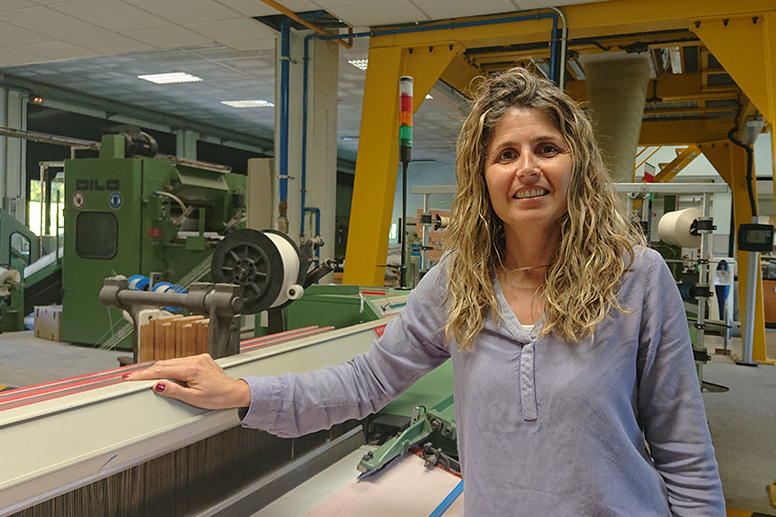
A project to create support centres to the textile industry in Morocco and Jordan
September 25, 2019
A new industrial process to improve fibre optic capacity
November 1, 2019The research groups CRAAX and SISCOM have completed their participation in the European project Enhancing Critical Infrastructure Protection with Innovative Security Framework (CIPSEC). The aim of the CIPSEC project was to create an innovative security solution for critical infrastructure environments.

This platform can easily integrate security products that are on the market. Consequently, the most innovative solutions available for anomaly detection, anti-malware, denial of service, software security platforms, etc. can be adopted, and then adapted or improved for incorporation into the CIPSEC platform. The solution that is developed can gather and process inputs from several sources and monitor critical infrastructure holistically.
To complete the security ecosystem, technical solutions are offered as additional services: vulnerability control tests at industrial level, studies of potential cascade-based attacks, contingency plans or forensic analysis as well as a training plan with the issue of certificates.
Three pilot projects have been carried out, led by Hospital Clínic de Barcelona in the health sector, the Consorzio per el Sistema Informatiu de Monitorització in the environmental sector, and Deustche Bahn AG in the transport sector. Based on valid requirements that were identified for any critical infrastructure, specific requirements were selected for each pilot project. The modularity of the platform developed in CIPSEC has meant that personalised solutions could be implemented for each of the pilot projects and, at the same time, a general solution could be offered that is adaptable to each critical infrastructure. In addition, it was found that the CIPSEC platform behaves satisfactorily when confronted with a wide range of attack scenarios.
CIPSEC can be rolled out fully at local level (in the client’s facilities), but it is also compatible with hybrid implementations, when one part is local and the other is in the cloud from where the most suitable products and services in each case can be selected.
The CIPSEC project, which has a budget of 5,613,788 euros, has thirteen members from European countries (Spain, Italy, Germany, Greece, the United Kingdom, Israel, Romania and Switzerland). The project, which began in May 2019, lasted three years and is part of the European Framework Programme for research and innovation, Horizon 2020.
Technology
You want to know more?
Related Projects
- The Interdisciplinary Group on Building Science and Technology (GICITED) and the Energy, Catalysis, Process and Reaction Engineering (ENCORE) research group at the Universitat Politècnica de Catalunya - BarcelonaTech (UPC) are participating in the European ArchiSpace project, to develop infrastructure prototypes for human settlements in extraterrestrial environments using materials and conditions analogous to those on the Moon and Mars.
- The Research Group in Smart and Sustainable Resources and Industries (RIIS) at the Universitat Politècnica de Catalunya - BarcelonaTech (UPC) is developing the ZeroCarbonPave project, which aims to assess the feasibility of incorporating biochar as filler and/or as the fine fraction of granular material in bituminous mixtures, with the objective of reducing the carbon footprint associated with the manufacture and laying of road pavements.
- The Group of Construction Research and Innovation (GRIC) at the Universitat Politècnica de Catalunya - BarcelonaTech (UPC) leads the RESILIENT project, which develops advanced models and methodologies to assess climate-resilience strategies in buildings and optimise decision-making.
- A research team from the Sustainable Construction Engineering Group (ECS) at the Universitat Politècnica de Catalunya - BarcelonaTech (UPC), together with the Catalan company La Farga, a manufacturer of copper products and semi-finished copper products and a leader in copper recycling, has taken part in the development of a solution to use slag from the copper refining process as new materials and to optimise the use of natural resources in industry. Through this project, La Farga aims to valorise this slag for high added-value industrial applications, such as conductive cements used to manufacture road pavements or industrial sensing products.