

FEVER: A project to transform the European energy system and adapt it to renewable energies
February 13, 2023
SCAPE: Towards standardisation, cost reduction and improved features of power conversion systems for electric vehicles
February 16, 202314/02/2023
It is the first open source library that enables multi-hop and peer-to-peer data routing in a LoRa communication mesh network.
The research group Computer Networks and Distributed Systems (CNDS) of the Universitat Politècnica de Catalunya - BarcelonaTech (UPC) is working on LoRaMesher. The main objective of this project is to implement a data routing protocol that enables the interconnection of IoT applications on LoRa wireless communication technology. IoT devices connected by LoRa construct a mesh, so that they can communicate between each other through the nodes of the network, as occurs on the Internet.
Consequently, with the LoRaMesher library, these devices can communicate between each other in a two-way manner. This enables services to be offered to nodes in the network, such as receiving updates or executing actions.
This opens up the opportunity for applications that are stored on the Internet to be able to connect to IoT devices. It expands their functionality beyond merely emitting data that are gathered by the IoT devices’ sensors.
Collaborators in the LoRaMesher project are Hacking Ecology S.L. (Spain), in the framework of the European project LoRaTRUST for obtaining reliable IoT data, and Puretek Innovations LTD (United Kingdom). LoRaMesher provides both companies with the communication layer between IoT devices.
LoRaMesher has been developed at the UPC during 2022 and is currently operating in real devices.
Impact and results
LoRaMesher is a library that facilitates the implementation of communication between IoT devices with an efficient routing protocol. It enables fast, reliable data exchange and is flexible and scalable. In addition, it is easier to implement than other technologies in any IoT project. It is an essential tool for developers of high quality IoT solutions.
The code that is developed is available in an open repository of GitHub in this link.
In addition, a demo application has been developed that is known as LoRaChat, which is also available here.
The project has obtained funding from the Spanish Government’s Ministry of Science and Innovation through the State Research Agency (project PID2019-106774RB-C21, project PCI2019-111851-2 (LeadingEdge CHIST-ERA), and the project PCI2019-111850-2 (DiPET CHIST-ERA) and PDC2023-145809-I00).


Technology
You want to know more?
Related Projects
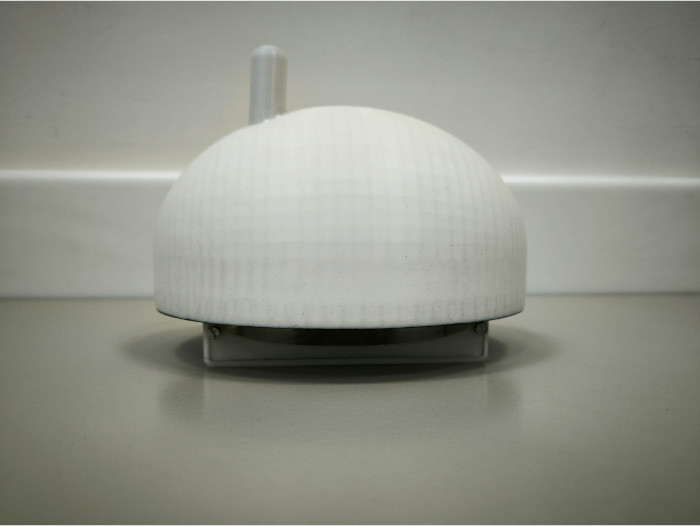
- Researchers from the Computer Networks and Distributed Systems (CNDS) research group at the Universitat Politècnica de Catalunya - BarcelonaTech (UPC) are developing new artificial intelligence-based solutions to obtain more accurate and reliable data from IoT sensor networks, with applications in air quality monitoring, anomaly detection and industrial predictive maintenance.
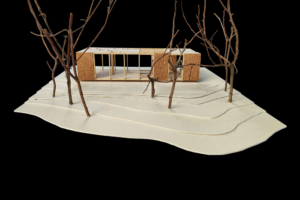
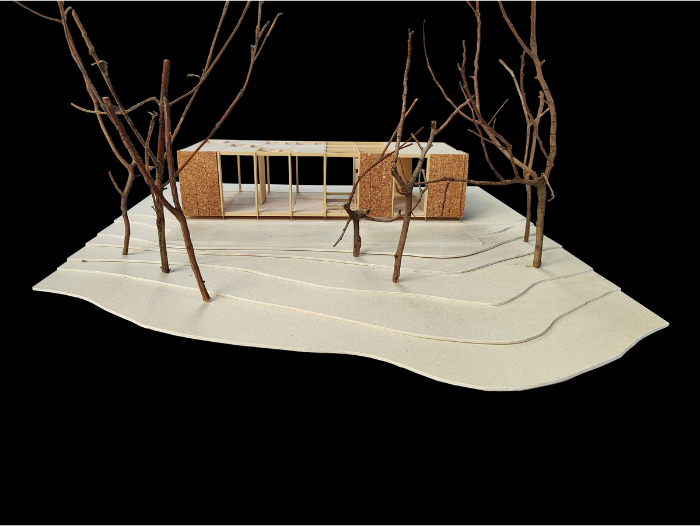
- The Casa Bosc project explores a lightweight, modular and prefabricated timber construction system designed to reduce the environmental impact of housing while making it easier to build and adapt to different contexts. The project has been developed by researchers from the Architectural Rehabilitation and Restoration Research Group (REARQ) at the Universitat Politècnica de Catalunya - BarcelonaTech (UPC) and the company ÀGORA.
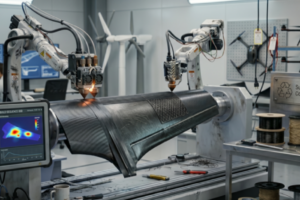
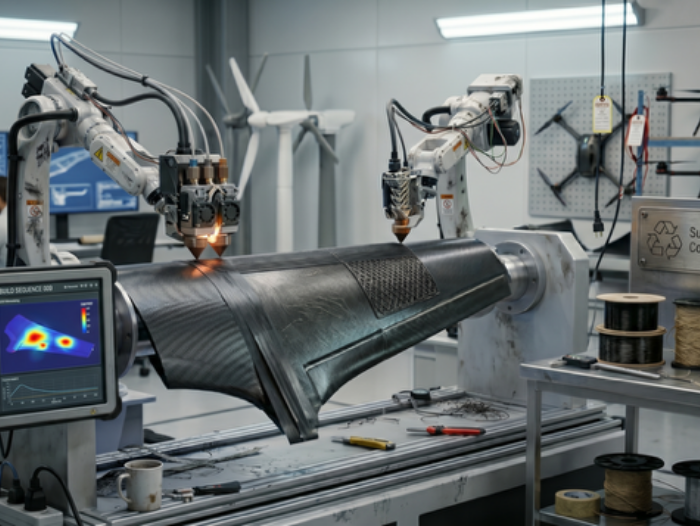
- The Control, Data and Artificial Intelligence (CoDAlab) research group at the Universitat Politècnica de Catalunya - BarcelonaTech (UPC) is taking part in the ATHENS project, which is developing recyclable thermoplastic composite materials with advanced real-time monitoring systems to improve the manufacture, safety and service life of lightweight structures.
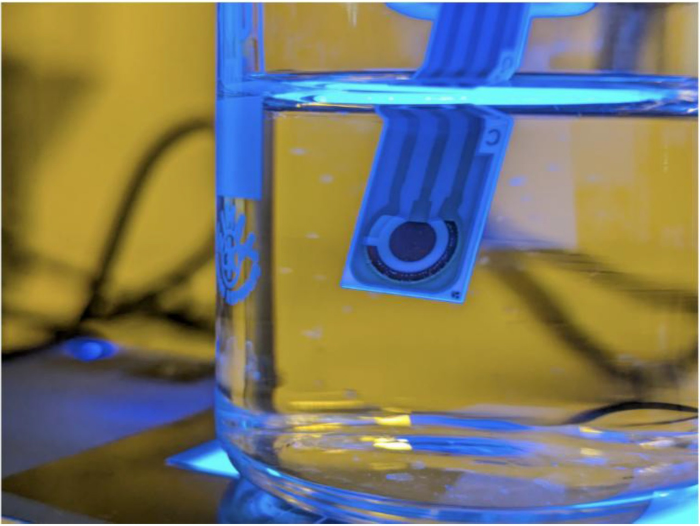
- The MICROTECH LAB - Microtechnology for the Industry research subgroup, part of the Centre for Advanced Technologies in Mechanics (CATMech) at the Universitat Politècnica de Catalunya - BarcelonaTech (UPC), is leading the technical development of a minimally invasive platform to monitor biomarkers and physiological indicators related to stress and emotional wellbeing.