


COVID-19 · Mathematical models and data management in public health emergencies
March 1, 2020
UPC researchers create an ‘app’ to monitor walks with children during lockdown
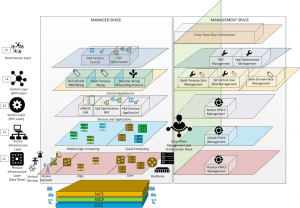
May 6, 2020The Optical Communications Group (GCO) has worked on SliceNet. The aim of this European project is to maximise the potential of 5G infrastructures and their services through the design and implementation of an advanced network management and control system for 5G services. This ensures that requirements are met in terms of flexibility, enhanced operational capacities with respect to service quality, and the experience from the terminal to the operating system.

The SliceNet management and control system has been tested in three use cases to provide vertical services in the fields of smart cities, e-health and smart grid. Specifically, the cases are smart management of public streetlighting, a connected ambulance to manage communication between emergency medical teams and wearables, and SmartGrids energy distribution.
SliceNet forms part of the 5GPPP programme of the European Commission, whose aim is to maintain European leadership in 5G infrastructures. The project had a budget of almost 8 million euros over 3 years (completed in May 2020).
SliceNet has been coordinated by EURESCOM (Germany) with the participation of 15 other members in Portugal, Italy, the United Kingdom, France, Israel, Greece, Rumania and Ireland.
Technology
You want to know more?
Related Projects
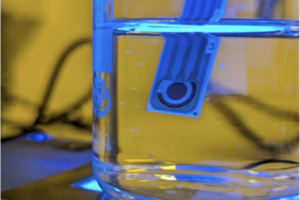
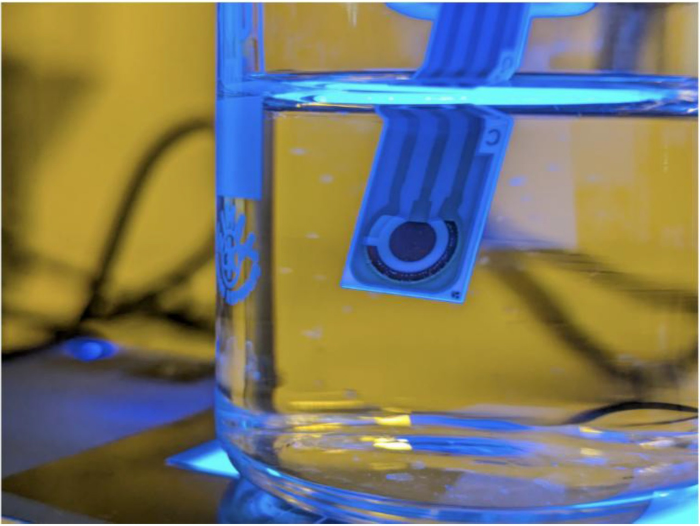
- The MICROTECH LAB - Microtechnology for the Industry research subgroup, part of the Centre for Advanced Technologies in Mechanics (CATMech) at the Universitat Politècnica de Catalunya - BarcelonaTech (UPC), is leading the technical development of a minimally invasive platform to monitor biomarkers and physiological indicators related to stress and emotional wellbeing.
- A research team from the Universitat Politècnica de Catalunya - BarcelonaTech (UPC) has participated in the M3LEC project, coordinated by the Centro de Astrobiología (CAB), a joint centre of the Spanish National Research Council (CSIC) and the Instituto Nacional de Técnica Aeroespacial (INTA), with the Universidad de Sevilla (US) / Instituto de Microelectrónica de Sevilla (IMSE) also participating. M3LEC aimed to contribute to the characterisation of the Martian atmosphere and meteorology, and to investigate new instrumentation for future planetary exploration missions.
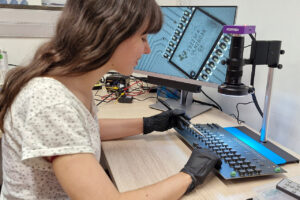
- A team from the Matrix Analysis and Discrete Potential Theory (MAPTHE) research group at the Universitat Politècnica de Catalunya - BarcelonaTech (UPC), and the Department of Mathematics at CUNEF Universidad in Madrid, have participated in the development of MARIA, a prototype of a portable, flexible and radiation-free device designed to improve the early detection of breast cancer. The device can identify tumours through electrical conductivity, with the aim of enabling its future use in primary care settings.
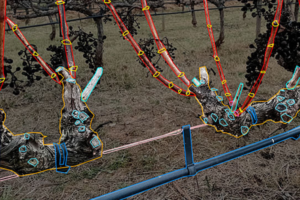
- The Center for Industrial Equipment Design (CDEI-UPC) at the Universitat Politècnica de Catalunya - BarcelonaTech (UPC) is participating in a cross-border project aimed at promoting the use of advanced digital technologies in viticulture in regions on both sides of the Pyrenees. The initiative seeks to improve specialist training, technical advice and decision-making in vineyard management.