

SAFEPASS: A polyurea-concrete construction system to improve safety in the conservation of infrastructures
November 29, 2023
More reliable and more durable ammonia sensors to improve the well-being of animals and reduce production costs on farms
January 18, 202404/12/2023
An international consortium of universities, hospitals and companies, led by the Centre for Sensors, Instruments and Systems Development (CD6) at the UPC, is developing new technologies based on light and artificial intelligence to improve the diagnosis of various diseases.
New photonic and artificial intelligence (AI) tools will be developed for the early diagnosis and precise treatment of ocular, cardiovascular and neurodegenerative diseases. This is the objective of the European BE-LIGHT project, coordinated by the Centre for Sensors, Instruments and Systems Development (CD6) at the Universitat Politècnica de Catalunya - BarcelonaTech (UPC). Participants in this project include a total of seven academic institutions, three hospitals and seven companies in Germany, France, Poland, Switzerland and Spain.
The BE-LIGHT project represents a step forward for knowledge and diagnosis of retinal diseases. Through the use of neural networks and optogenetic techniques, the new tools that are developed will promote better understanding of the functioning of the retina and the exchange of information between neurons, so that, based on quantitative models, retinal diseases can be detected.
The combination of various photonic technologies such as multispectral images and optical coherence tomography, complemented with AI algorithms, enables a precise analysis of various ocular structures (cornea, vitreous body, fundus) for the early detection of visual impairments and oculomotor disorders. In addition, assessment with AI of eye movement patterns, which are strongly controlled by several brain areas, could offer new diagnostic tools for neurological diseases, such as Alzheimer or long Covid.
The project will also make possible the development of new clinical instruments and methods that can be used, for example, to obtain images of blood vessels or ocular structures of the patient through optical tomography and optoacoustics or thermal image. This technology will help in the non-invasive, early detection of plaques of arteriosclerosis, among other disorders. Likewise, new automatic learning tools will be developed for the treatment and monitoring of cardiac arrythmias with light, which could replace current techniques based on electrical stimuli. The use of AI in combination with techniques of super-resolution microscopy will enable images of biological structures of less than a nanometre to be obtained, such as proteins involved in Parkinson’s disease and other rare diseases, which will improve the diagnosis.
Budget and funding
The consortium, led by Meritxell Vilaseca, researcher at CD6 and Cristina Masoller, researcher in the group Nonlinear Dynamics, Nonlinear Optics and Lasers (DONLL), has funding of 2.5 million euros from the European Union’s Horizon Europe programme, within the Marie Sklodowska Curie (Doctoral Networks) Actions. BE-LIGHT has a duration of 48 months (October 2023 – September 2027).
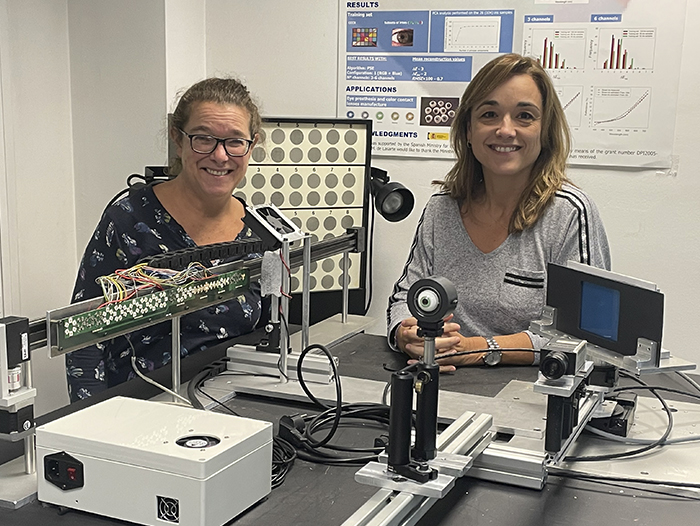
Researchers Cristina Masoller and Meritxell Vilaseca in the laboratory

The initial project meeting was held in Barcelona in November

International team involved in the project
Related Projects
- A team from the Matrix Analysis and Discrete Potential Theory (MAPTHE) research group at the Universitat Politècnica de Catalunya - BarcelonaTech (UPC), and the Department of Mathematics at CUNEF Universidad in Madrid, have participated in the development of MARIA, a prototype of a portable, flexible and radiation-free device designed to improve the early detection of breast cancer. The device can identify tumours through electrical conductivity, with the aim of enabling its future use in primary care settings.
- The Research Group in Smart and Sustainable Resources and Industries (RIIS) at the Universitat Politècnica de Catalunya - BarcelonaTech (UPC) is developing the ZeroCarbonPave project, which aims to assess the feasibility of incorporating biochar as filler and/or as the fine fraction of granular material in bituminous mixtures, with the objective of reducing the carbon footprint associated with the manufacture and laying of road pavements.
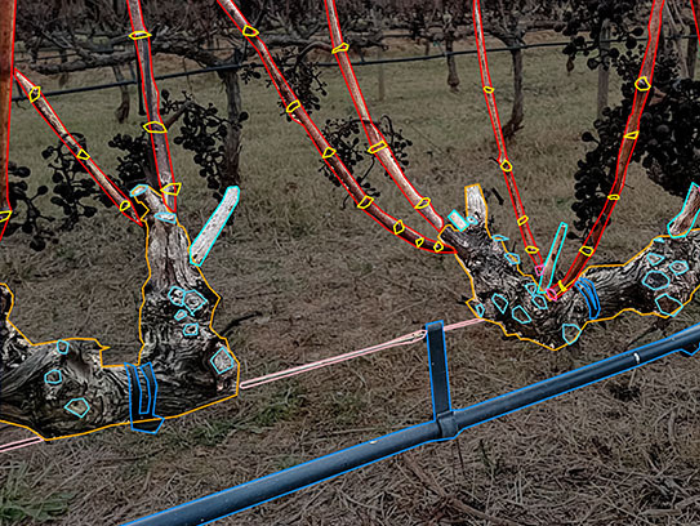
- The Center for Industrial Equipment Design (CDEI-UPC) at the Universitat Politècnica de Catalunya - BarcelonaTech (UPC) is participating in a cross-border project aimed at promoting the use of advanced digital technologies in viticulture in regions on both sides of the Pyrenees. The initiative seeks to improve specialist training, technical advice and decision-making in vineyard management.
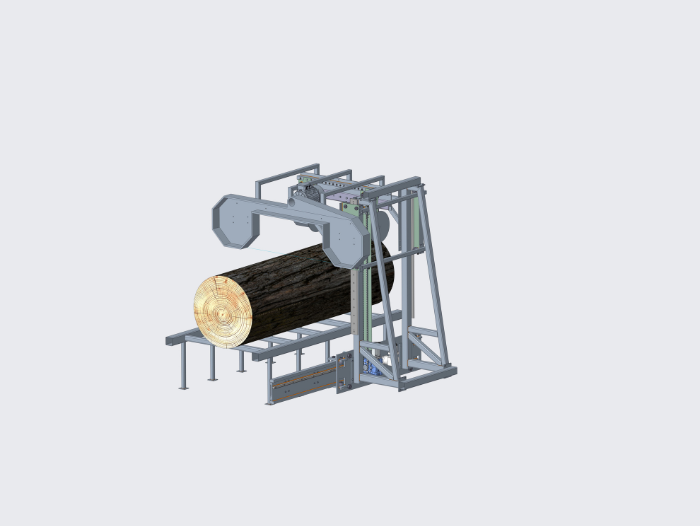
- The Centre for Industrial Equipment Design (CDEI) at the Universitat Politècnica de Catalunya - BarcelonaTech (UPC), together with the IRI, Institut de Robòtica i Informàtica Industrial (CSIC-UPC), is participating in the development of a pre-commercial prototype of an automatic portable sawmill that integrates computer vision, artificial intelligence and computer numerical control to improve productivity, efficiency and safety in local wood processing for the company Envall Coop. S.L.