INTRODUCTION
It is estimated that by 2050, 70% of the world’s population will live in cities. This will significantly increase the demand for resources such as water, energy, the environment, infrastructure and basic services. This scenario forces governments to seek technological solutions to relieve social and economic pressure, while working to make cities more resilient and sustainable.
The concept of a smart city is based on the use of information and communication technologies (ICT) to improve residents’ quality of life and the efficiency of service management, ensuring equitable access for all users. While traditionally the quality of infrastructure determined a city’s attractiveness, factors such as network connectivity, interconnection between different urban actors and service integration are now fundamental.
This evolution has driven competitiveness between cities, where ICT plays a key role in optimising transport networks, promoting citizen participation and automating administrative processes, especially in densely built-up urban areas.
Smart cities must address diverse needs, such as improving urban design to enable the efficient movement of people, reducing traffic and CO₂ emissions, and integrating innovative technologies to enhance public safety and promote digital management. Beyond this, other priorities include smart buildings and infrastructure, efficient energy management, environmental protection, the development of enabling technologies, and fostering social inclusion and economic development. This multidimensional approach is essential to adapting cities to future challenges.

AREAS
Enabling
technologies

Enabling technologies
Trends
Cities are increasingly turning to data provided by advanced technologies as a powerful tool to build resilience, improve services and plan for the future. The Internet of Things (IoT), predictive modelling, artificial intelligence (AI), augmented reality (AR) and digital twins are transforming how users access city services.
Public administrations, for their part, must find ways to respond to growing concerns about privacy and security, managing data effectively to make informed decisions and ensuring that urban plans adequately reflect the needs of all communities.
These enabling technologies are essential to transforming cities into smarter, more sustainable and people-centred ecosystems, driving innovation and urban quality of life:
The integration of sensors and connected devices makes it possible to collect and analyse data in real time and, for example, improve traffic and street lighting management, monitor resources and urban services, and optimise energy use and housing sustainability.
Key technologies for processing large volumes of data and images and making efficient decisions in areas such as public safety, urban planning and energy management.
They provide ultra-fast, low-latency communications, enabling applications such as autonomous vehicles, telemedicine services and large-scale IoT deployments.
It enables data to be processed close to where it is generated, reducing latency and optimising real-time response in applications such as security and traffic control.
The adoption of clean energy sources and intelligent distribution systems ensures more sustainable and efficient energy management.
Although 6G is still at an early stage of research and development (full commercial deployment is expected around 2030), it is anticipated to represent a significant leap forward in terms of speed, capacity, reliability and connectivity compared to previous generations.
Expected features and advantages of 6G include:
- Ultra-high speed, enabling instant downloads of large volumes of data and the transmission of ultra-high-resolution content such as virtual and augmented reality, holograms and 8K video.
-
Ultra-low latency, significantly reducing response time between sending and receiving data. This will enable real-time interactions, essential for advanced applications such as remote control of autonomous vehicles and industrial automation systems.
Integration of electric vehicles, interconnected public transport systems and micromobility solutions to reduce congestion and CO₂ emissions.
It enables the identification of urban patterns and improves real-time decision-making, for example in resource allocation and service planning.
It ensures transparency and security in processes such as urban data management, electronic payments and electronic voting systems.
They promote collaboration between governments and citizens through digital channels, encouraging shared responsibility in urban planning and management.
-
Massive object connectivity, deepening the Internet of Things (IoT) and driving applications such as smart cities, Industry 4.0 and precision agriculture.
-
Integrated artificial intelligence, where the network itself is able to make the most appropriate decisions in each situation and process information through embedded AI.
6G is expected to have a significant impact on sustainable development, facilitating cost reduction in the digital economy, infrastructure development, secure networks and healthcare provision in disadvantaged areas.
The speed of the first enabled devices, around 2030, is expected to reach 1 terabit per second (Tbps). The potential of this technology and its efficiency, which will drive growth in both urban and rural areas, will create a market situation with high demand, translating into an estimated annual growth rate of around 25% over the next five years.
Enabling technologies
Technological capabilities
Enabling technologies
Projects


Connected
mobility
Connected mobility
Trends
The technological transformation in personal mobility is driving profound changes in the way people move and will increasingly allow the travel experience to be personalised. The main business models that will shape the shared mobility market up to 2040 can be grouped into three major categories of change: behavioural changes, urban infrastructure changes, and technological changes.
These trends are driving shared mobility and the associated business models, with the market expected to generate over $2.5 trillion in revenue by 2030. The technological transformation in mobility is redefining travel, turning journeys into an increasingly personalised experience.
Changes in urban infrastructure are redefining cities and mobility, with a convergence of passenger and freight transport driving more integrated and efficient solutions.
At the same time, 20/15-minute cities are being developed, prioritising access to services on foot or by bicycle, car-free zones, and in some cases, free public transport. Shared mobility hubs are gaining prominence, including in rural areas, while transport modes are being adapted to specific contexts such as urban centres, communities, or university campuses.
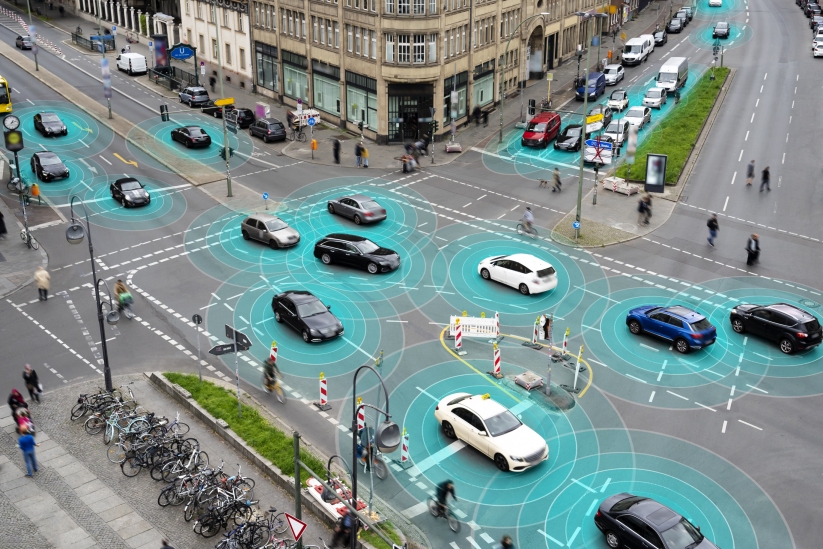
Technological changes are driving a profound transformation in mobility. The increasing penetration of smartphones, the internet, and 5G/4G connectivity is facilitating the implementation of advanced solutions, such as the development of connected intermodal transport systems, intelligent traffic solutions, and integrated mobility markets.
Technologies based on machine learning (ML) and artificial intelligence (AI) are optimising fleet management, improving service availability and efficiency. In addition, a new type of mixed traffic is emerging, combining autonomous vehicles with those driven by people. Meanwhile, electric mobility is advancing with the electrification of public and shared transport modes, and the design of specific vehicles—such as micromobility options that can be carried on buses—offers solutions tailored to emerging needs.
Some of the following forms of mobility have the potential to transform global transport, but their success will depend on overcoming technological, economic and regulatory challenges:
Electric, driverless vehicles using advanced driving systems (ADS). Their use in the EU is expected to grow significantly by 2030, thanks to falling technology costs and their viability in controlled environments such as airports or theme parks.
Autonomous vehicles used as taxi services. They offer efficient and sustainable urban mobility but still require further development before large-scale deployment.
Coupleable vehicles that adapt capacity to demand, offering flexible solutions for transporting people or goods. Despite their potential, they are still in early stages and will take time to become commercially viable.
Includes autonomous e-scooters and e-mopeds. They offer sustainable options for short trips and help to reduce congestion, but face technical and regulatory challenges for mass adoption.
(Walking or cycling). Bicycles and e-bikes will continue to show growing demand. By 2040, active mobility is expected to account for around 20% of urban journeys.
- The market for commercial last-mile drone delivery has strong global growth potential thanks to reduced time and costs, a smaller carbon footprint and the capacity to reach remote areas. However, it is constrained by strict regulation and high costs, especially for industrial drones, which are not very viable for short distances.
- As urban centres grow and the distance between city centres and outskirts increases, eVTOL (electric Vertical Take-off and Landing) aircraft are emerging, combining capabilities for urban air transport, goods delivery and recreational flights.
Connected mobility
Technological capabilities
Connected mobility
Projects




Energy and
environment

Energy and environment
Trends
Electrification has become an essential element for decarbonising the cities of the future. This process involves replacing fossil fuels with electricity generated from renewable sources, with the aim of reducing carbon emissions and meeting net-zero climate targets by 2050. Although there are still significant barriers, such as high upfront investments, technological compatibility and lack of infrastructure, the sustainability and efficiency opportunities make electrification a global priority.
Cities must intensify efforts to reduce emissions and transition towards decarbonisation using renewable energy sources. The integration of distributed energy resources and battery energy storage systems is key to accelerating global electrification, improving grid reliability and enabling optimal consumption of available renewable energy. Moreover, electrification technologies deliver high-density, efficient energy thanks to improved energy efficiency, reducing operating costs and driving digitalisation across sectors.
Renewable energy comes from inexhaustible sources (such as wind or sun) that do not produce harmful environmental effects. Innovative technologies are being developed to help increase this production, such as solar panels with perovskite cells. Although still at a very early stage of development, perovskite solar cell technology has great potential to replace silicon cells, which are widely used today. They consist of synthetic material designed according to the crystal structure of a mineral called perovskite, which absorbs sunlight in a different and more efficient way than silicon. This advantage in solar radiation absorption makes perovskites an optimal candidate for photovoltaic panels.
Another key area in clean energy transition due to its low carbon emissions is hydrogen. It can originate from various sources, such as fossil fuels, water splitting using nuclear energy, renewable energy sources or biomass via biological processes. Its applications are wide-ranging: as a fuel in maritime, aviation or land transport sectors, and as a decarbonised energy storage system in the power generation sector.
Finally, bioenergy, derived from biomass, can be converted into different types of energy such as electricity, biofuels, or combined heat and power. This offers cities an opportunity to reduce greenhouse gases and increase energy security by substituting fossil fuels. Some European countries such as France, Sweden and Germany have already begun to use bioenergy as a means to generate other forms of energy.
The circular city is an evolution of the smart city concept. It implies a shift in perception: from a view focused on new technologies and energy services to a holistic approach that considers all the resources a city consumes and focusses on the social, economic and environmental impact of this consumption. The circular city seeks sustainable development that includes environmental quality and sustainability, economic prosperity and competitiveness, and social equality and inclusion.
The transition from a linear to a circular economy is key to decoupling economic growth from resource use and achieving a climate-neutral, fair and prosperous society. Local and regional governments play a crucial role in achieving the systemic, transformative change needed, and must work actively with all levels of government and stakeholders from civil society, the private sector and the research community.
The European Union aims to strengthen the role of the circular economy for its cities and has made the Circular Economy Action Plan (2020) one of the pillars of the European Green Deal. This plan aims to promote circular economy processes, encourage sustainable consumption and ensure that resources are kept in the EU economy for as long as possible. It has identified sectors with the greatest circularity potential: electronics (ICT in general), plastics, textiles, construction and buildings, water and nutrients, and food.
The roadmap for electrification sets out a gradual transition. Between 2020 and 2030, the priority is to install basic infrastructure and reduce direct emissions. From 2030 to 2040, the use of renewable technologies in facilities and infrastructure is expected to expand. Between 2040 and 2050, the goal is full electrification, with operations functioning exclusively with renewable sources and achieving zero emissions.
The roadmap for electrification establishes a gradual transition. Between 2020 and 2030, the priority is the installation of basic infrastructure and the reduction of direct emissions. From 2030 to 2040, the use of renewable technologies in equipment and infrastructure is expected to expand. Between 2040 and 2050, full electrification is anticipated, with operations running exclusively on renewable sources and achieving zero emissions.
Climate change has a particular impact on cities. Rising temperatures affect access to water, both in terms of consumption and resources, and reduce resilience to heatwaves, which are becoming more frequent and intense. As a result, new technologies are being developed to reduce the effects of climate change, mainly by lowering greenhouse gas emissions.
The lack of sufficient water resources to meet the consumption needs of a region is known as water scarcity. This leads to water stress, referring to the difficulty of obtaining freshwater over a certain period of time, which can exhaust available water resources. It also causes water deficit, when water loss through transpiration exceeds the supply of water to plant leaves.
In cities, the effects of water scarcity can include shortages of drinking water for human and livestock consumption, limited hygiene measures that may lead to disease outbreaks, drying of aquifers and, consequently, insufficient food production to meet population needs, among others.
Water purification is a process in which pollutants, inorganic compounds or bacteria are removed, leaving water in a purer state. Some technologies that make this possible are activated carbon, ionisation electrodes and ion exchange.
To counteract the lack of rainfall in some areas, stormwater and greywater treatment systems are gaining prominence. India, Australia, China and other Middle Eastern countries are increasingly implementing these technologies. In this context of scarce resources, smart water services are being developed. This movement within the water industry involves emerging technologies that help water supply and wastewater utilities improve efficiency through automation, data collection and analytics, harnessing big data and IoT technologies. Examples of smart technologies include using imaging to inspect corroded pipes, analysing real-time data to identify leaks, or using pressure and flow data to detect pipes that need replacement.