

SaCoAV: Methods and Tools to Improve the Safety and Coordination of Autonomous Vehicles
May 6, 2025
Odour Recognition with AI in Embedded Devices
May 12, 202508/05/2025
The Center for Technological Innovation in Static Converters and Drives (CITCEA) at the Universitat Politècnica de Catalunya – BarcelonaTech (UPC) has designed a smart wireless application developed to optimise the electricity consumption of high-power devices.
Electricity costs are an increasing concern for many consumers, especially in the context of highly volatile electricity prices. 86% of consumers consider their electricity bills excessively high, and energy consumption remains one of the main sources of global emissions. Moreover, the rise in global temperatures, up 1.8 °C in 2023, highlights the urgent need to reduce CO₂ emissions and implement more energy-efficient solutions. In this context, it is crucial to develop tools that help minimize these costs while contributing to energy sustainability.
OCEAN was developed in this framework: a smart system that automatically optimises and manages the electricity consumption of high-power devices such as water heaters, pool pumps, or electric vehicles across municipalities, industries, buildings, and households. The application allows users to tailor consumption to their preferences, maximizing savings while reducing CO₂ emissions. With a "Plug and Play" solution, the application easily integrates into existing systems and provides efficient energy management, whether the goal is to reduce costs, emissions, or both.
For example, when it comes to pool pumps, users can decide how long they want the pump to run, and OCEAN takes care of operating it during optimal hours. For electric water heaters, the user can set time windows when they plan to shower, and the system ensures hot water is ready at that time, heating it during the most cost-effective or lowest-emission hours, depending on the user’s selection. For electric vehicle chargers, the user can choose the desired charge level and completion time, and OCEAN optimises the process by charging the vehicle during the cheapest and cleanest hours.
OCEAN offers 3 service options:
- OCEAN Integration: Integration of OCEAN into the consumer’s existing IoT product platform.
- OCEAN Hardware: Customized hardware solutions for consumers who prefer not to modify their software.
- OCEAN Redesign: Hardware redesign to make it IoT-compatible.
Impact
OCEAN has a direct impact on reducing energy costs and CO₂ emissions. It targets end users, manufacturers of pool pumps and electric water heaters (EWH), municipalities with public pools, and industries with high water consumption. It also addresses electric vehicle (EV) charging points.
In the case of residential pool pumps, users have achieved a 67% cost reduction, along with an average 11% drop in emissions. Meanwhile, households with electric water heaters have seen an average 30% savings on their electricity bills, optimizing consumption and contributing to a more sustainable future.

You want to know more?
Related Projects
- Researchers from the Computer Networks and Distributed Systems (CNDS) research group at the Universitat Politècnica de Catalunya - BarcelonaTech (UPC) are developing new artificial intelligence-based solutions to obtain more accurate and reliable data from IoT sensor networks, with applications in air quality monitoring, anomaly detection and industrial predictive maintenance.
- The Casa Bosc project explores a lightweight, modular and prefabricated timber construction system designed to reduce the environmental impact of housing while making it easier to build and adapt to different contexts. The project has been developed by researchers from the Architectural Rehabilitation and Restoration Research Group (REARQ) at the Universitat Politècnica de Catalunya - BarcelonaTech (UPC) and the company ÀGORA.
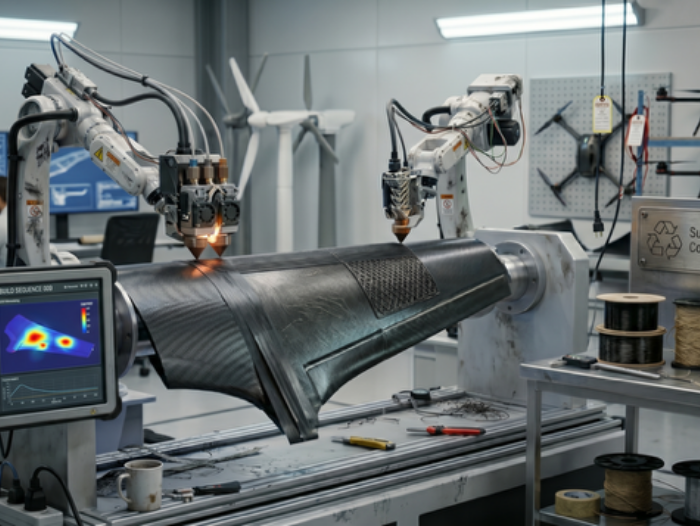
- The Control, Data and Artificial Intelligence (CoDAlab) research group at the Universitat Politècnica de Catalunya - BarcelonaTech (UPC) is taking part in the ATHENS project, which is developing recyclable thermoplastic composite materials with advanced real-time monitoring systems to improve the manufacture, safety and service life of lightweight structures.
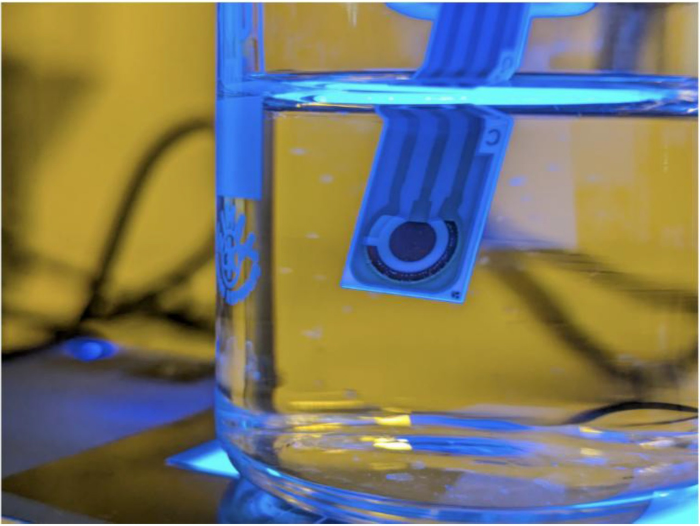
- The MICROTECH LAB - Microtechnology for the Industry research subgroup, part of the Centre for Advanced Technologies in Mechanics (CATMech) at the Universitat Politècnica de Catalunya - BarcelonaTech (UPC), is leading the technical development of a minimally invasive platform to monitor biomarkers and physiological indicators related to stress and emotional wellbeing.