


N2B2: A system to optimise heating and cooling with predictive control
January 22, 2024
BEACON: Design and construction of a proof of concept of LIDAR for its use in autonomous underwater vehicles
January 30, 202425/01/2024
A multidisciplinary team whose participants include the Microbiology Service of the Vall d’Hebrón University Hospital, the Microbiology research group of the Vall d’Hebron Research Institute (VHIR), the Computational Biology and Complex Systems Group (BIOCOM-SC UPC), the Image and Video Processing Group (GPI) and the Database Technologies and Information Management Group (DTMI) at the Universitat Politècnica de Catalunya - BarcelonaTech (UPC), and Fundación Probitas, have presented a new diagnostic method for malaria based on artificial intelligence.
Malaria is an infectious disease that is transmitted by mosquito bites and caused by parasites of the Plasmodium genus. The World Health Organization (WHO) calculated that in 2022 there were 249 million cases worldwide, 93% of which occurred in the African region, which also accounted for 95% of malaria deaths. The same report warns that climate change and globalisation are causing an expansion of the mosquito to new areas that have little preparation and resources to address this problem. Currently, the reference method for diagnosing malaria is visualisation of the parasites by an expert, using an optical microscope and blood samples. This is a manual, long, repetitive procedure that, added to the lack of laboratory technicians and instruments, leads to a high level of underdiagnosis. To date, any steps to automate the process has increased the costs exponentially, which has made it prohibitive in countries with few health resources.
This is a system created from artificial intelligence that combines a low-cost mobile application with an automated microscope, with the idea that this will be a useful and effective method in countries with few resources, where this disease is endemic. The results of the first iMAGING prototype have been published in the journal Frontiers in Microbiology. The prototype has been trained with over 2,500 images and has shown a reliability of over 96% in the laboratory with high-density samples and 94% with low-density samples. False positives and negatives were below 5% in all cases.
The proposed solution, iMAGING, is a mobile application (available for Android) that uses artificial intelligence to process digital images of blood samples to determine whether or not there is an infection. In positive cases, it also determines the density and the stage of the parasitic infection. To capture the images, an automated microscope has been created using a normal optical microscope and parts created using 3D printing, which has reduced their cost.
The app is connected via Bluetooth to the microscope and controls its movements and focus to automatically analyse the sample and achieve the images that are needed for the diagnosis. Technical staff only need to prepare the samples, which reduces their workload greatly and the possibility of errors.
It is planned to continue to train the artificial intelligence to introduce improvements in other areas. One of these is to be able to differentiate between the five species of parasites that cause the disease. This will enable the treatment to be personalised to a greater extent, which will improve its effectiveness.
Budget and funding
The project is part of science and technology work for human development promoted by the UPC’s Centre for Development Cooperation (CCD). The project is supported by the WHO as part of its initiative for digital imaging diagnosis of blood parasites in low and medium-income countries. It has a budget of €200,000 contributed by the three organisations that are involved: the Fundación Probitas, Vall d’Hebrón Research Institute and the UPC. Currently, funding is being sought to expand the project to diagnose other diseases such as schistosomiasis, filariasis, intestinal parasites or Chagas disease.

Sector
You want to know more?
Related Projects
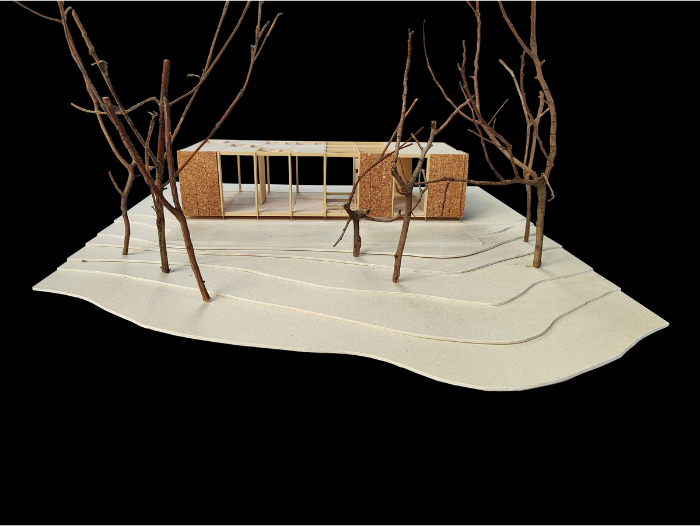
- The Casa Bosc project explores a lightweight, modular and prefabricated timber construction system designed to reduce the environmental impact of housing while making it easier to build and adapt to different contexts. The project has been developed by researchers from the Architectural Rehabilitation and Restoration Research Group (REARQ) at the Universitat Politècnica de Catalunya - BarcelonaTech (UPC) and the company ÀGORA.
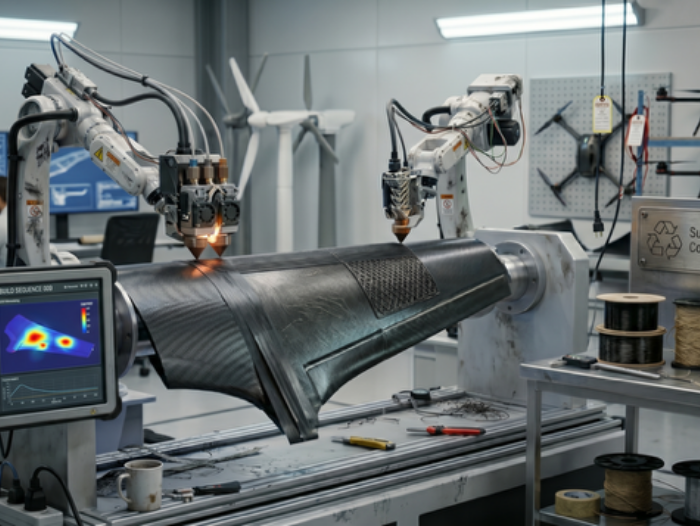
- The Control, Data and Artificial Intelligence (CoDAlab) research group at the Universitat Politècnica de Catalunya - BarcelonaTech (UPC) is taking part in the ATHENS project, which is developing recyclable thermoplastic composite materials with advanced real-time monitoring systems to improve the manufacture, safety and service life of lightweight structures.
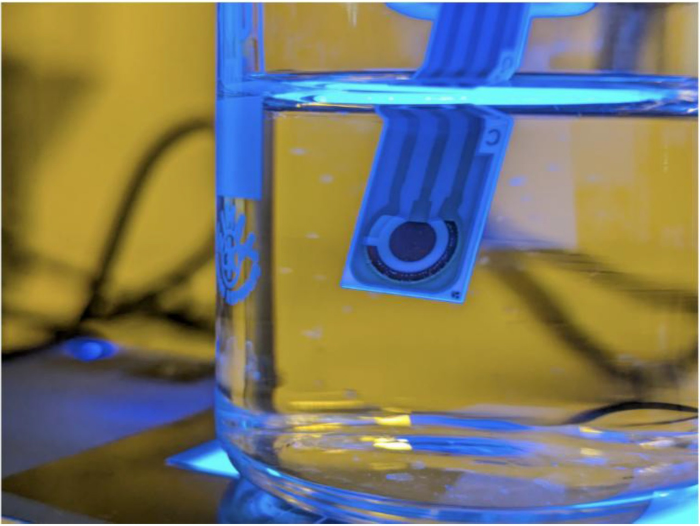
- The MICROTECH LAB - Microtechnology for the Industry research subgroup, part of the Centre for Advanced Technologies in Mechanics (CATMech) at the Universitat Politècnica de Catalunya - BarcelonaTech (UPC), is leading the technical development of a minimally invasive platform to monitor biomarkers and physiological indicators related to stress and emotional wellbeing.
- A research team from the Universitat Politècnica de Catalunya - BarcelonaTech (UPC) has participated in the M3LEC project, coordinated by the Centro de Astrobiología (CAB), a joint centre of the Spanish National Research Council (CSIC) and the Instituto Nacional de Técnica Aeroespacial (INTA), with the Universidad de Sevilla (US) / Instituto de Microelectrónica de Sevilla (IMSE) also participating. M3LEC aimed to contribute to the characterisation of the Martian atmosphere and meteorology, and to investigate new instrumentation for future planetary exploration missions.