

UPC technology to generate clean energy for the agricultural sector in Europe
March 21, 2023
New metamaterials that can detect molecular chirality
April 14, 202327/03/2023
The research group Barcelona Fluids & Energy Lab (IFLUIDS) and the Centre for Technological Innovation in Static Converters and Drives (CITCEA) of the UPC participate in the European project H-HOPE, which is focused on the development of solutions to produce clean energy based on water sources that have still not been exploited, such as pipes and water channels.
Hydroelectric energy represents approximately 35% of the electricity generated by renewable sources, a unique combination for the production of safe, low-cost, clean electricity. Taking advantage of this form of green energy is vital in the transition towards more sustainable energy models, to increase resilience to the impacts of climate change.
The project is focused on the development of innovative, sustainable solutions for harvesting hydraulic energy from pipe systems, open water channels and irrigation channels. In this way, an energy harvesting market will be promoted, which will digitalise networks for real-time monitoring, reduced maintenance costs and better management. As a result, managers of water supply networks and water channels will be able to operate their distribution systems in a more efficient way and save energy and costs.
The aim of the project is therefore to design technology in the commercial environment to obtain a new source of hydroelectric energy. The data obtained using this technology can be used to measure the quality of irrigation water for crops, manage irrigation, power weather stations with sensors for gathering various environmental parameters, monitor biodiversity in a river or provide developing communities with their own system for generating electricity with a simple, low-cost system.
Results and expected impact
In the framework of this project, the members will develop three technological devices for generating hydroelectric energy that are adapted to pipes, irrigation channels and open water channels, respectively, which they will test and validate in real conditions reproduced in the laboratory. The work of the research group IFLUIDS and of CITCEA of the UPC will focus on designing a solution adapted to water channel applications. This is a device of approximately 20 centimetres that incorporates piezoelectric materials that, when they vibrate inside the pipe, generate hydroelectric energy. This energy can be used to power various systems, such as IoT sensors.
With the technology developed by UPC researchers, operators of water supply networks and water channels will be helped to identify potential places for pilots, and to gather and analyse the corresponding data that will support the design, testing and validation of the energy.
In addition, the project will make available to citizens an online platform to facilitate the creation of systems for generating hydroelectric energy.
Consortium, budget and funding
The consortium is formed of 13 members from nine countries, coordinated by the University of Padua (Italy) and including the Universitat Politècnica de Catalunya - BarcelonaTech (UPC).
H-HOPE is funded by Horizon Europe as part of the European Union’s Climate, Energy and Mobility programme (Horizon Europe 2021-2027). It has a duration of four years (November 2022 to October 2026) and a total budget of €4,854,229.65.
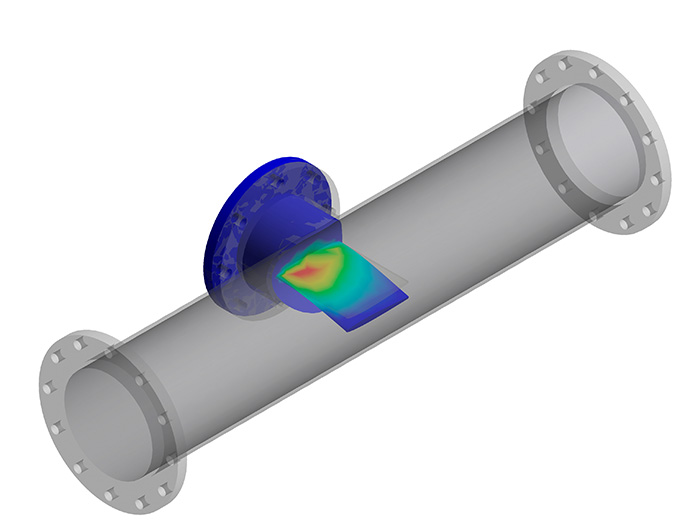
Image: Design of the device adapted to pipes created by UPC researchers.
Related Projects
- A research team from the UPC, in collaboration with the company B. Braun Surgical, has created a ceramic and biocompatible catalyst that captures greenhouse gases and transforms them into useful chemical products in a more sustainable way and at a lower cost than current technologies. The technology has successfully passed the pilot phase through joint projects with companies from different sectors.
- The company Trace ID and the group Twin Investors, in collaboration with the Textile Technology research group (TECTEX), which is part of the Institute of Textile Research and Industrial Cooperation of Terrassa (INTEXTER) at the Universitat Politècnica de Catalunya - BarcelonaTech (UPC), are developing electronic devices to identify, monitor, and study the traceability of the products in which they are embedded.
- The Hydrogeology Group (GHS) at the Universitat Politècnica de Catalunya - BarcelonaTech (UPC) is participating in the LIFE REMAR project to develop an innovative and sustainable solution for the reuse of treated wastewater through infiltration, with the aim of increasing the availability of freshwater resources and improving the state of ecosystems.
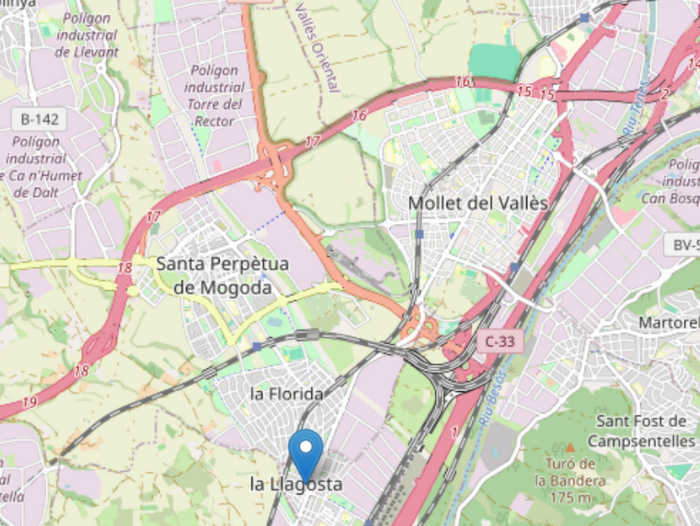
- A team from the Environment Centre Laboratory (LCMA) of the Universitat Politècnica de Catalunya - BarcelonaTech (UPC) is taking part in a study commissioned by the city councils of la Llagosta, Mollet and Santa Perpètua (in Vallès Occidental), with the main objective of identifying the impact of industrial plants on the generation of unpleasant odours and continuously monitoring air quality in these municipalities.