

MASANOM: Mobile acoustic sensors to generate automatic noise maps for cities
February 19, 2024
A solution to detect behaviour patterns for quality systems applied to industry
February 20, 202420/02/2024
The Wireless Communications and Technologies Research Group (WiComTec) at the Universitat Politècnica de Catalunya - BarcelonaTech (UPC) is participating in a project to develop and implement solutions based on the Internet of Everything to make mobile drone communication safer and more efficient.
The main aim of the FIERCE project is to integrate drones into existing communication networks in a safe, efficient way, and contribute to the sustainable development of their ecosystem. The project has two focuses: to improve communications from drones to the infrastructure (U2I/A2G, UAV to infrastructure/Air to Ground) and between drones (U2U/A2A, UAV to UAV/Air to Air). In the project, the integration of drones into cellular networks will be designed, analysed and optimised. In particular, A2A and A2G communications will be studied and enhanced to ensure their scalability and reliability.
FIERCE is part of the context of Internet of Everything (IoE), in which the aim is to meet expectations of scalability, intelligence and diversity in wireless communication.
The project has two phases, each with a specific focus:
The first phase is focused on obtaining information and on the development and assessment of theoretical tools, the analysis of models of communication (such as the analysis and planning of 3D radio, the study of radio resource management strategies or research on latency requirements and interferences for remote drone operations), and the characterisation of real devices. During this phase, work will also be done on iterative system design (gathering of data, use of simulation and optimisation tools).
In the second phase, the knowledge obtained through tests on laboratory prototypes will be applied and realistic solutions will be implemented. A considerable part of the activities will be dedicated to implementation and to aspects relating to hardware, using a unique resource such as that of the DroneLab of Castelldefels.
In the project, the base will be 5G technology, but more advanced concepts will be applied, such as 3D beamforming. This will enable the signal to be focused on the receptor in horizontal and vertical directions, to maximise performance throughout the airways. Trade-offs between the use of MU-MIMO will be studied, that is, the use of several antennas to optimise the coverage and speed of many users, with very narrow beams to achieve a high capacity on land and topologies that reduce horizontal selectivity.
In the IoE sector, other technologies will be involved such as Bluetooth, LoRa and similar. In addition, resource management algorithms based on AI will be explored and smart energy strategies to minimise latency and interference in massive IoE scenarios.
The FIERCE project is aligned with the European Commission’s strategy and objectives “European Drone Strategy 2.0”, adopted in November 2022. Considering that the current market for drones has enormous growth potential, with European demand estimated at over 15 billion euros for 2050, which is 10% of the aviation market, it is expected that civil drone operations, through government agencies or commercial companies, will generate most of this economic growth.
FIERCE will contribute to promoting the competitiveness of Spain and Europe in mobile communications and with drones. The expected results, such as the design of algorithms of artificial intelligence, hardware simulators and the publication of extensive sets of measurement data, could serve mobile technology providers, network operators and drone manufacturers, as well as other smaller companies that offer solutions for the IoT/IoE.
Budget and funding
The project has a total budget of €143,750 and was funded through the State Plan of Scientific and Technical Research and Innovation 2021-2023 (State Research Agency). It has a duration of 3 years (2023-2026).


Technology
Sector
You want to know more?
Related Projects
- A research team from the UPC, in collaboration with the company B. Braun Surgical, has created a ceramic and biocompatible catalyst that captures greenhouse gases and transforms them into useful chemical products in a more sustainable way and at a lower cost than current technologies. The technology has successfully passed the pilot phase through joint projects with companies from different sectors.
- The Visualisation, Virtual Reality and Graphic Interaction Research Group (ViRVIG) at the Universitat Politècnica de Catalunya - BarcelonaTech (UPC) participates in the CLIPE project under the MSCA-ITN call, which has developed technologies to provide virtual characters in immersive VR/AR environments with natural behaviour and interaction between virtual characters, making them more human and realistic, with potential applications in industry, video games, training and simulation.
- As part of the DigiPatICS project, eight ICS hospitals have optimised breast cancer diagnosis thanks to artificial intelligence (AI) algorithms that automate the analysis of tissue samples, enabling earlier and more accurate detection of the disease. The results and diagnoses are shared in real time across the eight centres, thereby forming the largest pathology network in Europe.
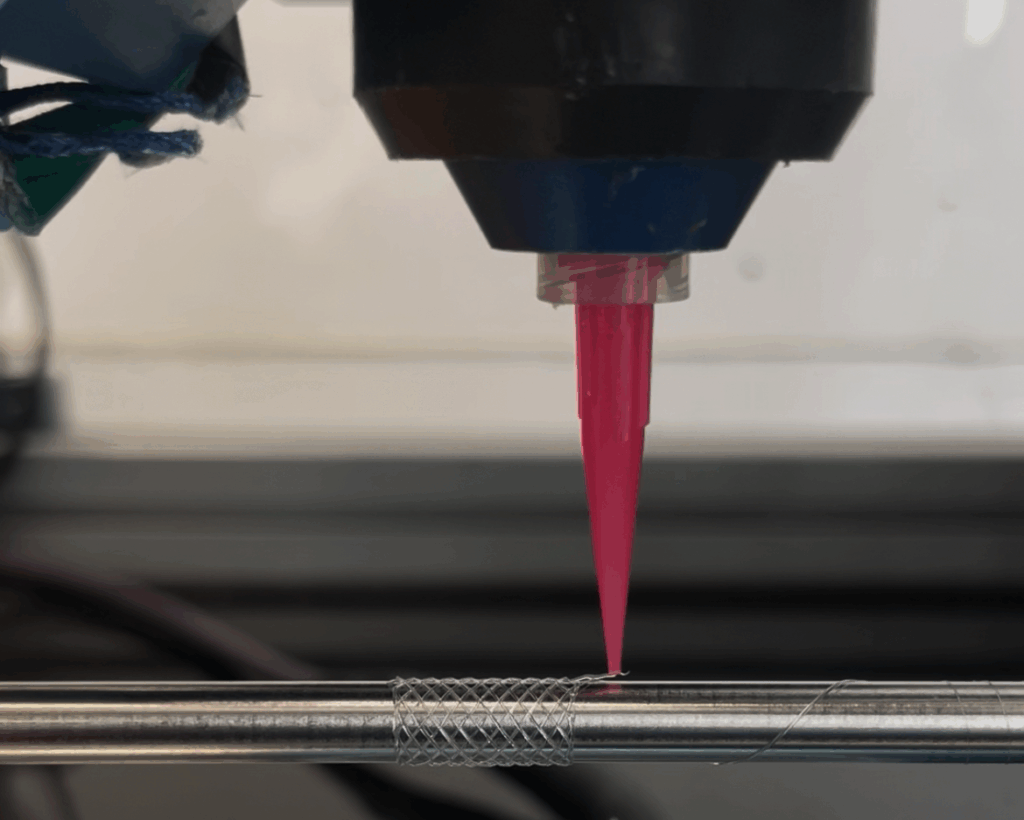
- The research groups in Biomaterials, Biomechanics and Tissue Engineering (BBT) and the Barcelona Research Center in Multiscale Science and Engineering (CCEM) at the Universitat Politècnica de Catalunya – BarcelonaTech (UPC) have developed biodegradable shape-memory stents for pediatric patients with aortic coarctation.