

PREPARE: Proactive Response and Efficient Planning with AI for Resilient Emergencies in hospitals
November 24, 2025
DigiPatICS: AI to improve cancer diagnosis and share results
December 1, 202527/11/2025
The research group in Biomaterials, Biomechanics and Tissue Engineering (BBT) and the Center for Research in Multiscale Science and Engineering (CCEM) at the Universitat Politècnica de Catalunya – BarcelonaTech (UPC) have developed biodegradable shape-memory stents for pediatric patients with aortic coarctation.
Aortic coarctation, a narrowing of the aorta, accounts for between 4% and 6% of all congenital heart diseases. It is a highly heterogeneous condition that often coexists with other cardiac abnormalities. Some patients may remain asymptomatic for years; however, when the narrowing is severe, hypertension, headaches, chest pain and muscle weakness may appear. If left untreated, the mortality rate reaches 90% by the age of 50, which is why addressing this condition during childhood is essential.
Current clinical treatments are based on two main strategies. The first is open-heart surgery, in which the narrowed aortic segment is removed. The second, less invasive option consists of balloon angioplasty and the implantation of a permanent metallic endovascular stent, initially designed for adults. In pediatrics, these stents are progressively fractured by surgeons as the aorta increases in diameter with the patient’s growth. Although mortality is below 1–2%, neither option is free from long-term complications —60% of which are cardiovascular in nature— such as aneurysms, aortic ruptures, dissections, arrhythmias, hypertension or recoarctation. Moreover, reinterventions continue to be frequent during growth and remain a clinical challenge.
To address these limitations, an innovative solution has been developed based on smart stents capable of adapting to the natural expansion of the aorta during childhood. The approach focuses on the development of polymeric, resorbable, shape-memory stents (SMP), manufactured using 3D printing and designed for minimally invasive surgery. This device, activated by body temperature, is biodegradable and designed to restore aortic functionality without leaving obstructive residues. If clinicians need to implant a new stent after 3–4 years, no remnants of the original device will remain. In addition, 3D printing technologies applied to smart devices —known as 4D printing— allow precise customisation to meet the specific needs of each patient.
Impact
The main outcome of this project is the protection of intellectual property, through a patent (PCTEP2025070937), for a new family of resorbable stents that reduce complications, minimise reinterventions and maintain long-term aortic patency, while enabling the continuous refinement of their development. Furthermore, a market study has been carried out, highlighting the technology’s potential and reinforcing both its viability and its market transfer potential to other applications, such as peripheral vascular diseases, providing support in areas like the femoral arteries, as well as paediatric pulmonary stenosis.
Partners and Funding
The project had a budget of € 20,000 funded by the Agència de Gestió d’Ajuts Universitaris i de Recerca (AGAUR) of the Government of Catalonia and lasted six months (from February to July 2024).


Related Projects
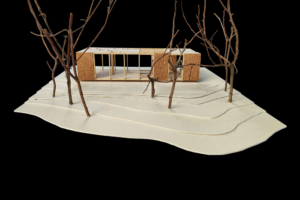
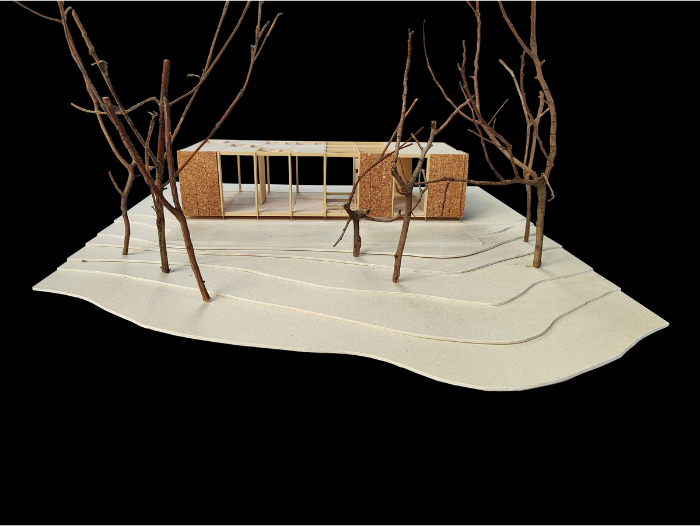
- The Casa Bosc project explores a lightweight, modular and prefabricated timber construction system designed to reduce the environmental impact of housing while making it easier to build and adapt to different contexts. The project has been developed by researchers from the Architectural Rehabilitation and Restoration Research Group (REARQ) at the Universitat Politècnica de Catalunya - BarcelonaTech (UPC) and the company ÀGORA.
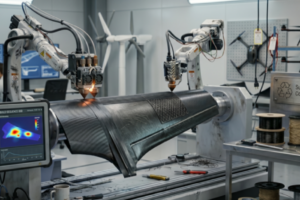
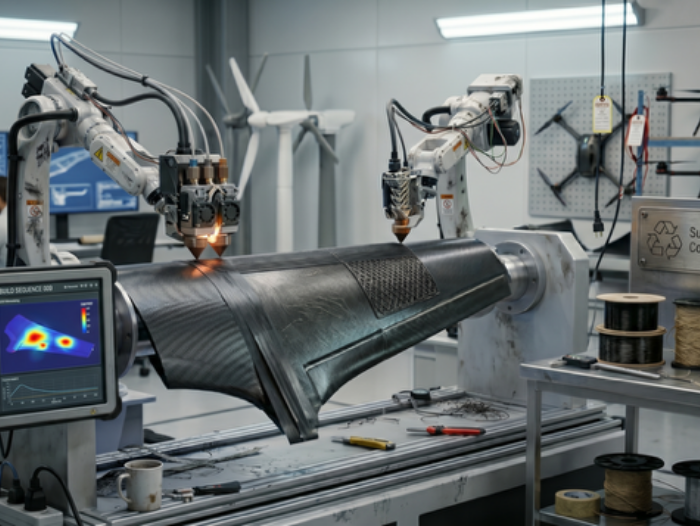
- The Control, Data and Artificial Intelligence (CoDAlab) research group at the Universitat Politècnica de Catalunya - BarcelonaTech (UPC) is taking part in the ATHENS project, which is developing recyclable thermoplastic composite materials with advanced real-time monitoring systems to improve the manufacture, safety and service life of lightweight structures.
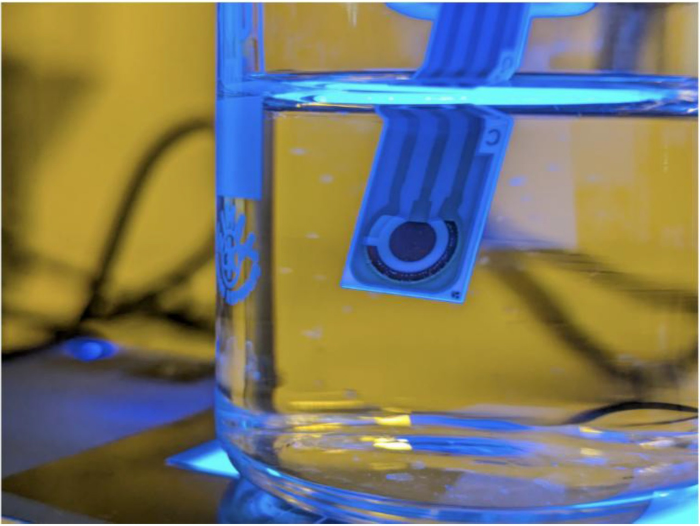
- The MICROTECH LAB - Microtechnology for the Industry research subgroup, part of the Centre for Advanced Technologies in Mechanics (CATMech) at the Universitat Politècnica de Catalunya - BarcelonaTech (UPC), is leading the technical development of a minimally invasive platform to monitor biomarkers and physiological indicators related to stress and emotional wellbeing.
- A research team from the Universitat Politècnica de Catalunya - BarcelonaTech (UPC) has participated in the M3LEC project, coordinated by the Centro de Astrobiología (CAB), a joint centre of the Spanish National Research Council (CSIC) and the Instituto Nacional de Técnica Aeroespacial (INTA), with the Universidad de Sevilla (US) / Instituto de Microelectrónica de Sevilla (IMSE) also participating. M3LEC aimed to contribute to the characterisation of the Martian atmosphere and meteorology, and to investigate new instrumentation for future planetary exploration missions.