

UPC technology to reduce the fuel consumption of the Open Arms humanitarian ship
October 1, 2024
USEFUL: A car equipped with AI and optical sensors that will collect vast amounts of data for autonomous driving
October 25, 202402/10/2024
The Technological Development Center for Remote Acquisition and Data Processing System (SARTI) at the Universitat Politècnica de Catalunya - BarcelonaTech (UPC), has participated in the development of a new model of buoys to record ocean currents and temperatures, as part of the European project Multi-Sensor Extra Light Oceanography Apparatus (MELOA). This is a DRIFTER, or a low-cost, low-power surface drifting buoy, which is easy to use, impact-resistant, multi-purpose, multi-sensorial, and very lightweight. It is designed to be used in all aquatic environments, from the deep sea to inland waters, including coastal areas, riverbanks, and wave-breaking zones.
The device has been developed as an improvement on the WAVY device, conceived by the Faculty of Engineering at the University of Porto, which was used to measure surface circulation forced by wave breaking, including the detailed structure of rip currents and littoral drift. The philosophy behind the WAVY device has been essentially respected: a small-sized sphere with enough space to house the power source, GPS receiver, communication modules, antennas, sensors, and data processor; optimised buoyancy to prevent the device’s trajectory from responding to wind instead of currents, while providing the right exposure of the antennas to ensure GPS signal acquisition at the required speed and reliable near real-time communications.
Given the low influence of wind on the movement of drifting devices, these devices offer an effective and cost-efficient way to monitor surface currents and dynamic surface characteristics anywhere in the global ocean. By equipping the devices with thermistors (a type of resistor that varies with temperature) at two different levels, it becomes possible to monitor the "near-surface temperature" and vertical temperature gradients near the surface.
These in situ measurements are invaluable for the calibration/validation of current surface oceanographic models and satellite-derived sea data. This is the case for the GEOSS and Copernicus programs, which study surface currents and sea temperatures through satellite measurements and require in situ data to validate their results.
The MELOA project is developed under the Horizon 2020 program and aims to improve current ocean observation and monitoring systems. The consortium is made up of nine other partners, has lasted 4 and a half years, and has a total budget of 4.7 million euros.


Topic
You want to know more?
Related Projects
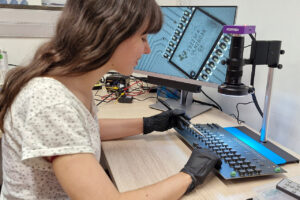
- A team from the Matrix Analysis and Discrete Potential Theory (MAPTHE) research group at the Universitat Politècnica de Catalunya - BarcelonaTech (UPC), and the Department of Mathematics at CUNEF Universidad in Madrid, have participated in the development of MARIA, a prototype of a portable, flexible and radiation-free device designed to improve the early detection of breast cancer. The device can identify tumours through electrical conductivity, with the aim of enabling its future use in primary care settings.
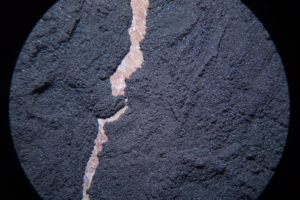
- The Research Group in Smart and Sustainable Resources and Industries (RIIS) at the Universitat Politècnica de Catalunya - BarcelonaTech (UPC) is developing the ZeroCarbonPave project, which aims to assess the feasibility of incorporating biochar as filler and/or as the fine fraction of granular material in bituminous mixtures, with the objective of reducing the carbon footprint associated with the manufacture and laying of road pavements.
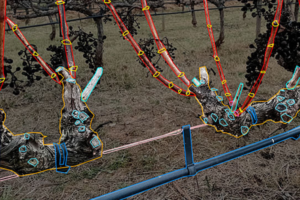
- The Center for Industrial Equipment Design (CDEI-UPC) at the Universitat Politècnica de Catalunya - BarcelonaTech (UPC) is participating in a cross-border project aimed at promoting the use of advanced digital technologies in viticulture in regions on both sides of the Pyrenees. The initiative seeks to improve specialist training, technical advice and decision-making in vineyard management.
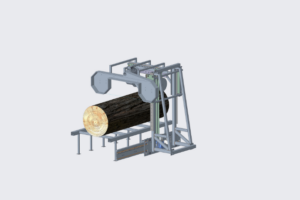
- The Centre for Industrial Equipment Design (CDEI) at the Universitat Politècnica de Catalunya - BarcelonaTech (UPC), together with the IRI, Institut de Robòtica i Informàtica Industrial (CSIC-UPC), is participating in the development of a pre-commercial prototype of an automatic portable sawmill that integrates computer vision, artificial intelligence and computer numerical control to improve productivity, efficiency and safety in local wood processing for the company Envall Coop. S.L.