

Sustainable 3D Printing Resins Derived from Plant-Based Sources
May 23, 2025
An innovative seawater irrigation system without filtration or desalination for agriculture and gardening
June 16, 202530/05/2025
The Environmental Engineering (ENMA) research group leads the WhATTer project with the aim of developing an innovative and sustainable solution for the treatment of textile wastewater through an electrochemical/alkaline electrolysis system that allows for simultaneous hydrogen production. The project is carried out in collaboration with the Textile Technology (TECTEX) and Polymeric Materials and Textile Chemistry (POLQUITEX) research groups at the facilities of the Institute of Textile Research and Industrial Cooperation of Terrassa (INTEXTER) at the Universitat Politècnica de Catalunya - BarcelonaTech (UPC).
In the European Union, textiles are the fourth industrial sector in terms of water consumption and the fifth largest emitter of greenhouse gases. The textile industry requires large amounts of water and energy during its wet processes, such as pretreatment (bleaching, mercerization), dyeing, and finishing. Wet processes carry alkalis, salts, and poorly biodegradable dyes that must be removed before discharging the effluent into water bodies. However, their properties make them ideal for treatment using electrochemical techniques, generating hydrogen as a by-product — a fact that has so far been overlooked.
In addition, wet processes require heating large volumes of water, making natural gas the main energy source consumed, which constitutes a significant source of CO₂ emissions. In order to move forward in line with the ecological transition, the sector must achieve greater efficiency in the use of water and compounds and seek alternative methods for treating residual effluents while reducing the use of fossil fuels.
In this context, the WhATTer project aims to improve textile industry processes through an electrochemical system for wastewater treatment to generate green hydrogen, reducing dependence on fossil fuels and increasing efficiency in water use. The proposed method contributes to the circular economy, CO₂ emissions reduction, and improved sustainability, including water recirculation and the use of hydrogen as a heat source.
This will be achieved through an electrochemical treatment method with simultaneous hydrogen production, similar to alkaline electrolysis (a technology that allows hydrogen to be produced from water using electricity). The new electrochemical reactor enables the treatment of two types of water, since the anode and cathode (the electrodes where electrochemical reactions occur) are separated. On one side, at the anode, industrial wastewater is purified by oxidizing organic compounds that are not easily removed in urban treatment plants. In the other compartment, at the cathode, pure hydrogen is generated by water reduction. The innovation lies in this dual process, where wastewater is treated while hydrogen is obtained as a valuable energy vector by-product.
Once the hydrogen is generated, its direct use is proposed by injecting it directly into a natural gas pipeline. Thanks to the implementation of this method, part of the water and useful components (such as salts and alkalis) can be recovered, and the generated hydrogen can be used as an energy source. In this way, waste is reduced, clean energy is produced, and the sustainability of the sector is improved.
The WhATTer project is developed in several phases starting with the analysis of water and energy consumption in the textile industry and the characterization of generated effluents, in order to identify the best application cases. Next, an electrochemical cell is tested to remove contaminants, generate hydrogen, and reuse water, optimizing the system through the selection of efficient materials. With the results obtained, an industrial-scale prototype will be designed, and an economic and environmental assessment of the system and the potential use of hydrogen in the textile industry will be carried out.
The electrochemical reactor has already been validated at laboratory scale with real industrial waters, and work is underway on scaling the reactor for the construction of a semi-industrial prototype with the goal of raising the technology readiness level with engineering firms and various end users.
Finally, the ENMA research group plans to transfer the results obtained in the WhATTer project to other industrial sectors such as the chemical and pharmaceutical industries, as well as in water treatment for drinking and disinfection purposes. In this regard, the MesH project has been launched (Simultaneous Electrolysis Method for water treatment and Hydrogen recovery), a "Llavor" project within the Knowledge Industry Grants Call of the Government of Catalonia.
Impact
WhATTer aims to find the best materials to improve efficiency in both processes, analyze the environmental and economic benefits compared to classical treatment methodologies, define a design to scale up the system for industrial use, and analyze the potential of hydrogen use in the textile industry.
WhATTer will decisively contribute to making the textile industry more sustainable, offering a technological alternative that reduces resource use and emissions. Its application will facilitate compliance with four key objectives of the European green transition: circular economy, climate change mitigation, sustainable water use, and pollution prevention.
Funding
The WhATTer project is funded under the State Plan for Scientific and Technical Research and Innovation 2021–2023 and has a budget of €115,000. It has a duration of three years (December 2022 – August 2025).


Related Projects
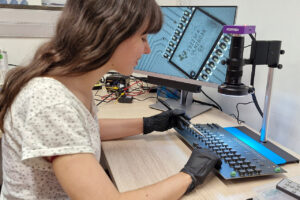
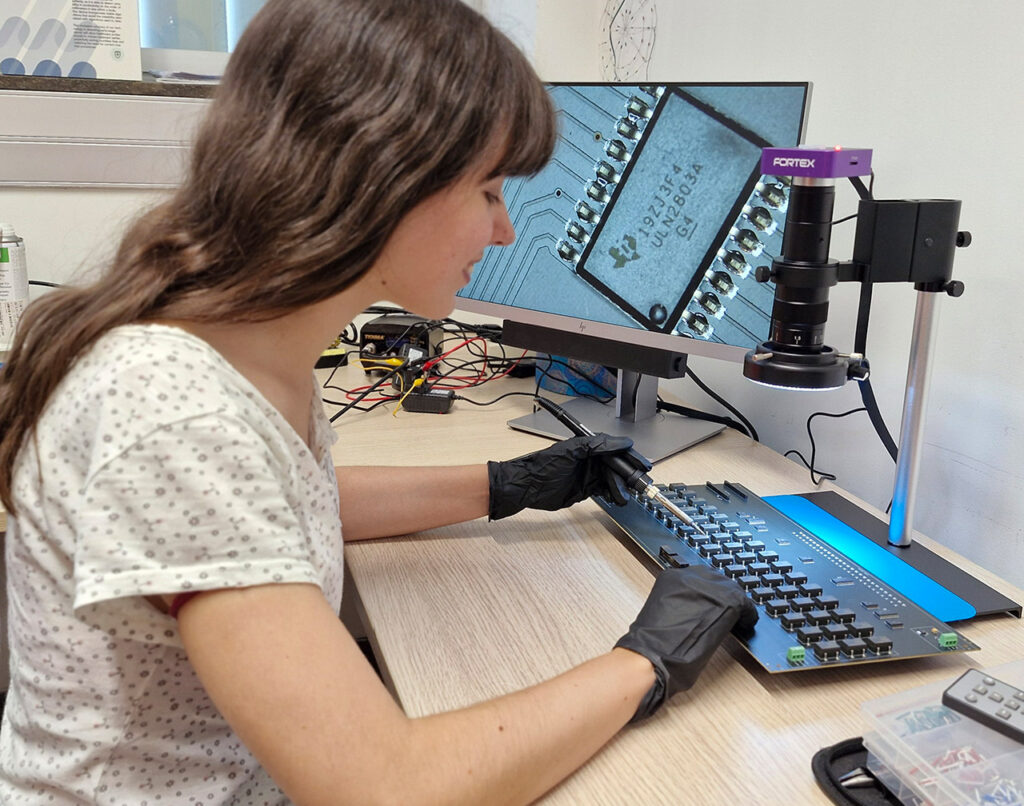
- A team from the Matrix Analysis and Discrete Potential Theory (MAPTHE) research group at the Universitat Politècnica de Catalunya - BarcelonaTech (UPC), and the Department of Mathematics at CUNEF Universidad in Madrid, have participated in the development of MARIA, a prototype of a portable, flexible and radiation-free device designed to improve the early detection of breast cancer. The device can identify tumours through electrical conductivity, with the aim of enabling its future use in primary care settings.
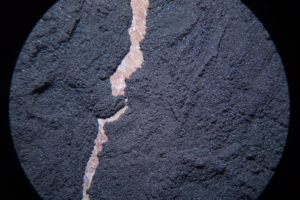
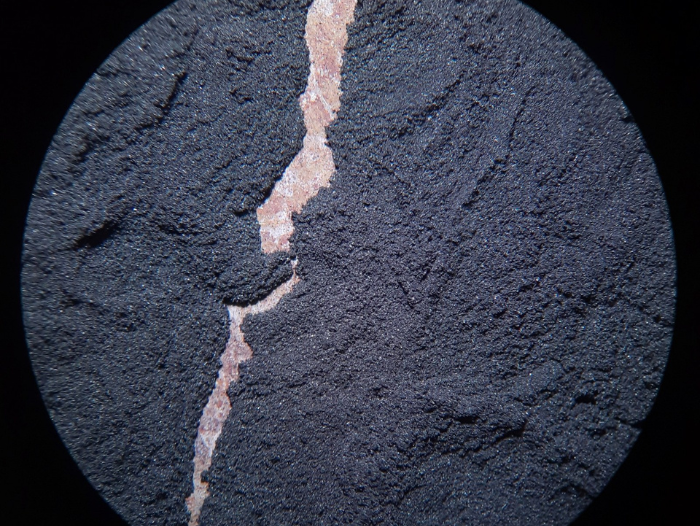
- The Research Group in Smart and Sustainable Resources and Industries (RIIS) at the Universitat Politècnica de Catalunya - BarcelonaTech (UPC) is developing the ZeroCarbonPave project, which aims to assess the feasibility of incorporating biochar as filler and/or as the fine fraction of granular material in bituminous mixtures, with the objective of reducing the carbon footprint associated with the manufacture and laying of road pavements.
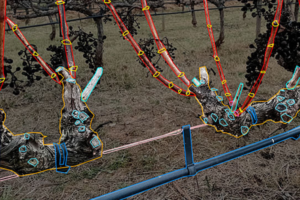
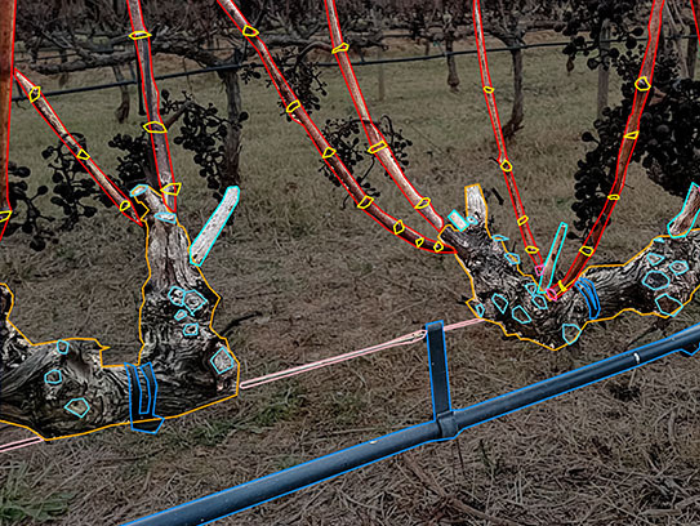
- The Center for Industrial Equipment Design (CDEI-UPC) at the Universitat Politècnica de Catalunya - BarcelonaTech (UPC) is participating in a cross-border project aimed at promoting the use of advanced digital technologies in viticulture in regions on both sides of the Pyrenees. The initiative seeks to improve specialist training, technical advice and decision-making in vineyard management.
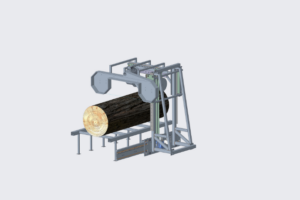
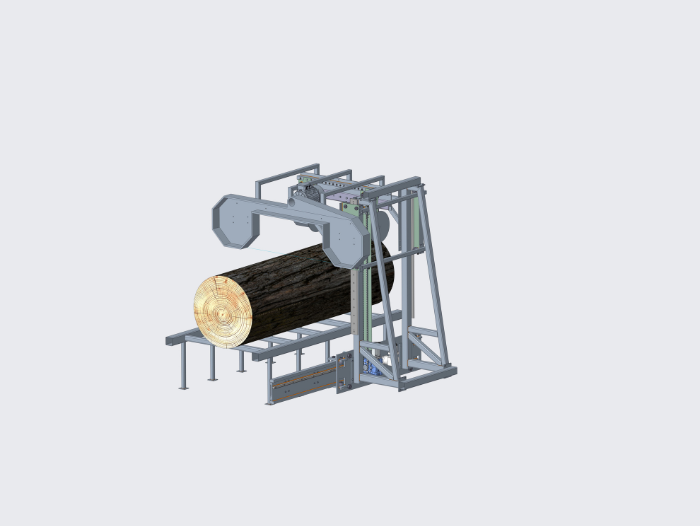
- The Centre for Industrial Equipment Design (CDEI) at the Universitat Politècnica de Catalunya - BarcelonaTech (UPC), together with the IRI, Institut de Robòtica i Informàtica Industrial (CSIC-UPC), is participating in the development of a pre-commercial prototype of an automatic portable sawmill that integrates computer vision, artificial intelligence and computer numerical control to improve productivity, efficiency and safety in local wood processing for the company Envall Coop. S.L.