

Hydroless: Reducing water consumption in production plants through the use of artificial intelligence and digital twins
October 2, 2025
E-MED: Towards a more efficient and sustainable public transport in the Euro-Mediterranean region
October 9, 202507/10/2025
The company Trace ID and the group Twin Investors, in collaboration with the Textile Technology research group (TECTEX), which is part of the Institute of Textile Research and Industrial Cooperation of Terrassa (INTEXTER) at the Universitat Politècnica de Catalunya - BarcelonaTech (UPC), are developing electronic devices to identify, monitor, and study the traceability of the products in which they are embedded.
In the textile industry, the use of RFID (Radio Frequency Identification) devices is a common practice to control and track products during their manufacturing and commercialisation. However, these systems present significant limitations. At present, RFID tags are incorporated into garments at the end of the production chain, either as a detachable external label or, in more sophisticated versions, as an adhesive placed inside. In both cases, these devices can be easily removed, which hinders both recycling and the traceability of the textile product throughout its life cycle.
In response to this challenge, the INVISITAGS project has been launched with the aim of developing a new generation of UHF-RFID (Ultra High Frequency Radio Frequency Identification) tags that can be integrated into the seams of garments and remain hidden within the final product. These UHF-RFID tags are electronic devices that use radio frequency to identify, monitor and trace the items in which they are embedded. They consist of an integrated circuit that stores information and an antenna that enables communication with the environment through electromagnetic waves.
The goal is for these tags to be integrated in the early stages of the production process, to withstand the demanding conditions of the textile industry, and to allow continuous monitoring throughout the useful life of the product, thereby promoting the reuse and recycling of textile materials. In addition, the project aims to assess the environmental impact of the new tags through an eco-audit and to analyse their economic feasibility within the textile sector.
Budget and Funding
With a budget of €308,294.43, the project started in June 2024 and is expected to conclude in June 2027.

Technology
Topic
You want to know more?
Related Projects
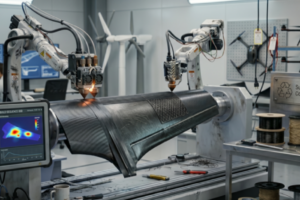
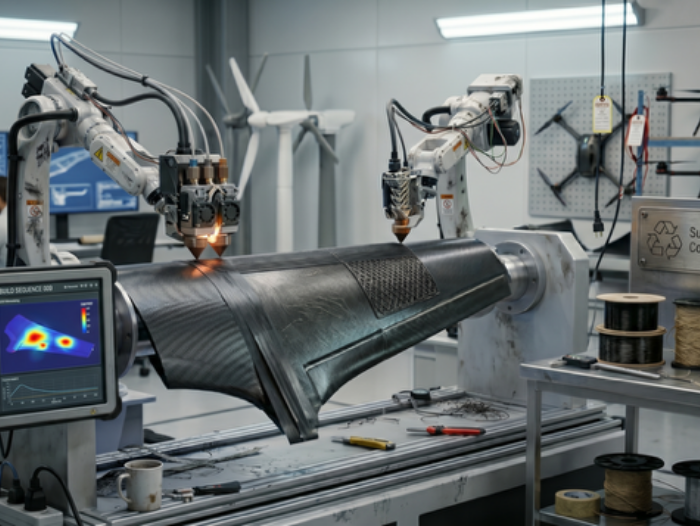
- The Control, Data and Artificial Intelligence (CoDAlab) research group at the Universitat Politècnica de Catalunya - BarcelonaTech (UPC) is taking part in the ATHENS project, which is developing recyclable thermoplastic composite materials with advanced real-time monitoring systems to improve the manufacture, safety and service life of lightweight structures.
- The MICROTECH LAB - Microtechnology for the Industry research subgroup, part of the Centre for Advanced Technologies in Mechanics (CATMech) at the Universitat Politècnica de Catalunya - BarcelonaTech (UPC), is leading the technical development of a minimally invasive platform to monitor biomarkers and physiological indicators related to stress and emotional wellbeing.
- A research team from the Universitat Politècnica de Catalunya - BarcelonaTech (UPC) has participated in the M3LEC project, coordinated by the Centro de Astrobiología (CAB), a joint centre of the Spanish National Research Council (CSIC) and the Instituto Nacional de Técnica Aeroespacial (INTA), with the Universidad de Sevilla (US) / Instituto de Microelectrónica de Sevilla (IMSE) also participating. M3LEC aimed to contribute to the characterisation of the Martian atmosphere and meteorology, and to investigate new instrumentation for future planetary exploration missions.
- The Interdisciplinary Group on Building Science and Technology (GICITED) and the Energy, Catalysis, Process and Reaction Engineering (ENCORE) research group at the Universitat Politècnica de Catalunya - BarcelonaTech (UPC) are participating in the European ArchiSpace project, to develop infrastructure prototypes for human settlements in extraterrestrial environments using materials and conditions analogous to those on the Moon and Mars.