


H2GLASS: Decarbonising the glass and aluminium industry through hydrogen technologies and advanced energy management systems
June 19, 2026
MagNa: Recovering valuable raw materials from seawater
June 25, 202623/06/2026
The Center for Industrial Diagnostics (CDIF) and the Energy Processing and Integrated Circuits (EPIC) group at the Universitat Politècnica de Catalunya - BarcelonaTech (UPC) are participating in FLEXHYBAT (Design and control of flexible hydropower plants by hybridisation with second life batteries), a project exploring the hybridisation of hydropower plants with second-life batteries to improve their flexibility, efficiency and durability.
The energy transition is transforming the operation of the electricity grid. The growing penetration of variable renewable energies requires plants capable of responding rapidly to changes in demand and providing grid ancillary services, such as frequency regulation. In this context, flexible hydropower plants play a key role in providing stability and flexibility to the system.
However, this new operating function has a technological cost. When turbines operate across wider operating ranges and in off-design conditions, dynamic loads and wear increase in critical hydromechanical components, such as the turbine runner or the flow-regulation mechanisms. This may reduce the service life of equipment, extend overhaul periods and increase operation and maintenance costs. The challenge, therefore, is to find solutions that enable grid services to be provided with greater flexibility without penalising the reliability or profitability of the plant.
FLEXHYBAT proposes a solution based on the hybridisation of hydropower turbines with second-life battery storage systems. These batteries can act as a buffer between the rapid demands of the grid and the mechanical response of the turbine, absorbing part of the fluctuations and reducing continuous movements in hydromechanical components. In this way, the hybrid system can help reduce wear, improve operational efficiency and provide a faster and more precise response to ancillary services.
The project combines modelling, grid simulation, digital twins, experimental battery characterisation and validation through reduced-scale laboratory systems and hardware-in-the-loop (a testing methodology in which part of the system is real —in this case the components— and the rest of the system is represented through a real-time simulation). It also develops low-complexity but accurate models to describe the performance and ageing of second-life batteries, as well as methodologies to reduce testing times and facilitate their reuse. Another relevant element is the standardisation of second-life battery data sheets, with the aim of providing greater safety and traceability to the reuse process.
The expected results suggest that a relatively small battery could have a very significant impact: a battery power of approximately 4% of the turbine power is considered an optimum point, and this configuration can reduce by up to 50% the accumulated movement of mechanical actuators during automatic frequency regulation services. Significant reductions are also expected in stress cycles in components such as the guide-vane mechanism and the turbine runner.
UPC’s contribution focuses on two complementary areas. The CDIF contributes its knowledge of the operating principles of hydraulic turbines, diagnosis, degradation mechanisms, dynamic modelling and the assessment of the impact of hybridisation on the service life of critical components. EPIC, for its part, contributes its expertise in the thermal and electrical characterisation of batteries, modelling, ageing estimation and the analysis of second-life batteries. This combination makes it possible to address the challenge from an integrated perspective, connecting the hydromechanical behaviour of the plant with the performance of the storage system.
The project uses the Sallente-Estany Gento pumped-storage hydropower plant, located in La Torre de Cabdella, in Pallars Jussà, as its demonstrator. The facility makes it possible to analyse, in a real environment, the operating conditions, storage needs and potential impact of hybridisation on plant flexibility.
Consortium, Budget and Funding
FLEXHYBAT is coordinated jointly by UPC and the Universidad de Oviedo (UNIOVI). The project is funded by the Ministerio de Ciencia, Innovación y Universidades (PID2022-139479OB-C21) under the Plan Estatal de Investigación Científica y Técnica y de Innovación 2021-2023 (Agencia Estatal de Investigación). It has a duration of three years (September 2023 - August 2026) and a budget of 520,000 euros.


Sector
Topic
You want to know more?
Related Projects
- A team from the Matrix Analysis and Discrete Potential Theory (MAPTHE) research group at the Universitat Politècnica de Catalunya - BarcelonaTech (UPC), and the Department of Mathematics at CUNEF Universidad in Madrid, have participated in the development of MARIA, a prototype of a portable, flexible and radiation-free device designed to improve the early detection of breast cancer. The device can identify tumours through electrical conductivity, with the aim of enabling its future use in primary care settings.
- The Research Group in Smart and Sustainable Resources and Industries (RIIS) at the Universitat Politècnica de Catalunya - BarcelonaTech (UPC) is developing the ZeroCarbonPave project, which aims to assess the feasibility of incorporating biochar as filler and/or as the fine fraction of granular material in bituminous mixtures, with the objective of reducing the carbon footprint associated with the manufacture and laying of road pavements.
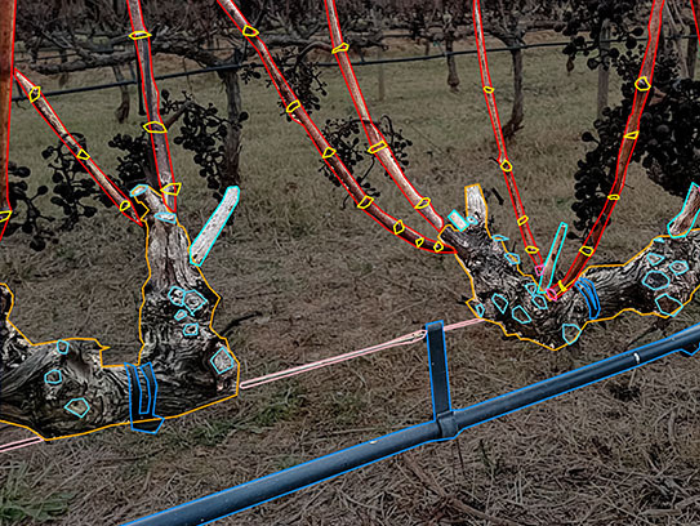
- The Center for Industrial Equipment Design (CDEI-UPC) at the Universitat Politècnica de Catalunya - BarcelonaTech (UPC) is participating in a cross-border project aimed at promoting the use of advanced digital technologies in viticulture in regions on both sides of the Pyrenees. The initiative seeks to improve specialist training, technical advice and decision-making in vineyard management.
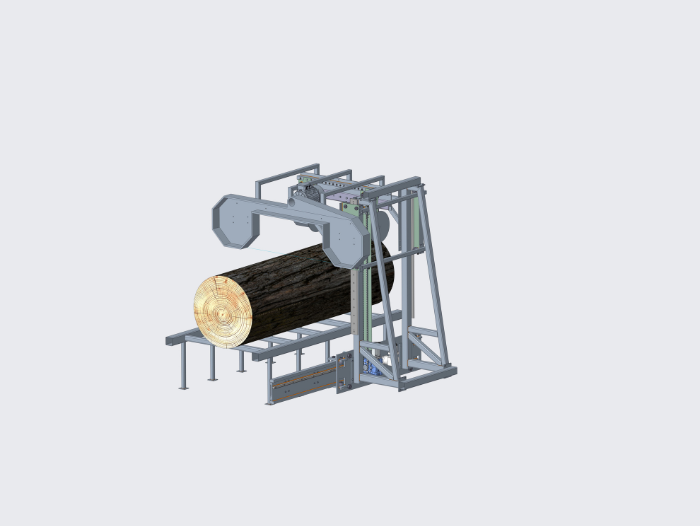
- The Centre for Industrial Equipment Design (CDEI) at the Universitat Politècnica de Catalunya - BarcelonaTech (UPC), together with the IRI, Institut de Robòtica i Informàtica Industrial (CSIC-UPC), is participating in the development of a pre-commercial prototype of an automatic portable sawmill that integrates computer vision, artificial intelligence and computer numerical control to improve productivity, efficiency and safety in local wood processing for the company Envall Coop. S.L.