


ArchiSpace: Sustainable architecture to design future human habitats on the Moon and Mars
September 1, 2026
EmotionalSigns: biosensors to measure stress and emotional state in people with communication difficulties
September 8, 202601/09/2026
A research team from the Universitat Politècnica de Catalunya - BarcelonaTech (UPC) has participated in the M3LEC project, coordinated by the Centro de Astrobiología (CAB), a joint centre of the Spanish National Research Council (CSIC) and the Instituto Nacional de Técnica Aeroespacial (INTA), with the Universidad de Sevilla (US) / Instituto de Microelectrónica de Sevilla (IMSE) also participating. M3LEC aimed to contribute to the characterisation of the Martian atmosphere and meteorology, and to investigate new instrumentation for future planetary exploration missions.
The project was divided into three complementary subprojects. In the first, which retained the name of the overall project, INTA-CAB (the project coordinator) led the scientific exploitation and operational support of the REMS, TWINS and MEDA environmental stations on Mars. In the second, M3SENS, the UPC was responsible for designing the next generation of wind sensors and thermal probes to study the interaction between the planet’s surface and subsurface. In the third, M3CHIP, the Universidad de Sevilla-IMSE developed an application-specific integrated circuit (ASIC) designed to process signals from the miniaturised wind sensor under extreme conditions. The circuit is radiation-resistant (radiation hardened by design) and capable of operating across the extreme temperature range found on Mars.
M3SENS, led by the UPC’s Micro and Nanotechnologies for Solar Energy Group (MNT-Solar), focused on developing a new sensor suite (an integrated set of different sensors that work together) for planetary exploration. The solution focused particularly on the Martian environment, while also addressing scientific and technological challenges associated with other bodies such as the Moon and asteroids, and other environments of interest for future space missions. Researchers from the TUAREG) and the RF&MW research groups at the UPC also participated in this subproject.
Planetary exploration requires increasingly accurate, robust and miniaturised instruments that can operate under extreme conditions and provide reliable information on interactions between the atmosphere, surface and subsurface. On Mars, reliably measuring local surface winds and the thermophysical properties of regolith (the layer of loose, fragmented material covering the surface of a planetary body) is essential to interpreting the planet’s evolution, preparing future missions and improving the safety and efficiency of systems deployed in the field. These developments also open up new opportunities in advanced instrumentation, sensors for extreme environments and miniaturised sensing technologies.
Against this background, M3SENS proposes a sensor suite that helps to characterise the surface-subsurface interface in different planetary environments. The project includes a new-generation wind sensor for the Martian atmosphere, building on the wind sensors in the REMS, TWINS and MEDA instruments developed for NASA’s Mars Science Laboratory, InSight and Mars 2020 missions. It also includes a thermal probe for regolith to measure the thermophysical properties of planetary material, together with the exploration of a new microwave probe for regolith characterisation.
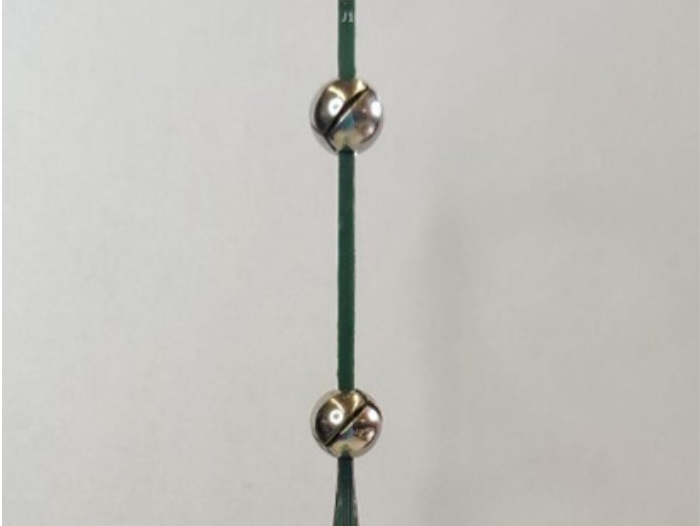
The project’s innovation lies in combining advanced sensing technologies, simulation, control electronics and high-frequency thermal characterisation techniques. Within this framework, techniques based on microelectromechanical systems (MEMS, Micro-Electro-Mechanical Systems) were developed to increase the bandwidth of the wind sensors. A key part of the UPC contribution was the development and technological maturation of a spherical 3D wind sensor for the Martian atmosphere, with the aim of advancing the technology to a maturity level close to validation in real or representative environments. The project also explored new high-frequency technologies for monitoring air flows over surfaces, with space and aeronautical applications.
For the spherical wind sensor for Mars, the project carried out system-level tests using the ASIC (Application-Specific Integrated Circuit) developed by US-IMSE, together with mechanical simulations for qualification and high-fidelity computational fluid dynamics simulations to understand how the sensor responds to wind according to its geometry. It also developed a regolith sensor with electronic control systems to characterise thermophysical properties in ice, Martian and lunar regolith simulants, and meteorite simulants.
Budget and Consortium
M3SENS had a budget of €151,250, funded by the Spanish State Research Agency through the State Knowledge Generation Programme. The project ran for three years (January 2022 to December 2024, extended to December 2025).

Related Projects
- The MICROTECH LAB - Microtechnology for the Industry research subgroup, part of the Centre for Advanced Technologies in Mechanics (CATMech) at the Universitat Politècnica de Catalunya - BarcelonaTech (UPC), is leading the technical development of a minimally invasive platform to monitor biomarkers and physiological indicators related to stress and emotional wellbeing.
- The Interdisciplinary Group on Building Science and Technology (GICITED) and the Energy, Catalysis, Process and Reaction Engineering (ENCORE) research group at the Universitat Politècnica de Catalunya - BarcelonaTech (UPC) are participating in the European ArchiSpace project, to develop infrastructure prototypes for human settlements in extraterrestrial environments using materials and conditions analogous to those on the Moon and Mars.
- A team from the Matrix Analysis and Discrete Potential Theory (MAPTHE) research group at the Universitat Politècnica de Catalunya - BarcelonaTech (UPC), and the Department of Mathematics at CUNEF Universidad in Madrid, have participated in the development of MARIA, a prototype of a portable, flexible and radiation-free device designed to improve the early detection of breast cancer. The device can identify tumours through electrical conductivity, with the aim of enabling its future use in primary care settings.
- The Research Group in Smart and Sustainable Resources and Industries (RIIS) at the Universitat Politècnica de Catalunya - BarcelonaTech (UPC) is developing the ZeroCarbonPave project, which aims to assess the feasibility of incorporating biochar as filler and/or as the fine fraction of granular material in bituminous mixtures, with the objective of reducing the carbon footprint associated with the manufacture and laying of road pavements.