

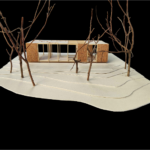
Casa Bosc: a modular timber housing system combining prefabrication, circularity, low cost and minimal intervention in the landscape
October 8, 2026
THERMOPOLIS: Street-Level Heat Maps to Improve Urban Climate Adaptation
October 26, 202615/10/2026
Researchers from the Computer Networks and Distributed Systems (CNDS) research group at the Universitat Politècnica de Catalunya - BarcelonaTech (UPC) are developing new artificial intelligence-based solutions to obtain more accurate and reliable data from IoT sensor networks, with applications in air quality monitoring, anomaly detection and industrial predictive maintenance.
More affordable sensors, more reliable data
Continuous environmental monitoring is becoming increasingly important for environmental management, public health and the optimisation of industrial processes. Low-cost sensor networks offer the possibility of deploying large-scale measurement systems with lower initial investment. However, they face a significant challenge: the data they generate often contain errors, noise or missing values, limiting their reliability and usefulness for decision-making.
To overcome these limitations, the MONET project (intelligent monitoring networks for environmental and industrial applications) is developing new artificial intelligence (AI) techniques to improve data quality and make use of information collected across an entire sensor network.
The aim is to facilitate the deployment of more accurate, affordable and efficient monitoring systems in both urban environments and industrial facilities.
Artificial intelligence to turn data into valuable information
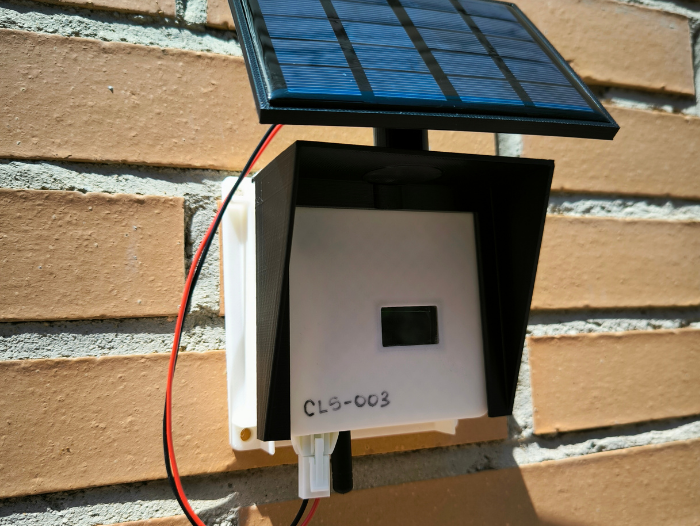
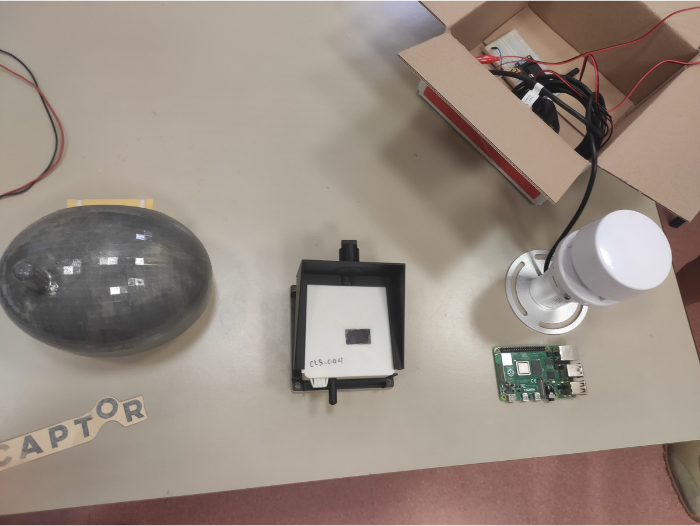
MONET combines IoT sensors with a cloud-based platform called CAPTOR-6, which can automatically calibrate, clean and reconstruct the data collected.
The main innovation lies in applying different AI techniques, including generative models, few-shot learning, explainable AI and physics-informed models, to improve measurement quality. The system also uses information from all sensors across the network to identify errors and fill in missing data.
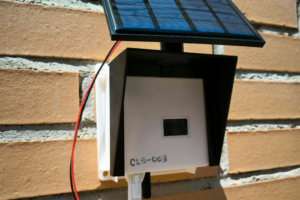
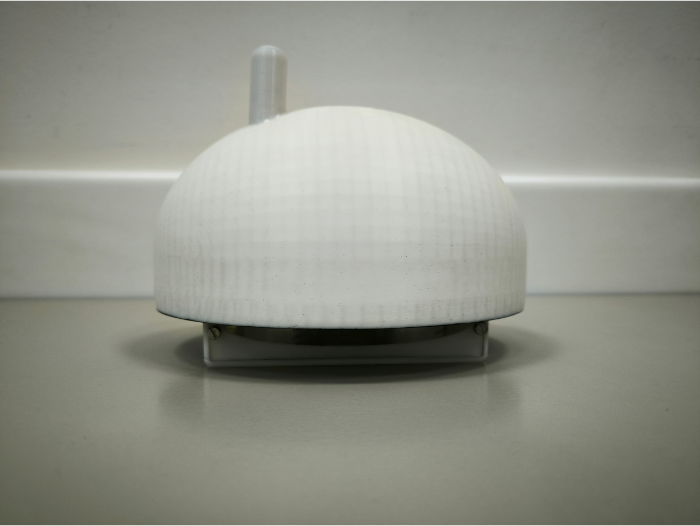
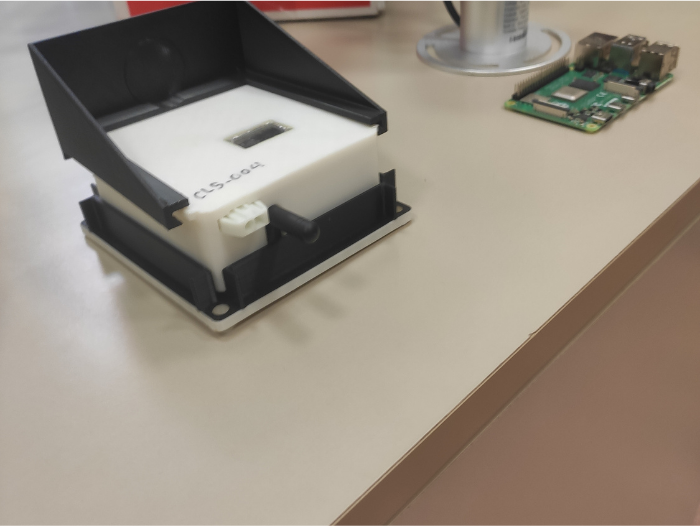
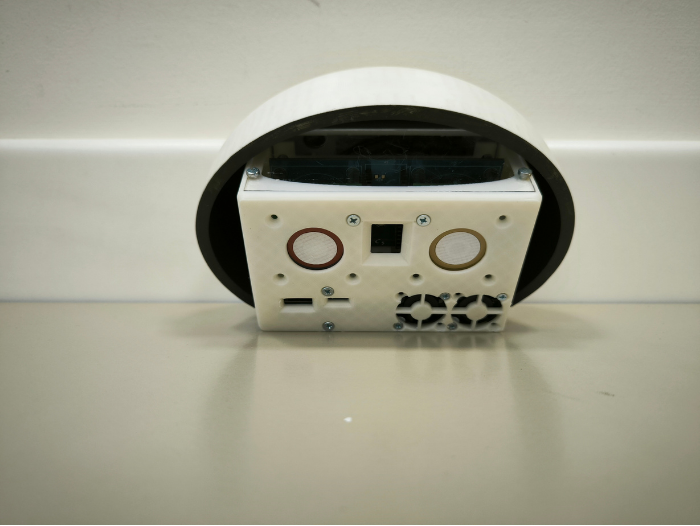
The technology is being validated through MONET-1, a network of custom-developed measurement nodes deployed in two types of locations. Firstly, alongside official reference monitoring stations, where sensor accuracy is assessed in accordance with the European technical specification CEN/TS 17660-1:2021. Secondly, in volunteers' homes, schools and public buildings across Barcelona, where pollutants such as ozone, nitrogen dioxide (NO₂), particulate matter and black carbon are monitored.
Expected results include achieving Class 2 data quality under European standards (a level attained by few commercial devices), an improvement of at least 10% in calibration, error detection and data reconstruction through network-wide analysis, and the generation of black carbon exposure maps for Barcelona with a spatial resolution of 500 metres or better.
The project also aims to halve the solar panel area required to power monitoring nodes and publish open datasets containing validated hourly measurements.
Industrial applications: anticipating anomalies and reducing false alarms
Beyond environmental monitoring, MONET is transferring these technologies to industry through intelligent anomaly detection and predictive maintenance systems.
One of the planned applications involves monitoring cold storage facilities, where algorithms can identify abnormal behaviour and help anticipate potential incidents. These systems are designed to operate directly on local devices, without requiring a permanent cloud connection.
The project aims to improve anomaly detection by at least 5%, reduce false alarms and deliver at least two operational industrial solutions.
This approach creates opportunities for companies that need to continuously monitor equipment and facilities, providing more reliable monitoring systems with less dependence on cloud infrastructure.
Budget and other partners
MONET has a planned duration of 36 months and a budget of €210,000, under the 2025 Knowledge Generation Projects call of the Spanish State Research Agency (AEI), co-funded by the European Union.
The project builds on previous collaborations with AKO Electromecánica, with which the research group holds a joint European patent, as well as REPSOL and MENSOFT. Other collaborating organisations include New York University, the Barcelona Supercomputing Center – Centro Nacional de Supercomputación (BSC-CNS) and the Institute of Environmental Assessment and Water Research (IDAEA-CSIC).
You want to know more?
Related Projects
- The UPC Technology Center (CIT UPC) is taking part in the European project KnowVAlTE, which will develop tools, services and methodologies to improve knowledge transfer and make it easier to apply research results in business and society.
- The Communication Networks and Distributed Systems (CNDS) research group at the Universitat Politècnica de Catalunya - BarcelonaTech (UPC) is developing an innovative methodology that combines sensors, artificial intelligence and thermal imaging to identify differences in thermal comfort across urban spaces and support decision-making in response to heatwaves.
- The Casa Bosc project explores a lightweight, modular and prefabricated timber construction system designed to reduce the environmental impact of housing while making it easier to build and adapt to different contexts. The project has been developed by researchers from the Architectural Rehabilitation and Restoration Research Group (REARQ) at the Universitat Politècnica de Catalunya - BarcelonaTech (UPC) and the company ÀGORA.
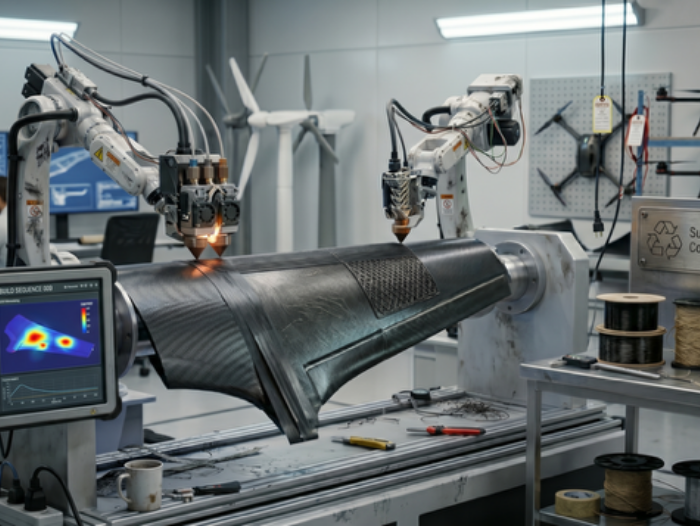
- The Control, Data and Artificial Intelligence (CoDAlab) research group at the Universitat Politècnica de Catalunya - BarcelonaTech (UPC) is taking part in the ATHENS project, which is developing recyclable thermoplastic composite materials with advanced real-time monitoring systems to improve the manufacture, safety and service life of lightweight structures.