
TECHNLOGICAL CAPABILITIES


Connectivity
- Communication protocols that guarantee considerable time constraints and offer a bounded latency along with high reliability and energy efficiency in fields such as IoT and industry 4.0.
- IoT mesh networks with low-power radios.
- IoT alert management system that enables users to handle different input channels, keep track of input device files, and send out alert messages.
- Decentralized computing and networking systems infrastructures based on cooperative resource coordination models.
- Adaptable, resilient, scalable software systems that exploit edge resources and networks for communications and computing infrastructures (cloud).
Security & Cybersecurity
- Real-time response and mitigation of the effects of cyberattacks across ICT supply chains, focused on the field of IoT.
- More functional and secure integrated circuits in fields such as IoT, cybersecurity, and supercomputing.
- Algorithms for the detection of physical and cyber attacks.
- Cybersecurity in the maritime industry.
- Monitoring of intelligent fire detection systems.
- High availability infrastructure.
- Intrusion detection and response mechanisms.
- Perception systems: vision to control and guide robots.
eHealth
- Surgical robots.
- Virtual reality and augmented reality for telerehabilitation.
- Low-cost devices for remote cardiovascular monitoring.
- Image processing for diagnosing injuries.
- Differential diagnosis in patients with Parkinson’s through biomechanical tests.
- Advanced non-intrusive remote health assessment.
- IoT medical devices.
- Biophotonics.
- Biosensors.
- WearableTech.
- Modeling of human body movement.
- Instrumentation. Biomedical signal processing.


Smart Farming
- Agriculture 4.0: systems for capturing and processing images and telecommunications systems based on data science.
- Application of Digital Twins for irrigated agriculture.
- Automation and mechanization of production processes in smart agriculture.
- Development of measurement systems in agriculture and communication of data with lower energy consumption.
- Remote sensing for outdoor crops using drones and satellites.
- Improvement of productivity with mobile robots.
- Design of agricultural machinery sensor-equipped.
- Livestock monitoring and disease detection using biometric sensors.
Robotic Process Automation
- Agriculture 4.0: systems for capturing and processing images and telecommunications systems based on data science.
- Application of Digital Twins for irrigated agriculture.
- Automation and mechanization of production processes in smart agriculture.
- Development of measurement systems in agriculture and communication of data with lower energy consumption.
- Remote sensing for outdoor crops using drones and satellites.
- Improvement of productivity with mobile robots.
- Design of agricultural machinery sensor-equipped.
- Livestock monitoring and disease detection using biometric sensors.
Edge and Cloud Computing
- Communication protocols that guarantee considerable time constraints and offer a bounded latency along with high reliability and energy efficiency in fields such as IoT and industry 4.0.
- IoT mesh networks with low-power radios.
- IoT alert management system that enables users to handle different input channels, keep track of input device files, and send out alert messages.
- Decentralized computing and networking systems infrastructures based on cooperative resource coordination models.
- Adaptable, resilient, scalable software systems that exploit edge resources and networks for communications and computing infrastructures (cloud)


Energy efficiency
- Internet architecture with new protocols, open software, and hardware aimed at Internet management in cases such as privacy by design, IoT, network optimization, e-commerce security, and energy efficiency.
- Smart, modular, and scalable batteries using big data analysis, artificial intelligence, and IoT.
- Energy management in smart factories.
- Light energy harvesting for autonomous sensors.
Smart Building & BIM
- Advanced optimization for monitoring errors in smart infrastructures.
- IoT platform using deep learning algorithms to bring benefits to smart homes.
- Measurements from the IoT platform of the social and environmental impact produced by U-Space.
- Modular sensors for identifying bridge structures under quasi-static loads.
- 3D printing of insulating composites useful in construction.
- Energy information in digital administration.
- SmartHome
Digital Twins
- Digital twin platform to improve the construction industry, optimize and increase productivity, reduce costs, and ensure safe working conditions using IoT.
- Open-source software to produce Digital Twins that operate on the edge (edge computing).
- AI-based platforms for Digital Twins.
- Digital Twins in the Blue Economy
- MobilityDigitalTwin


Industry 4.0
- Advanced production through automated technologies such as adaptive models, ATP/AFP, 3D printing, curved pultrusion profiles, hot stamping, innovative composite connections.
- Integration of drones with 4G and 5G mobile technologies.
- Predictive management and maintenance of machines using IoT platforms.
- Industrial automation and communication.
- Artificial intelligence.
- Intelligent monitoring of industrial processes.
- Energy savings through intelligent monitoring.
- Sensor systems and data extraction.
- Techniques to control and monitor the quality of the process/product.
- Flexible manufacturing processes.
- Advanced decision-making tools for Zero Defects Manufacturing (ZDM).
- Digital control with microprocessors and DSP.
- Human-machine collaboration.
- Computer vision.
- Human-machine communication interfaces (dialogue systems).
- Advanced information models for knowledge generation and learning.
Big Data Analytics
- Data analysis techniques to improve the accuracy of data acquired through low-cost sensors.
- Internet of Things (IoT) or Internet of People (IoP) connected between machines, sensors, and people, as well as the ability to transform data into usable and reliable information.
- Management of large amounts of data on devices and network equipment, as well as efficient and adaptable management of network infrastructure.
- Managing the resulting complexity of systems with massive volumes of data made available by next-generation, instantaneous, and widespread communication networks.
- Communication protocols that ensure significant temporal limitations and offer limited latency along with high reliability and energy efficiency in fields such as IoT and Industry 4.0.
- IoT mesh networks with low-power radios.
- Alert management system that allows users to manage different input channels, track device input files, and send alert messages.
- Decentralized computing and network system infrastructures based on cooperative resource coordination models.
- Adaptable, resilient, and scalable software systems that exploit edge resources and networks for communications and computing infrastructures (cloud).
Learn more about IoT here
PROJECTES RELACIONATS
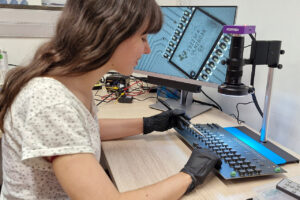
- A team from the Matrix Analysis and Discrete Potential Theory (MAPTHE) research group at the Universitat Politècnica de Catalunya - BarcelonaTech (UPC), and the Department of Mathematics at CUNEF Universidad in Madrid, have participated in the development of MARIA, a prototype of a portable, flexible and radiation-free device designed to improve the early detection of breast cancer. The device can identify tumours through electrical conductivity, with the aim of enabling its future use in primary care settings.
- The Research Group in Smart and Sustainable Resources and Industries (RIIS) at the Universitat Politècnica de Catalunya - BarcelonaTech (UPC) is developing the ZeroCarbonPave project, which aims to assess the feasibility of incorporating biochar as filler and/or as the fine fraction of granular material in bituminous mixtures, with the objective of reducing the carbon footprint associated with the manufacture and laying of road pavements.
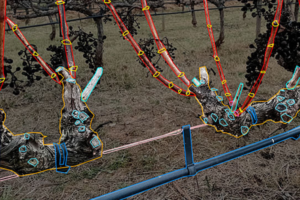
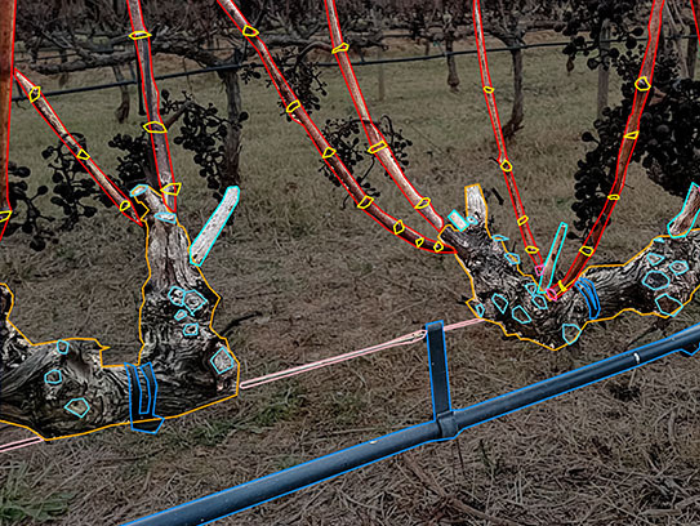
- The Center for Industrial Equipment Design (CDEI-UPC) at the Universitat Politècnica de Catalunya - BarcelonaTech (UPC) is participating in a cross-border project aimed at promoting the use of advanced digital technologies in viticulture in regions on both sides of the Pyrenees. The initiative seeks to improve specialist training, technical advice and decision-making in vineyard management.
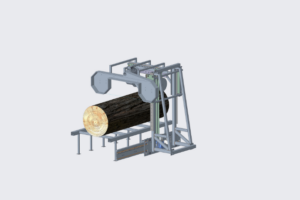
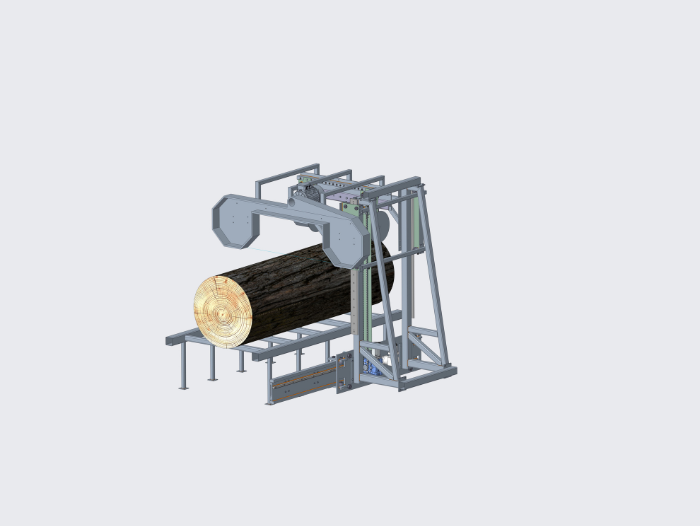
- The Centre for Industrial Equipment Design (CDEI) at the Universitat Politècnica de Catalunya - BarcelonaTech (UPC), together with the IRI, Institut de Robòtica i Informàtica Industrial (CSIC-UPC), is participating in the development of a pre-commercial prototype of an automatic portable sawmill that integrates computer vision, artificial intelligence and computer numerical control to improve productivity, efficiency and safety in local wood processing for the company Envall Coop. S.L.