
TECHNLOGICAL CAPABILITIES


Connectivity
- Communication protocols that guarantee considerable time constraints and offer a bounded latency along with high reliability and energy efficiency in fields such as IoT and industry 4.0.
- IoT mesh networks with low-power radios.
- IoT alert management system that enables users to handle different input channels, keep track of input device files, and send out alert messages.
- Decentralized computing and networking systems infrastructures based on cooperative resource coordination models.
- Adaptable, resilient, scalable software systems that exploit edge resources and networks for communications and computing infrastructures (cloud).
Security & Cybersecurity
- Real-time response and mitigation of the effects of cyberattacks across ICT supply chains, focused on the field of IoT.
- More functional and secure integrated circuits in fields such as IoT, cybersecurity, and supercomputing.
- Algorithms for the detection of physical and cyber attacks.
- Cybersecurity in the maritime industry.
- Monitoring of intelligent fire detection systems.
- High availability infrastructure.
- Intrusion detection and response mechanisms.
- Perception systems: vision to control and guide robots.
eHealth
- Surgical robots.
- Virtual reality and augmented reality for telerehabilitation.
- Low-cost devices for remote cardiovascular monitoring.
- Image processing for diagnosing injuries.
- Differential diagnosis in patients with Parkinson’s through biomechanical tests.
- Advanced non-intrusive remote health assessment.
- IoT medical devices.
- Biophotonics.
- Biosensors.
- WearableTech.
- Modeling of human body movement.
- Instrumentation. Biomedical signal processing.


Smart Farming
- Agriculture 4.0: systems for capturing and processing images and telecommunications systems based on data science.
- Application of Digital Twins for irrigated agriculture.
- Automation and mechanization of production processes in smart agriculture.
- Development of measurement systems in agriculture and communication of data with lower energy consumption.
- Remote sensing for outdoor crops using drones and satellites.
- Improvement of productivity with mobile robots.
- Design of agricultural machinery sensor-equipped.
- Livestock monitoring and disease detection using biometric sensors.
Robotic Process Automation
- Agriculture 4.0: systems for capturing and processing images and telecommunications systems based on data science.
- Application of Digital Twins for irrigated agriculture.
- Automation and mechanization of production processes in smart agriculture.
- Development of measurement systems in agriculture and communication of data with lower energy consumption.
- Remote sensing for outdoor crops using drones and satellites.
- Improvement of productivity with mobile robots.
- Design of agricultural machinery sensor-equipped.
- Livestock monitoring and disease detection using biometric sensors.
Edge and Cloud Computing
- Communication protocols that guarantee considerable time constraints and offer a bounded latency along with high reliability and energy efficiency in fields such as IoT and industry 4.0.
- IoT mesh networks with low-power radios.
- IoT alert management system that enables users to handle different input channels, keep track of input device files, and send out alert messages.
- Decentralized computing and networking systems infrastructures based on cooperative resource coordination models.
- Adaptable, resilient, scalable software systems that exploit edge resources and networks for communications and computing infrastructures (cloud)


Energy efficiency
- Internet architecture with new protocols, open software, and hardware aimed at Internet management in cases such as privacy by design, IoT, network optimization, e-commerce security, and energy efficiency.
- Smart, modular, and scalable batteries using big data analysis, artificial intelligence, and IoT.
- Energy management in smart factories.
- Light energy harvesting for autonomous sensors.
Smart Building & BIM
- Advanced optimization for monitoring errors in smart infrastructures.
- IoT platform using deep learning algorithms to bring benefits to smart homes.
- Measurements from the IoT platform of the social and environmental impact produced by U-Space.
- Modular sensors for identifying bridge structures under quasi-static loads.
- 3D printing of insulating composites useful in construction.
- Energy information in digital administration.
- SmartHome
Digital Twins
- Digital twin platform to improve the construction industry, optimize and increase productivity, reduce costs, and ensure safe working conditions using IoT.
- Open-source software to produce Digital Twins that operate on the edge (edge computing).
- AI-based platforms for Digital Twins.
- Digital Twins in the Blue Economy
- MobilityDigitalTwin


Industry 4.0
- Advanced production through automated technologies such as adaptive models, ATP/AFP, 3D printing, curved pultrusion profiles, hot stamping, innovative composite connections.
- Integration of drones with 4G and 5G mobile technologies.
- Predictive management and maintenance of machines using IoT platforms.
- Industrial automation and communication.
- Artificial intelligence.
- Intelligent monitoring of industrial processes.
- Energy savings through intelligent monitoring.
- Sensor systems and data extraction.
- Techniques to control and monitor the quality of the process/product.
- Flexible manufacturing processes.
- Advanced decision-making tools for Zero Defects Manufacturing (ZDM).
- Digital control with microprocessors and DSP.
- Human-machine collaboration.
- Computer vision.
- Human-machine communication interfaces (dialogue systems).
- Advanced information models for knowledge generation and learning.
Big Data Analytics
- Data analysis techniques to improve the accuracy of data acquired through low-cost sensors.
- Internet of Things (IoT) or Internet of People (IoP) connected between machines, sensors, and people, as well as the ability to transform data into usable and reliable information.
- Management of large amounts of data on devices and network equipment, as well as efficient and adaptable management of network infrastructure.
- Managing the resulting complexity of systems with massive volumes of data made available by next-generation, instantaneous, and widespread communication networks.
- Communication protocols that ensure significant temporal limitations and offer limited latency along with high reliability and energy efficiency in fields such as IoT and Industry 4.0.
- IoT mesh networks with low-power radios.
- Alert management system that allows users to manage different input channels, track device input files, and send alert messages.
- Decentralized computing and network system infrastructures based on cooperative resource coordination models.
- Adaptable, resilient, and scalable software systems that exploit edge resources and networks for communications and computing infrastructures (cloud).
Learn more about IoT here
PROJECTES RELACIONATS
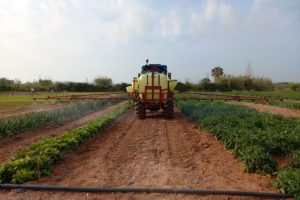
- The microÚs project, in which the Agricultural Machinery Unit (UMA) at the Universitat Politècnica de Catalunya - BarcelonaTech (UPC) participates, is designed to demonstrate the use of a certain formulation of copper-based microcapsules to increase the retention of this metal in leaves in intensive production of horticultural crops such as onion, lettuce and tomato. This enables a reduction in the use of the product and an improvement in the sustainability of the process.
- The research group IMEM-BRT of the UPC leads the TherGel project, which aim is to combine the properties of both materials in a conductive polymer hydrogel that could be used in water evaporation systems, as filtration membranes and as solid-state electrolytes that are active in electrochemical cells of capacitive deionisation of salt water.
- Participants in the HybridNeuro project include researchers from the group BIOART, which is part of the CREB of the UPC. The project is designed to establish a new way of analysing the motor system and human musculoskeletal movements, and the transfer of academic research to clinical practice and industry.
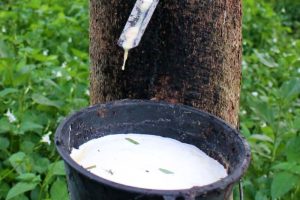
- The research group Plastics and Ecological Composites (e-PLASCOM) of the Universitat Politècnica de Catalunya - BarcelonaTech (UPC), and the Catalan Plastics Center (CCP), work in a project that aims to design ad hoc natural rubber-based composites, with specific compositions and geometries, to be optimally integrated into both EC and BC technologies at prototype level.