

GIRASOL II: Digital twin of photovoltaic solar power plants
May 3, 2024
AI to detect soil water response
May 8, 202408/05/2024
The innovation and research laboratory of the Barcelona Faculty of Computer Science (inLab FIB) at the Universitat Politècnica de Catalunya - BarcelonaTech (UPC) collaborated with ModpoW, a company specialised in wireless technologies, sensors and general electronics, to create a solution that optimises water and fertilizer usage in agriculture. This solution, which can potentially save over 30% of annual water and fertilizer consumption, monitors underground water data to draw up an irrigation recommendation for farmers, according to the real-time conditions of each plot.
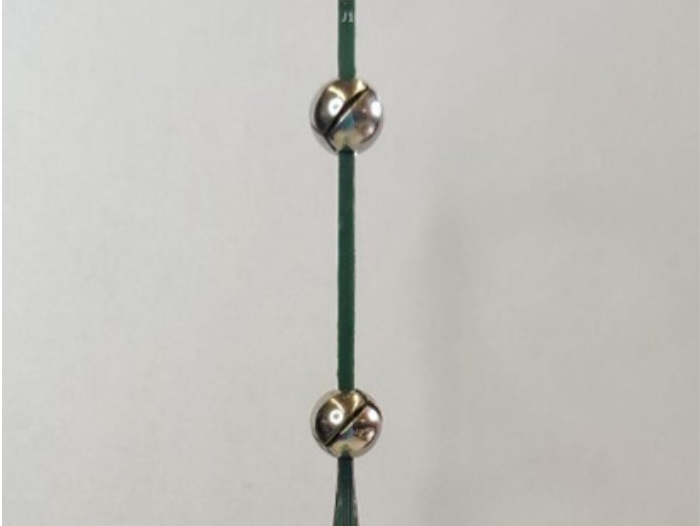
To achieve this, inLab FIB developed a machine learning model that can detect the phases that occur naturally and at various depths when a field is irrigated. These phases are identified using data obtained from soil water content sensors installed by ModpoW at various depths in the fields.
The project was developed in 2023.

Related Projects
- The Casa Bosc project explores a lightweight, modular and prefabricated timber construction system designed to reduce the environmental impact of housing while making it easier to build and adapt to different contexts. The project has been developed by researchers from the Architectural Rehabilitation and Restoration Research Group (REARQ) at the Universitat Politècnica de Catalunya - BarcelonaTech (UPC) and the company ÀGORA.
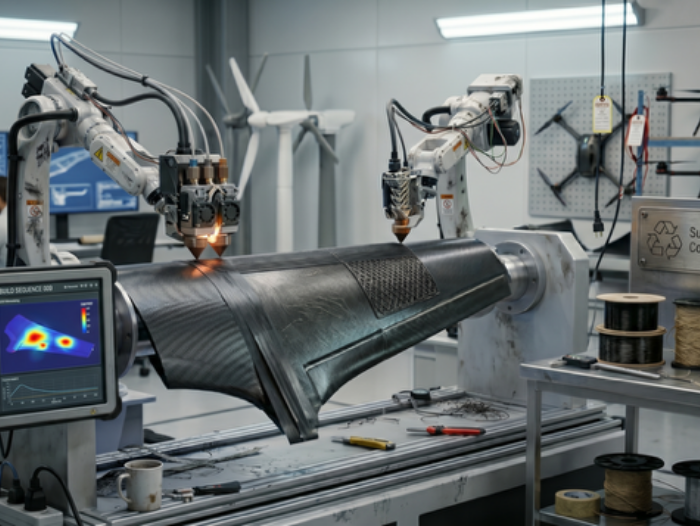
- The Control, Data and Artificial Intelligence (CoDAlab) research group at the Universitat Politècnica de Catalunya - BarcelonaTech (UPC) is taking part in the ATHENS project, which is developing recyclable thermoplastic composite materials with advanced real-time monitoring systems to improve the manufacture, safety and service life of lightweight structures.
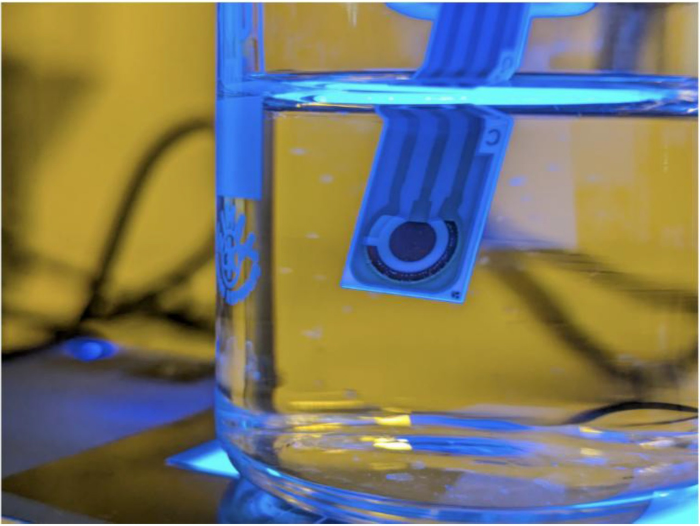
- The MICROTECH LAB - Microtechnology for the Industry research subgroup, part of the Centre for Advanced Technologies in Mechanics (CATMech) at the Universitat Politècnica de Catalunya - BarcelonaTech (UPC), is leading the technical development of a minimally invasive platform to monitor biomarkers and physiological indicators related to stress and emotional wellbeing.
- A research team from the Universitat Politècnica de Catalunya - BarcelonaTech (UPC) has participated in the M3LEC project, coordinated by the Centro de Astrobiología (CAB), a joint centre of the Spanish National Research Council (CSIC) and the Instituto Nacional de Técnica Aeroespacial (INTA), with the Universidad de Sevilla (US) / Instituto de Microelectrónica de Sevilla (IMSE) also participating. M3LEC aimed to contribute to the characterisation of the Martian atmosphere and meteorology, and to investigate new instrumentation for future planetary exploration missions.