



MultiDEPART: A project to facilitate the deployment of transport services on demand
December 16, 2022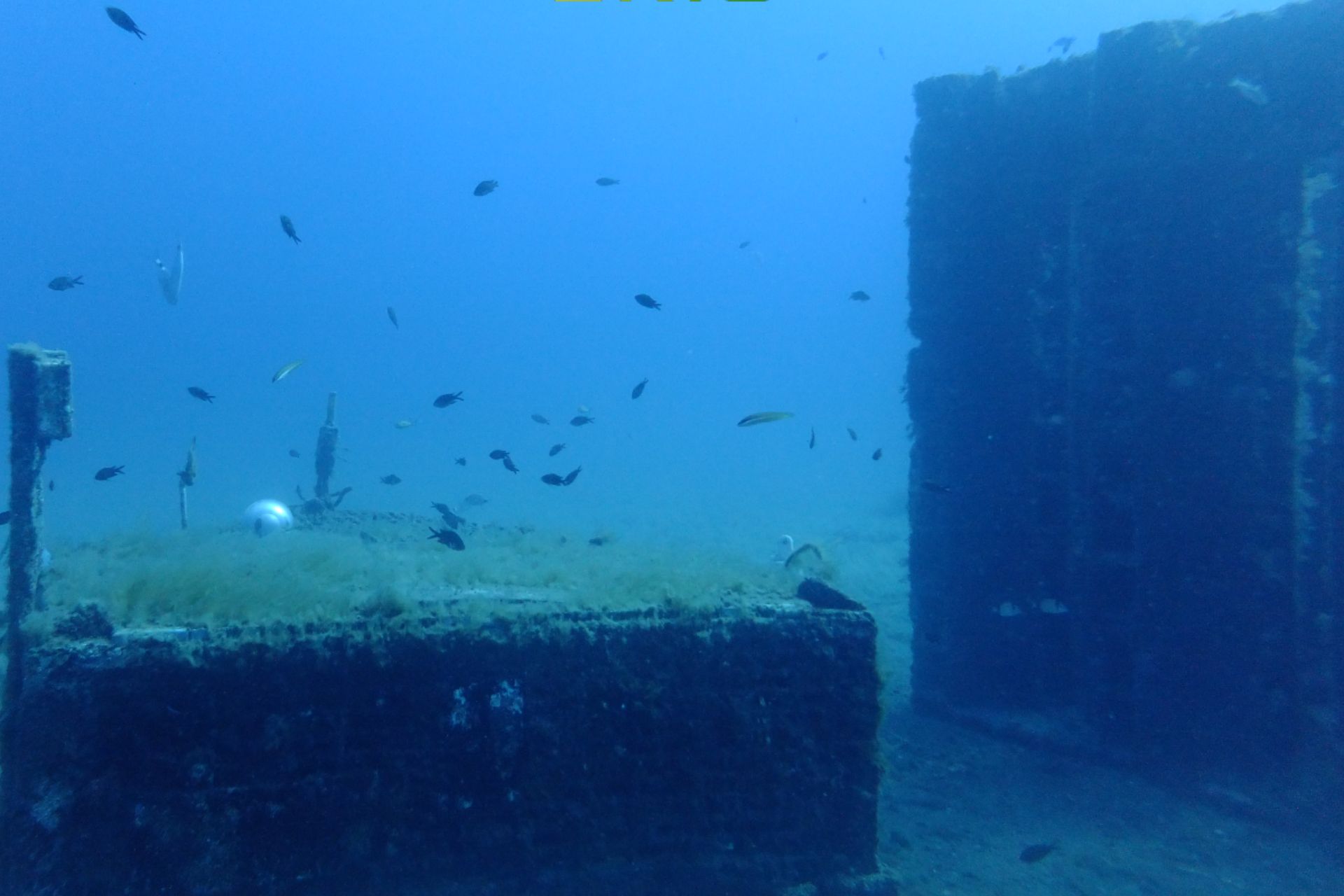
SLAGREEF: Solutions for the 3D manufacture of marine biotopes through steel slag recycling
December 20, 202220/12/2022
Efficient water management is a key factor to increase the output of agricultural activity in accordance with the Sustainable Development Goals of Agenda 2030. To improve efficiency and efficacy in the use of irrigation water in agriculture and in the transformation of foods, the GroPeRBot emerged. Participants include the Center for Industrial Equipment Design-Dynamics of Machines (CDEI) and the Geophysics and Earthquake Engineering (GiES) group of the Universitat Politècnica de Catalunya - BarcelonaTech (UPC).
The aim of the project is to demonstrate the applicability of autonomous electromagnetic detection systems to identify properties of the agricultural soil and, specifically, to detect the soil humidity at different depths.
An autonomous robot to detect soil humidity
To achieve this objective, a prototype of an autonomous land inspection robot will be created, based on the convergence of technologies: autonomous mobile robotics, ground penetrating radar (GPR), recognition and automatic classification with machine learning, and autonomous decision making based on sensory data.
Through a ground penetrating radar (GPR), geophysical prospecting of the land will enable buried objects and changes to be detected by means of the electromagnetic properties. With the data that are gathered and using neural networks, the water content in the subsoil will be assessed to determine electromagnetic parameters in the medium. These enable detection of whether there is any water, how much is there and where it is located in the subsoil. The combined data on the surface and the subsoil enable the characteristics of the soil in large extensions of land to be mapped and stored.
The CDEI will carry out the tasks of integration of the autonomous robot and the GPR, by adapting the platform so that it can house the georadar and integrate the navigation system. It will also participate in the phases of mechanical adaptation of the robotic platform, integration of the electronic and power systems and of software, and subsequent experiments and the appraisal phase.
Results and expected impact
GroPeRBot will have as a result the development of the prototype of an autonomous land-inspection robot that can detect soil humidity at different depths. For this task, and unlike other existing tools, extractive tests do not need to be carried out. This reduces the cost, time and impact on the ecosystem.
GroPeRBot will contribute to the digitalisation of the sector, specifically, to precision agriculture, to achieve savings in resources and greater production efficiency.
Other potential applications will be to identify the sate of maturity and health of root vegetables, detailed characterisation of the quality of the subsoil (contaminants and types of soil) and mapping of the network of deep roots to improve the efficiency of resources and reduce waste.
Budget and funding
The project was funded through the call for applications Grants for technology transfer demonstration activities of the Catalan Rural Development Programme 2014-2022 (PDR 2014-2022), of the Government of Catalonia’s Department of Climate Action, Food and the Rural Agenda. GroPeRBot has a total budget of €44,956.02 and lasts 18 months (from June 2022 to February 2024).



Activity financed through Operation 01.02.01 for Technology Transfer of the Rural Development Programme of Catalonia 2014-2022.
Technology
Topic
You want to know more?
Related Projects
- The organisation CARBOPESCA, together with the research group Development Center of Remote Acquisition and Information Processing Systems (SARTI) and the Efficient and Robust Integrated Circuits and Systems (EFRICS) group, at the UPC, are leading the iPROPEZESPADA project, an initiative aimed at optimising the capture and management of swordfish fishing using artificial intelligence.
- The Food Safety and Control Research Center (CRESCA) at the Universitat Politècnica de Catalunya – BarcelonaTech (UPC), in collaboration with the Aquamaris Foundation, has developed a system that allows irrigation using seawater without the need for filtration, desalination, or chemical treatment, both in agriculture and gardening. The new system enables the adaptation of ornamental garden plants and leafy vegetable crops, eliminating the need for fresh water entirely.
- The company Natural Machines and the Heat and Mass Transfer Technological Centre (CTTC-UPC) at the UPC have completed the EFICIENT3D project, during which a low-energy cooking system was developed by integrating advanced heat transfer technologies into the 3D food printer, Foodini, commercialised by Natural Machines.
- RootBot aims to develop and demonstrate an autonomous robotic electromagnetic detection system equipped with ground-penetrating radar (GPR) and advanced navigation technologies to map the root systems of fruit trees and soil moisture. This project seeks to optimize agricultural resource management, particularly water, and contribute to more sustainable farming through the use of innovative technological tools.


