

RENOVATE: Innovation, Digitalization, and Training for Agricultural Sustainability
March 25, 2025
TenSyGrid: A Tool to Assess the Stability of Power Grids with High Levels of Renewable Energy
April 29, 202507/04/2025
The Maritime Engineering Laboratory at UPC (LIM) participates in a European project that will help improve the management of plastic pollution in the north-western Mediterranean and raise environmental awareness among citizens about marine preservation.
Plastics are increasingly present in the seas and oceans around the world. The Mediterranean, which is a semi-enclosed marine basin, is one of the seas that accumulates more tons of plastic waste from the continent each day, a situation that threatens biodiversity and marine ecosystems. Now, the Universitat Politècnica de Catalunya – BarcelonaTech (UPC), the Universitat de Barcelona (UB), and the company Plastic at Sea are driving a citizen science project to better understand the origin and final destination of the plastic contaminants reaching the sea and to improve conservation strategies for the marine environment in the north-western Mediterranean.
The project Participatory Strategies for the Management of Transboundary Plastic Pollution on the Coast (TRAP) is led by the Marine Geosciences Research Group of the Faculty of Earth Sciences at the UB, and its main partners are the Maritime Engineering Laboratory (LIM) at the UPC and the plastic pollution quantification hub of the company Plastic at Sea.
The ultimate goal of the project is to provide managers with a monitoring and forecasting system for plastic distribution in this transboundary region (amount of marine litter entering or accumulating) that will help lead political actions to mitigate the impact of marine litter on a local and regional scale.
From the coasts of France to the Ebro Delta
Most of the plastic waste threatening the marine environment originates on the continent (rivers, beaches, discharges, etc.). The TRAP project will help preserve ecological values in the Mediterranean coastline within the coastal region of the Eastern Coastal Functional Area (AFLE), from the estuary of the Aude River (France) to the Ebro Delta in Tarragona. According to recent studies, marine plastics are present in this area both near major cities and far from the coast, probably due to the dispersion by the northern current flowing south from the Gulf of Lion, capable of transporting up to a trillion microplastic particles to southern latitudes.
To study plastic transport along the coasts, an open approach is sought, considering possible particle flows between countries. In the context of this project and its predecessor, the TRACE project, LIM researchers have developed numerical modelling tools for the dispersion and accumulation of marine waste in the Western Mediterranean region, from southern France to the Catalan coast. Measurements of plastic particle transport have been obtained through buoys that move with the currents and provide real-time position data. The relationship between water turbidity and microplastic concentration has also been studied to attempt to derive microplastic concentration information from satellite images. In this way, plastic concentration maps for the Western Mediterranean have been generated by combining plastic sampling carried out by researchers from UB and Plastic at Sea in Catalonia and France.
Citizen science and environmental commitment
Citizen science will also play a leading role in the plastic sampling methodology. This will allow for sampling in areas with higher geographical and temporal resolution, reducing project costs and increasing environmental awareness through citizen science.
Collaboration between institutions and citizens will facilitate the characterisation and monitoring of marine litter reaching the coast, especially from continental sources, and understanding the spatial and temporal distribution of waste in response to anthropogenic factors and environmental variables (tourism, weather, oceanography, etc.).
Impact
With this combined approach, TRAP will address various scientific and social challenges: understanding the mechanisms of plastic transport in the north-western Mediterranean coastal region, developing a tool to facilitate better waste management at the local and regional levels, and informing and at the same time raising awareness among society about plastic pollution.
TRAP is an opportunity to rethink environmental policies on both sides of the border. The joint work of partners, entities, and citizens will allow for a comprehensive assessment of the plastic pollution issue along the coastline beyond administrative boundaries, thus improving regional environmental policies for marine protection.
Budget and consortium
With a budget of nearly one million euros, the project will run from 2025 to 2028 and is co-funded within the framework of the INTERREG POCTEFA Programme, a European Union initiative to promote sustainable development in the border territory of Spain, France, and Andorra.


You want to know more?
Related Projects
- The Image and Video Processing Group (GPI), part of the IDEAI-UPC research group, and the Digital Culture and Creative Technologies Research Group (DiCode) from the Image Processing and Multimedia Technology Center (CITM) at the Universitat Politècnica de Catalunya – BarcelonaTech (UPC), have co-organised the AI and Music Festival (S+T+ARTS) together with Sónar+D and Betevé, to explore the creative use of artificial intelligence in music.
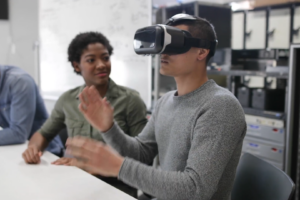
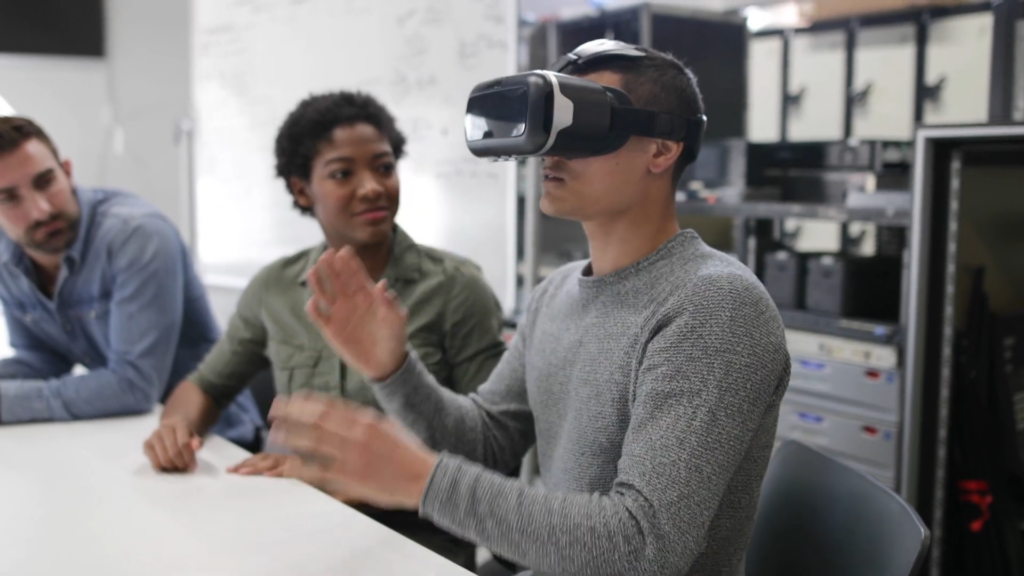
- The Visualisation, Virtual Reality and Graphic Interaction Research Group (ViRVIG) at the Universitat Politècnica de Catalunya - BarcelonaTech (UPC) has participated in the XR4ED project, an initiative that connects the educational technology (EdTech) and Extended Reality (XR) sectors, with the aim of transforming learning and training across Europe.
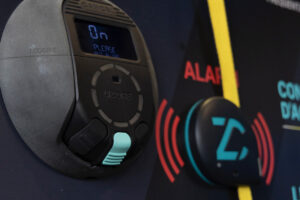
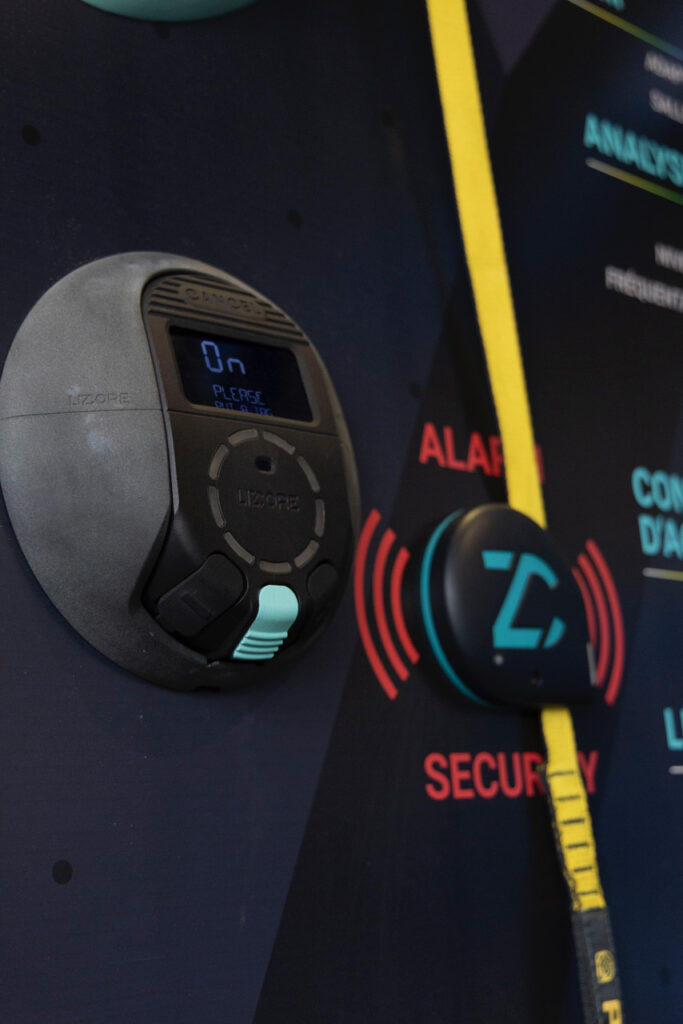
- The inLab FIB at the UPC has collaborated with Lizcore® for the development of a proof of concept based on artificial intelligence to improve safety in climbing with autobelay devices. The system allows the automatic and accurate detection of risk situations before starting a route.
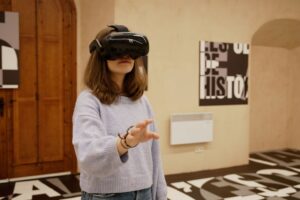
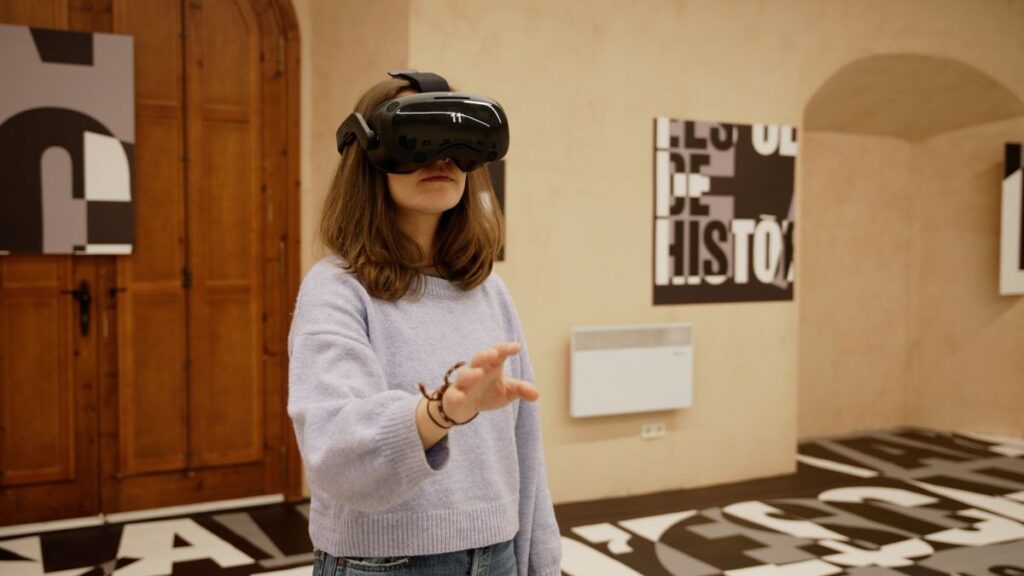
- Researchers from the Centre for Image and Multimedia Technology of the UPC (CITM) and from the DiCode research group (Digital Culture and Creative Technologies Research Group) of the Universitat Politècnica de Catalunya – BarcelonaTech (UPC) have worked on the project The Eyes of History, an initiative of the Catalan Agency for Cultural Heritage that offers an immersive view of Catalan cultural heritage. It is especially aimed at the first and second cycles of secondary education and was created to bring heritage into the classroom. Its goal is to bring the history and monuments of Catalonia closer in a vivid and innovative way, using tools such as virtual reality and new museographic narratives.