

Els ulls de la història: An immersive perspective on Catalan cultural heritage
January 14, 2026
XR4ED: A digital infrastructure for applications oriented towards learning, training and education with Extended Reality (XR)
January 22, 202620/01/2026
The inLab FIB at the UPC has collaborated with Lizcore® for the development of a proof of concept based on artificial intelligence to improve safety in climbing with autobelay devices. The system allows the automatic and accurate detection of risk situations before starting a route.
Autobelay devices are widely used in climbing gyms and allow solo climbing: the rope retracts automatically during the ascent and, in the event of a fall, the system brakes and lowers the climber in a controlled manner. In addition, they reduce human errors in belaying and facilitate training.
In this context, the inLab FIB at the Universitat Politècnica de Catalunya – BarcelonaTech (UPC) has developed for the company Lizcore® a machine learning–based proof of concept applied to its autobelay systems. The objective is to improve safety before starting the climb by automatically, reliably and accurately detecting potential risk situations that could cause accidents.
The AI model is integrated into the software of Lizcore’s Safety Gate, a system that automatically monitors the use of autobelay devices through artificial intelligence and computer vision techniques. This system enables real-time alerts and, thanks to its direct connection with the management software (Lizcore GymOS), facility managers and technicians can receive immediate notifications and access precise usage data to manage preventive maintenance.
This innovative device automatically checks:
- Access control: Only authorised climbers with up-to-date legal agreements can activate the autobelay device using the NFC wristband.
- Intelligent verification (AI): A front-facing camera validates the correct connection of the harness and the locking of the carabiner to the ventral attachment point before allowing the activity to begin.
- Route safety and range of action: A top-mounted camera verifies that the climber remains within the correct route and within the safety margins provided by the autobelay line.
- Landing zone control: A front-facing camera monitors the fall or descent area to prevent collisions with other people who may be crossing or positioned beneath the climber.
- Multi-channel alert system: In the event of any malfunction or dangerous situation, acoustic warnings, visual signals (LEDs) and immediate mobile notifications are activated for the facility staff.
This proactive safety layer complements —rather than replaces— human supervision, providing a key technological tool to prevent accidents caused by distraction or human error.
The system implemented by the inLab FIB uses machine learning models based on convolutional neural networks (CNNs), trained with images from the Safety Gate cameras. These models enable:
- Identification and localisation of objects (harnesses, carabiners, devices).
- Recognition of actions and behaviours (clipping in, starting the route, attempting to climb without being secured).
- Detection of risk patterns in real time.
The solution developed by Lizcore® with the support of the inLab FIB enables:
- Reduction of accidents caused by human error through AI.
- Provision of real-time alerts and prevention.
- Improvement of the climbing experience with greater safety and confidence.
- Provision of useful data for the management and maintenance of climbing gyms.
- Promotion of digitalisation and technological innovation in the indoor climbing sector.
Lizcore® is a Catalan technology startup that applies artificial intelligence to the world of indoor climbing to improve safety, performance analysis, sport gamification and climbing gym management.

Related Projects
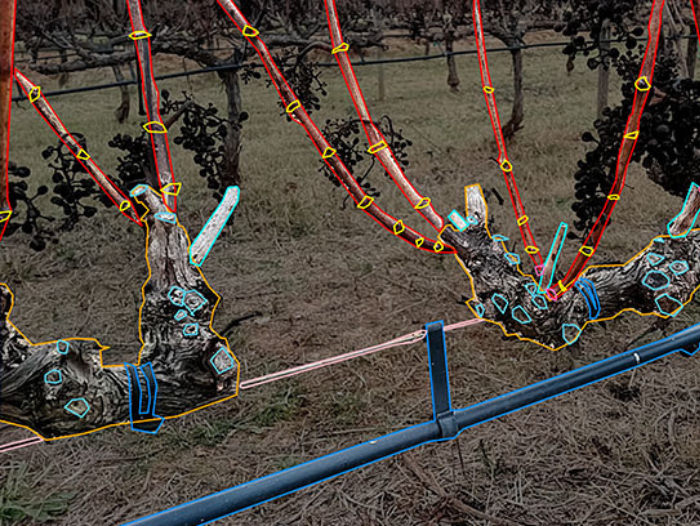
- The Center for Industrial Equipment Design (CDEI-UPC) at the Universitat Politècnica de Catalunya - BarcelonaTech (UPC) is participating in a cross-border project aimed at promoting the use of advanced digital technologies in viticulture in regions on both sides of the Pyrenees. The initiative seeks to improve specialist training, technical advice and decision-making in vineyard management.
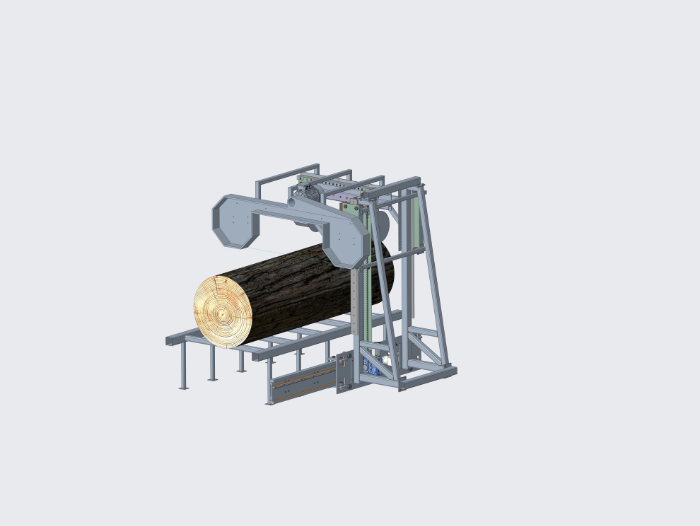
- The Centre for Industrial Equipment Design (CDEI) at the Universitat Politècnica de Catalunya - BarcelonaTech (UPC), together with the IRI, Institut de Robòtica i Informàtica Industrial (CSIC-UPC), is participating in the development of a pre-commercial prototype of an automatic portable sawmill that integrates computer vision, artificial intelligence and computer numerical control to improve productivity, efficiency and safety in local wood processing for the company Envall Coop. S.L.
- The Advanced Network Architectures Lab (CRAAX) at the Universitat Politècnica de Catalunya - BarcelonaTech (UPC) is participating in the ACCOMPLISH project, which is developing an innovative AI-based compliance and certification framework to simplify, integrate and automate compliance in operations, assets, solutions and organisational processes related to data and artificial intelligence.
- Researchers at the Universitat Politècnica de Catalunya - BarcelonaTech (UPC) have developed a unique infrastructure serving the UPC, research centres and companies for the experimentation and validation of technologies and services using next-generation networks. This platform enables the validation of 5G solutions in real-world scenarios and leads research towards 6G, facilitating technology transfer to the market.