

Chips are introduced into ovules to measure the first stages of embryonic development
June 26, 2020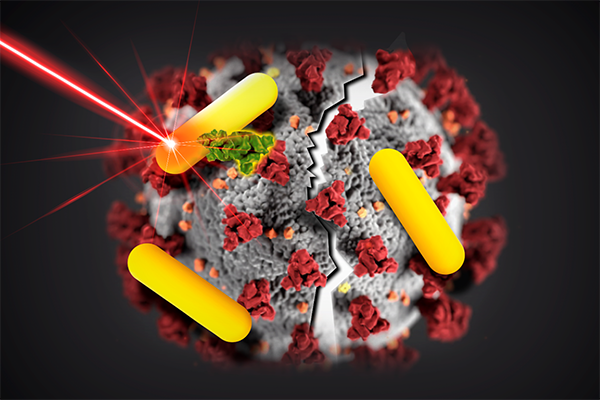
A UPC group and B. Braun investigate new inactivation strategies against SARS-CoV-2 virus through functionalized nanoparticles and activation of heat nanosources
June 28, 2020As part of the FEVER European project, the Centre for Technological Innovation in Static Converters and Drives (CITCEA) of the UPC will develop two-way chargers for electric vehicles and solutions to take advantage of the potential flexibility of energy storage resources and meet the demand for specific services for the electricity network, making it safe, efficient and resistant.
The flexibility of electric systems is vital in the process of energy transition towards increasingly sustainable energy generation models. Flexibility makes systems more capable of adapting to variability in energy demand and generation, in a safe, efficient way. Taking advantage of this potential for flexibility is key in the transformation of the energy system and to ensure its efficiency. In this context, the European project FEVER aims to contribute solutions for the optimal management of electrical networks and electricity markets based on renewable sources, through the flexibilization of energy production, demand and storage.
With an overall budget of almost 10 million euros as part of the Horizon 2020 research and innovation programme, the project will be undertaken over the next three and a half years. Participants include 17 members from eight countries, including the Universitat Politècnica de Catalunya · BarcelonaTech (UPC), through the Centre for Technological Innovation in Static Converters and Drives (CITCEA). At the UPC, the project is led by Andreas Sumper.

Solutions to future challenges
The European Commission promotes the development of solutions to meet the challenges of managing electrical grids in a future energy system based on renewable sources. An increasing share of fluctuating electricity generators such as wind and solar systems makes it more difficult to calculate the power that is supplied. Increasing energy demand due to the increase in use of electric vehicles creates an additional difficulty. For safe, resistant energy supply, production and demand must be harmonised. FEVER will respond to these challenges through distributed generation systems based on flexible production, storage and energy consumption.
The project encompasses technologies and techniques to achieve energy flexibility of energy storage resources at various levels. An important source of flexibility are electric vehicles. In this area, the UPC will develop two-way V2G chargers to provide capacity for the grid from this sector. Another common source of flexibility are storage resources, which provide advanced functionalities to meet the demand for flexibility and specific services in the grid. In addition, advantage will be taken of the potential flexibility in the electrification of heating (heat pumps or urban heating) and cooling (for example, industrial cooling) systems.
To coordinate all types of flexibilities optimally, an integral solution of aggregation, management and marketing will be worked on, so that these services can be offered in different markets (local and wholesale). In addition, a set of flexible trading tools will be adopted with technology that enables independent like-for-like trading, through a negotiation platform that will work with artificial intelligence techniques.
FEVER will offer distribution system operators (DSO) a set of applications and tools for observation and control. These will facilitate optimal management of the grid and tackle the challenges of the system. The DSO toolbox that will be developed will contain all these tools and enable advanced control options to be implemented to obtain information on the current state of the network, prevent incidents, provide information on the current state of the grid and enable resolution of problems.
FEVER will carry out demonstration and testing activities in many environments. To assess scalability, the project includes large-scale simulations of new mechanisms of a daily, continuous market of flexibility services, and simulations of connection between the wholesale-retail market. These simulations will contribute to the quantification of the impact of flexibility services in the grid. FEVER will facilitate the establishment and operation of suitable commercial models for all stakeholders in the market, to provide the EU with a safe, efficient, resistant electrical grid.
Related Projects
- A research team from the UPC, in collaboration with the company B. Braun Surgical, has created a ceramic and biocompatible catalyst that captures greenhouse gases and transforms them into useful chemical products in a more sustainable way and at a lower cost than current technologies. The technology has successfully passed the pilot phase through joint projects with companies from different sectors.
- The company Trace ID and the group Twin Investors, in collaboration with the Textile Technology research group (TECTEX), which is part of the Institute of Textile Research and Industrial Cooperation of Terrassa (INTEXTER) at the Universitat Politècnica de Catalunya - BarcelonaTech (UPC), are developing electronic devices to identify, monitor, and study the traceability of the products in which they are embedded.
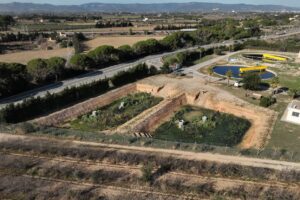
- The Hydrogeology Group (GHS) at the Universitat Politècnica de Catalunya - BarcelonaTech (UPC) is participating in the LIFE REMAR project to develop an innovative and sustainable solution for the reuse of treated wastewater through infiltration, with the aim of increasing the availability of freshwater resources and improving the state of ecosystems.
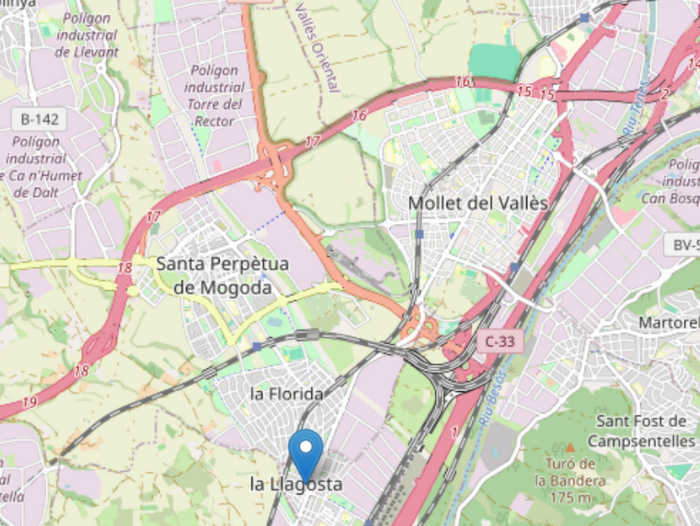
- A team from the Environment Centre Laboratory (LCMA) of the Universitat Politècnica de Catalunya - BarcelonaTech (UPC) is taking part in a study commissioned by the city councils of la Llagosta, Mollet and Santa Perpètua (in Vallès Occidental), with the main objective of identifying the impact of industrial plants on the generation of unpleasant odours and continuously monitoring air quality in these municipalities.