

A new, non-invasive ophthalmological instrument for the diagnosis of dry eye based on photonic techniques
October 28, 2020
The first anti-tumour membrane in the world successfully implanted in a patient
November 12, 202029/10/2020
The FURNISH project responds to a call to address mobility challenges posed by the COVID-19 pandemic, with the aim of redesigning the world’s streets and reconfiguring public spaces through the use of temporary mobile elements.
FURNISH is led by CARNET, an initiative coordinated by CIT UPC, and is funded by EIT Urban Mobility. The consortium that is carrying out the project has the participation of the Urbanism Research Group (GRU) and the research group FORM+, both from the UPC, as well as the Barcelona School of Design and Engineering (Elisava), the Institute for Advanced Architecture of Catalonia (IAAC), Milan City Council and AMAT.
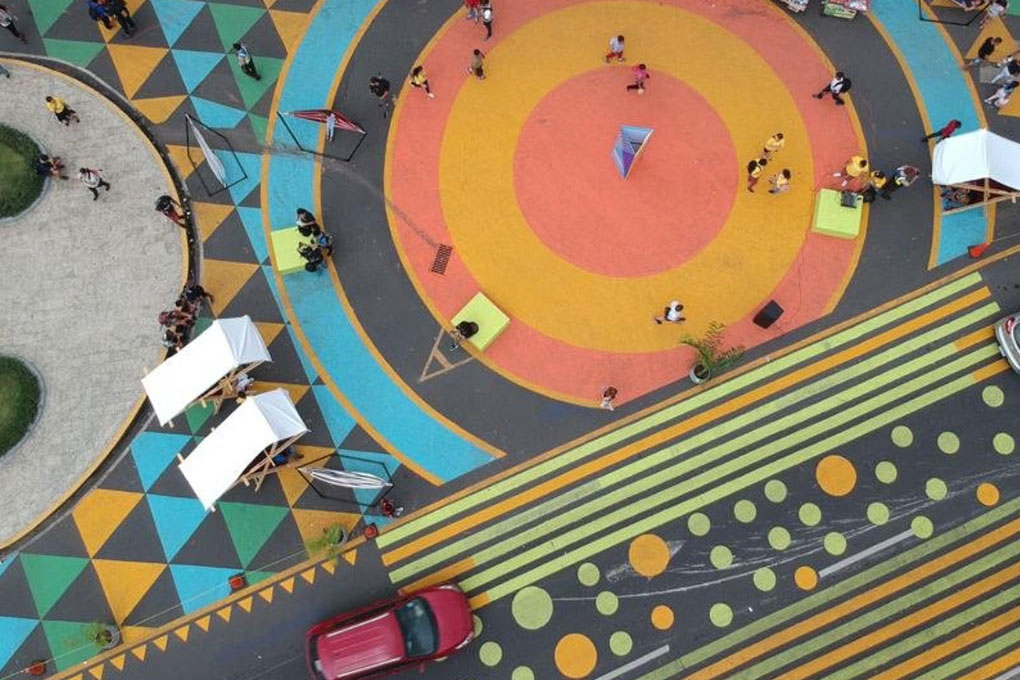
The project opened a call at European level for teams, with the aim of preventing the spread of COVID-19 by redesigning the streets of cities and reconfiguring public spaces through the use of temporary mobile elements. A total of seven teams participated: four selected through the open call and three headed by FURNISH members (UPC, Elisava and IAAC). The seven teams took part in online workshops led by the consortium members, so that all projects benefitted from the knowledge of other participants.
The teams worked on new mobility projects and designed temporary mobile urban elements to reconfigure urban spaces. The proposals that emerged envision the reorganisation of public spaces, especially those that have the greatest problems of capacity, through the use of these elements. The prototype was designed by teachers and students from the Department of Urbanism and Regional Planning (DUOT), Labmaq at the Barcelona School of Architecture (ETSAB) and Barcelona School of Building Construction (EPSEB) and other collaborators. EDUS/Point, which is the name of the proposal, reflects the need for education centres to have new spaces in which to carry out their activity while maintaining safe distances and it explores the possibility of outdoor classrooms, even using public spaces for the activity.

The process ended in December and all the results and materials that were created were published on the Open Innovation Platform. This is an open-source repository of knowledge relating to urban planning, mobility, social behaviour and urban elements, where the materials will be available free of charge for use in any part of the world.

Project Partners
EIT Urban Mobility, CARNET, UPC, Elisava, IAAC, Milan City Council and AMAT
Technology
Sector
Topic
Project Press Release
Avoiding resurgences of COVID-19 through the redesign of public spaces
You want to know more?
Related Projects
- The Barcelona Innovative Transportation (BIT), the Research Center in Automotive and Advanced Mobility (CER-AMA) and The Future Mobility Research Hub (CARNET) research groups from the Universitat Politècnica de Catalunya - BarcelonaTech (UPC) are participating in the E-MED project, which aims to optimise energy and resource efficiency in public transport systems by addressing energy price fluctuations through smart and participatory solutions across the Mediterranean region.
- A research team involving the Barcelona Innovative Transportation (BIT), inLab FIB, CARNET Barcelona – Future Mobility Research Hub (CER-AMA), and the Department of Computer Architecture (DAC) of the Universitat Politècnica de Catalunya - BarcelonaTech (UPC) is driving the i-MovE project, which aims to incorporate multisectoral data to provide much more accurate and valuable information for the mobility sector. The project develops four use cases focused on both companies and mobility authorities, covering public and individual transport, using the UPCxels demonstrator.
- The Research Center for Supervision, Safety and Automatic Control (CS2AC-UPC) at the Universitat Politècnica de Catalunya - BarcelonaTech (UPC) has coordinated the SaCoAV project, focused on researching new methods and tools to ensure the safe coordination of autonomous vehicles in urban environments.
- As part of the USEFUL project, the Centre for Sensor, Instrumentation and Systems Development (CD6) at the Universitat Politècnica de Catalunya - BarcelonaTech (UPC) has equipped a low-emission vehicle that will drive through the streets of Terrassa with optical sensors integrated into a complex system for data computing, visualisation, and storage. This car will collect and store thousands of anonymous driving data points, which will be used to develop more accurate algorithms for autonomous driving.