

CIT UPC participates in the MAV Day 2024 as a cluster member
February 3, 2025
The UPC and the Medical Emergency System of Catalonia will develop a drone management platform
March 14, 2025CIT UPC participates in the MAV Day 2024 as a cluster member
February 3, 2025The UPC and the Medical Emergency System of Catalonia will develop a drone management platform
March 14, 202507/03/2025
The UPC once again participated in the Mobile World Congress (MWC) Barcelona. This year, the University presented three cutting-edge technological prototypes that utilise artificial intelligence and smart sensing: a solution for 6G networks, an intelligent traffic signal processing system for autonomous vehicles, and smart insoles to improve the lives of Parkinson’s patients. Additionally, other projects were showcased.
The Universitat Politècnica de Catalunya - BarcelonaTech (UPC), through the UPC Technology Center (CIT UPC), has once again been present at MWC Barcelona 2025, the largest and most influential congress on technology and connectivity, taking place from 3 to 6 March at the Gran Via venue of Fira de Barcelona. At a stand located in the Catalan Government’s pavilion (Congress Square, CS220, booth 27), the University has showcased its technological capabilities, demos and prototypes of projects, and advanced solutions in fields such as AI, smart connectivity, connected mobility, 5G, connected industries, and security in mobile technologies.
Among other technologies (see the UPC portfolio of projects and prototypes at MWC), three prototypes developed at the university were exhibited:
→ MyGAIT project: an intelligent orthopaedic insole capable of measuring body force and movement to estimate cardiovascular variability in Parkinson’s patients. This insole can provide objective data on the patient’s progress and help doctors prescribe more personalised and effective treatment, thereby improving their quality of life. Developed by the UPC’s Instrumentation, Sensors, and Interfaces Research Group (ISI), in collaboration with researchers from the University of Zaragoza, the insole will help prevent falls and freezing of gait, as well as enhance the effectiveness of physiotherapy and pharmacological treatments for patients.
→ 6G-EWOC project: a network that, by combining artificial intelligence with 6G technologies, remote sensing systems, and optical communication (both wireless and fibre-optic), enables vehicles—both autonomous and human-driven—to travel safely and avoid potential accidents in high-traffic or crowded areas. The system detects objects, other vehicles, or pedestrians in the surroundings and accurately determines their distance, speed, and direction. It provides a detailed, comprehensive, and real-time updated map to ensure the safest possible driving conditions.
The platform demonstration at MWC included a computer and a small car to illustrate the operation of a real-time traffic signal detection system in controlled urban environments. By employing secure video transmission and deep learning algorithms, the system efficiently detected and processed traffic signals, leveraging edge computing nodes to make real-time decisions. This testbed would be available to companies from 2026. Several research groups from the Centre for Broadband Communications (CCABA) were involved in the development of this network.
→ ELEGANT and 6G-OpenLab projects: a unique infrastructure serving as a real-world testbed for 6G applications. It consists of a hybrid network combining optical communications and mobile networks, spanning two UPC campuses 34 km apart: the Diagonal North Campus in Barcelona and the Baix Llobregat Campus in Castelldefels. It will be used to test and facilitate the deployment of autonomous vehicles, smart crop monitoring, more efficient emergency services, connected drones, and other emerging technologies.
Other projects
One of the featured projects at the UPC stand was MERIT and its new master’s programme, which was presented through a dedicated corporate leaflet and a QR brochure specifically designed for the 2025 edition of MWC Barcelona. Additionally, the MERIT project video was constantly displayed during the four days. The promotion of MERIT through the UPC stand at the MWC25 reached several SMEs that were introduced to the project’s vision.
Another revolutionary project initiated last year was the DISCOVER project, which aims to transform the construction and demolition industry by developing an advanced system for the autonomous, synchronous, and continuous identification and analysis of materials in end-of-life built environments.
And finally, in order to improve the collaboration between business and academia, the INDUSAC project (that launched the INDUSAC platform), an initiative to reshape the landscape of industry-academia collaboration.
In addition to these technological innovations , other projects were also presented:
- GAISSA: An energy card to assess and improve energy efficiency and performance of AI
- USEFUL: A car equipped with AI and optical sensors that will collect vast amounts of data for autonomous driving
- Compass+: Artificial intelligence and machine learning for maritime traffic management at the Port of Barcelona
- AI4WATER: Digital twins for irrigation agriculture
More information: mwcbarcelona.upc.edu


Related Projects
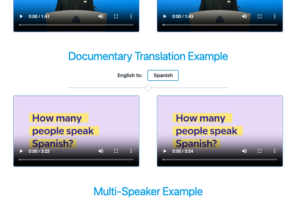
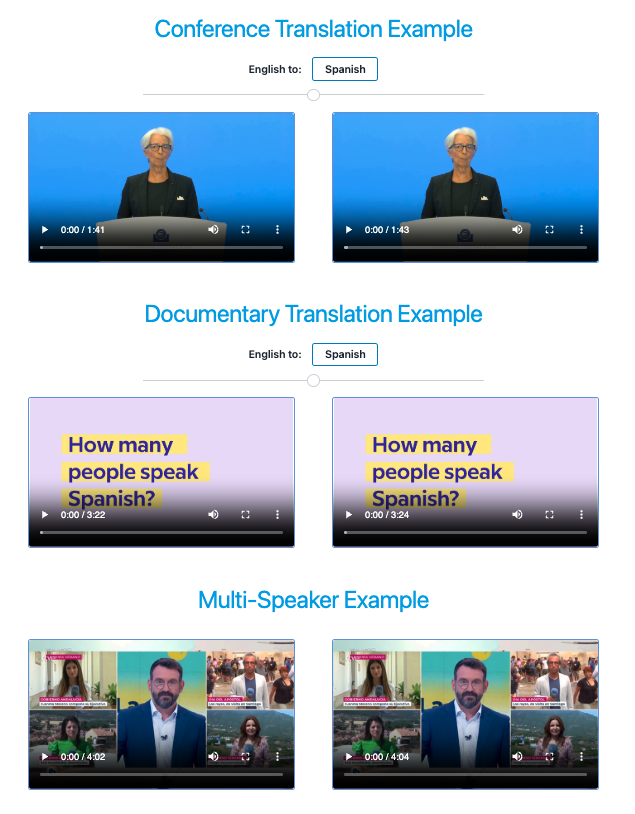
- The AgroTech research group at the Universitat Politècnica de Catalunya – BarcelonaTech (UPC), together with its spin-off Ugiat Technologies, have driven DoblAI, an AI platform that integrates transcription, translation, subtitling and video dubbing into a single workflow. The solution, which uses deep learning technology and cloned or default voice models, is specifically designed for the journalism and communications sector.
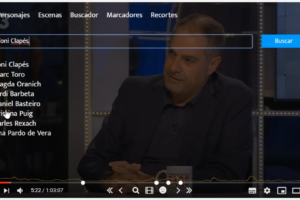
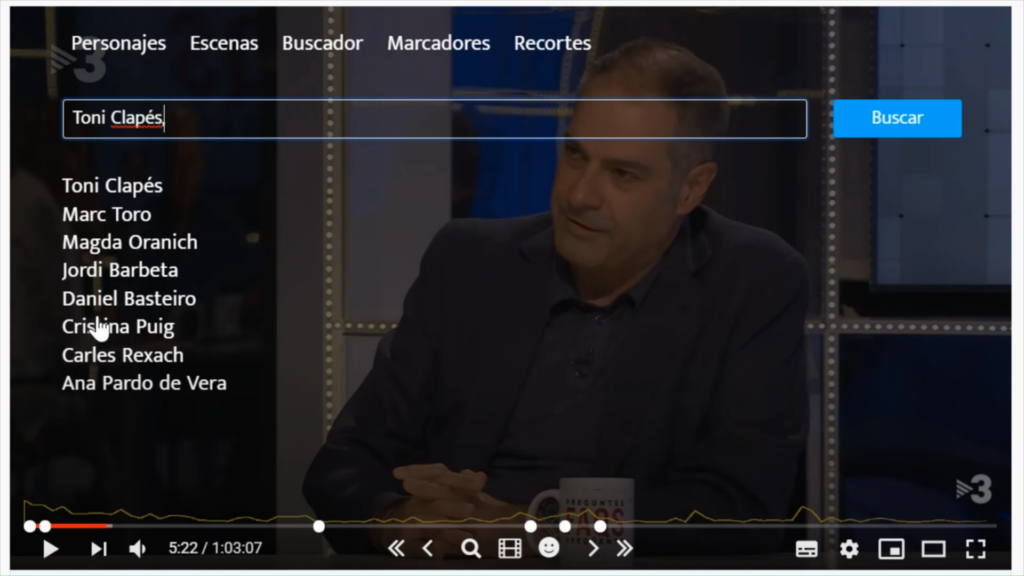
- The AgroTech research group at UPC, in collaboration with its spin-off Ugiat Technologies, has developed uPlayer, a new multimedia player concept that enables more intuitive video navigation and viewing, intelligently enhancing the user experience, especially on YouTube and other platforms, by integrating as a plugin or advanced player.
- The Image and Video Processing Group (GPI), part of the IDEAI-UPC research group, and the Digital Culture and Creative Technologies Research Group (DiCode) from the Image Processing and Multimedia Technology Center (CITM) at the Universitat Politècnica de Catalunya – BarcelonaTech (UPC), have co-organised the AI and Music Festival (S+T+ARTS) together with Sónar+D and Betevé, to explore the creative use of artificial intelligence in music.
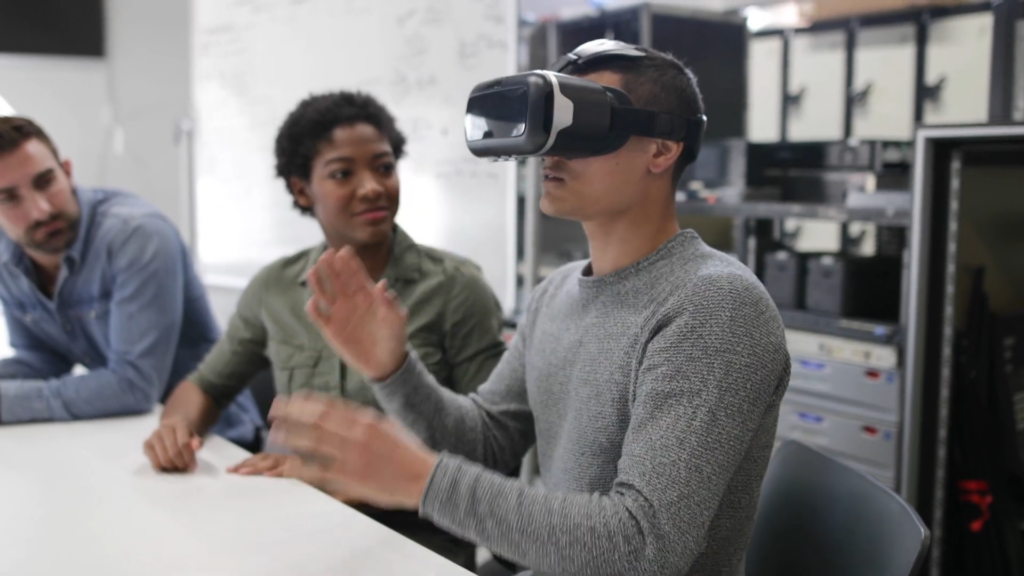
- The Visualisation, Virtual Reality and Graphic Interaction Research Group (ViRVIG) at the Universitat Politècnica de Catalunya - BarcelonaTech (UPC) has participated in the XR4ED project, an initiative that connects the educational technology (EdTech) and Extended Reality (XR) sectors, with the aim of transforming learning and training across Europe.