

SPIN: An intelligent portable sawmill to automate and optimise local wood sawing
July 7, 2026
ZeroCarbonPave: Bituminous pavements with biochar to reduce the carbon footprint of roads
July 14, 202609/07/2026
The Center for Industrial Equipment Design (CDEI-UPC) at the Universitat Politècnica de Catalunya - BarcelonaTech (UPC) is participating in a cross-border project aimed at promoting the use of advanced digital technologies in viticulture in regions on both sides of the Pyrenees. The initiative seeks to improve specialist training, technical advice and decision-making in vineyard management.
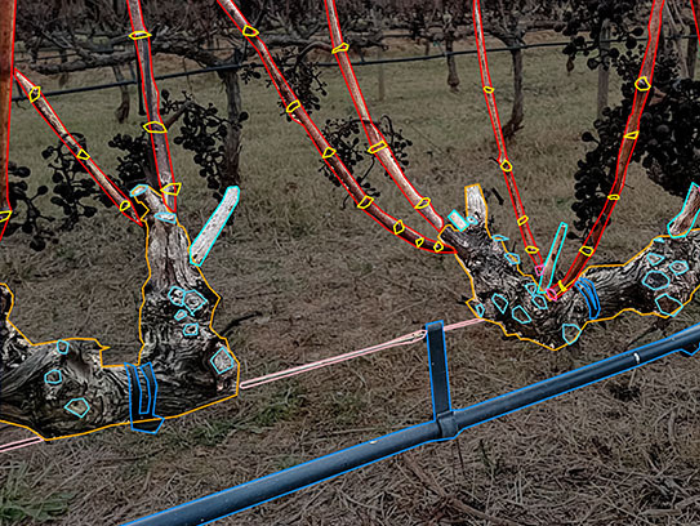
The VINNEA project (Viticultura INteligente mediante Nuevas herramientas digitales para la Enseñanza y el Apoyo a la toma de decisiones) focuses on integrating digital technologies into the vineyard sector, particularly in areas such as pruning, the study of vine root systems and vineyard management in regions on both sides of the Pyrenees. Within this context, the UPC’s CDEI-UPC is developing advanced digital tools for vineyard digitalisation and the automation of key tasks, particularly winter pruning.
The objective is to develop technological solutions that enable vineyards to be digitalised and support progress towards the intelligent automation of their processes, while remaining aligned with agronomic criteria and the sector’s real needs.
As part of the project, coordinated by the Public University of Navarre (UPNA), technologies such as 3D modelling and virtual and augmented reality will be developed and applied to recreate hyperrealistic, immersive vineyard environments. These environments will incorporate digital twins of the vines and enable precise interaction with pruning tools, together with advanced learning assessment systems. The aim is to improve education, vocational training, decision-making and the automation of certain viticultural practices.
The work will begin with an assessment of the sector’s needs and the tools already available. Based on this analysis, new technological solutions will be designed and subsequently tested through pilot activities involving university students, teaching staff, winegrowers and training centres. These experiences will make it possible to verify their usefulness in real-life situations, assess their impact and refine the tools before they are disseminated.
The project also envisages creating a cross-border cooperation network to facilitate knowledge transfer and the dissemination of results through demonstrations, events, publications and audiovisual materials. The validation and adaptation of the tools in different contexts, with the support of organisations linked to the wine and training sectors, is intended to strengthen their applicability and facilitate their transfer beyond the consortium.
The project addresses several current challenges facing the wine-growing sector, including climate change, the shortage of skilled labour, the need to preserve and transfer technical knowledge, and the transition towards more sustainable practices. By integrating digital technologies into training and vineyard management, VINNEA aims to contribute to more efficient and resilient viticulture that is better prepared to meet future challenges across the cross-border region.
The CDEI-UPC’s contribution focuses on developing methodologies and systems for the autonomous digitalisation of vineyards that could eventually be integrated into sensor-equipped mobile robots. These systems will generate structured digital representations of vineyards, enabling their geometry, condition and agronomic characteristics to be captured efficiently and at scale.
On this basis, the CDEI-UPC is developing artificial intelligence models to support pruning decisions and provide recommendations in accordance with respectful pruning criteria. These models not only have direct applications in pruning automation, but also serve as support tools for training, agronomic validation and knowledge transfer to the sector.
In parallel, the CDEI-UPC is addressing the automation of the pruning process by exploring the specifications and requirements that robotic systems must meet to perform these tasks autonomously under real field conditions.
Work is also under way on solutions for monitoring and phenotyping root systems using non-invasive technologies such as ground-penetrating radar (GPR). The aim is to characterise root distribution and move towards hybrid models that improve understanding of the vineyard from an integrated perspective.
Consortium, Budget and Funding
In addition to the UPC and the UPNA, the main partners in the VINNEA project are the École d’Ingénieurs de Purpan in Toulouse; France’s National Research Institute for Agriculture, Food and the Environment (INRAE-EGFV); the Navarre-based company Viticultura Viva; and the French digital technology company WiDiD. Several other organisations are also participating: the San Martín de Unx Vineyards and Wineries Association in Navarre; the Spanish Wine Technology Platform; the Spanish Wine Federation; the Catalan INNOVI cluster; the French Institute of Vine and Wine (IFV); VINOVALIE R&D; the Syndicat des Vins AOP Fronton; and AgroCampus 64 – the Vocational Training and Agricultural Promotion Centre (CFPPA) of the Pyrénées-Atlantiques.
VINNEA (EFA 214/06) has a budget of €1.8 million and has been 65% co-funded by the European Regional Development Fund (ERDF) through the Interreg VI-A Spain–France–Andorra Programme (POCTEFA 2021–2027). The project will run for three years (January 2026 - December 2028).

Topic
You want to know more?
Related Projects
- The MICROTECH LAB - Microtechnology for the Industry research subgroup, part of the Centre for Advanced Technologies in Mechanics (CATMech) at the Universitat Politècnica de Catalunya - BarcelonaTech (UPC), is leading the technical development of a minimally invasive platform to monitor biomarkers and physiological indicators related to stress and emotional wellbeing.
- A research team from the Universitat Politècnica de Catalunya - BarcelonaTech (UPC) has participated in the M3LEC project, coordinated by the Centro de Astrobiología (CAB), a joint centre of the Spanish National Research Council (CSIC) and the Instituto Nacional de Técnica Aeroespacial (INTA), with the Universidad de Sevilla (US) / Instituto de Microelectrónica de Sevilla (IMSE) also participating. M3LEC aimed to contribute to the characterisation of the Martian atmosphere and meteorology, and to investigate new instrumentation for future planetary exploration missions.
- A team from the Matrix Analysis and Discrete Potential Theory (MAPTHE) research group at the Universitat Politècnica de Catalunya - BarcelonaTech (UPC), and the Department of Mathematics at CUNEF Universidad in Madrid, have participated in the development of MARIA, a prototype of a portable, flexible and radiation-free device designed to improve the early detection of breast cancer. The device can identify tumours through electrical conductivity, with the aim of enabling its future use in primary care settings.
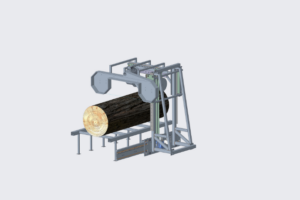
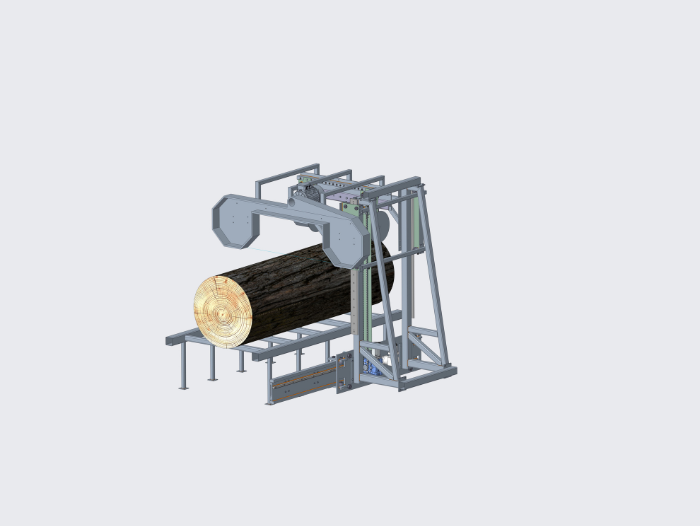
- The Centre for Industrial Equipment Design (CDEI) at the Universitat Politècnica de Catalunya - BarcelonaTech (UPC), together with the IRI, Institut de Robòtica i Informàtica Industrial (CSIC-UPC), is participating in the development of a pre-commercial prototype of an automatic portable sawmill that integrates computer vision, artificial intelligence and computer numerical control to improve productivity, efficiency and safety in local wood processing for the company Envall Coop. S.L.