


Structures of high-performance concrete based on design and construction material and technologies
December 31, 2019
Virtual reproduction of the architectural evolution of the medieval complex of Palau Reial Major, Barcelona
January 3, 2020To develop the connected car, improvements must be made in the field of electronics, such as advanced driver assistance systems (ADAS), new infotainment systems, and more recently communication systems and sensors that provide progressively higher levels of autonomy. These applications need to produce a beam of radiation that is sufficiently directional and adaptable that can scan the space to establish efficient communication or locate a target accurately. This is the case of the new multi-element antennas for data communications or radar detection, particularly for antennas working at millimetre wave frequencies. In this context, technology has been developed to adapt the use of these types of antennas of connected vehicles using a technique called Beamforming. This technique is increasingly used in wireless communication such as 5G, LTE and WLAN, in groups of 3D sensors, sonar medical imaging and audio systems. However, it has not been used for communications in the automotive industry to date.

Beamforming enables the antenna to form narrow beams that can simultaneously or sequentially scan the 3D space to select concentrations of radiation transmitted or received from an antenna in a specific direction and/or space. This selective concentration of radiation improves the signal-to-noise ratio and eliminates interference. The result is an improvement in the reliability of the system for complex and high velocity situations (for the various urban, suburban and rural zones), an improvement in the scope of V2X (V2V and V2I) systems, a significant increase in capacity by achieving GBps speeds, greater spectral and energy efficiencies and higher resolution and accuracy in general, which increases with frequency. In addition, the introduction of a reconfigurable multibeam communication system for sub-6GHz, particularly at MMW frequencies, should provide information (angle and or arrival time) on the source of the incoming signal (location of the infrastructure, another car, the satellite system, etc.) for safety applications or to reduce interference in a highly dense environment, and to connect with land-based and satellite systems.
Eventually, an advanced Beamforming technique could also lead to the development of a cognitive radar with improved resolution, better radar image quality, immunity from interference and capacity to learn from the environment. Combined with the sensors, it could provide full, robust information that brings us closer to a virtual image of the 3D environment in real time.
In short, the Beamforming technique applied to the next generation of reconfigurable vehicle communication systems will create the opportunity for a safer generation of vehicles that are better connected, have a greater knowledge of the environment and are more environmentally friendly for data transmission in high velocity environments.
Sector
Topic
You want to know more?
Related Projects
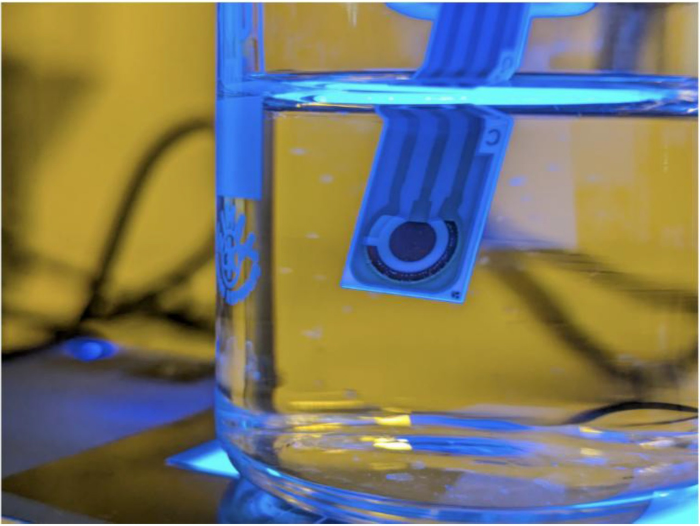
- The MICROTECH LAB - Microtechnology for the Industry research subgroup, part of the Centre for Advanced Technologies in Mechanics (CATMech) at the Universitat Politècnica de Catalunya - BarcelonaTech (UPC), is leading the technical development of a minimally invasive platform to monitor biomarkers and physiological indicators related to stress and emotional wellbeing.
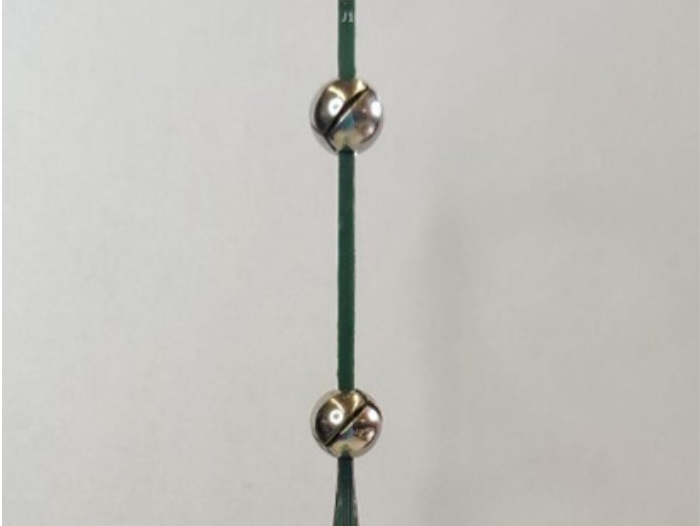
- A research team from the Universitat Politècnica de Catalunya - BarcelonaTech (UPC) has participated in the M3LEC project, coordinated by the Centro de Astrobiología (CAB), a joint centre of the Spanish National Research Council (CSIC) and the Instituto Nacional de Técnica Aeroespacial (INTA), with the Universidad de Sevilla (US) / Instituto de Microelectrónica de Sevilla (IMSE) also participating. M3LEC aimed to contribute to the characterisation of the Martian atmosphere and meteorology, and to investigate new instrumentation for future planetary exploration missions.
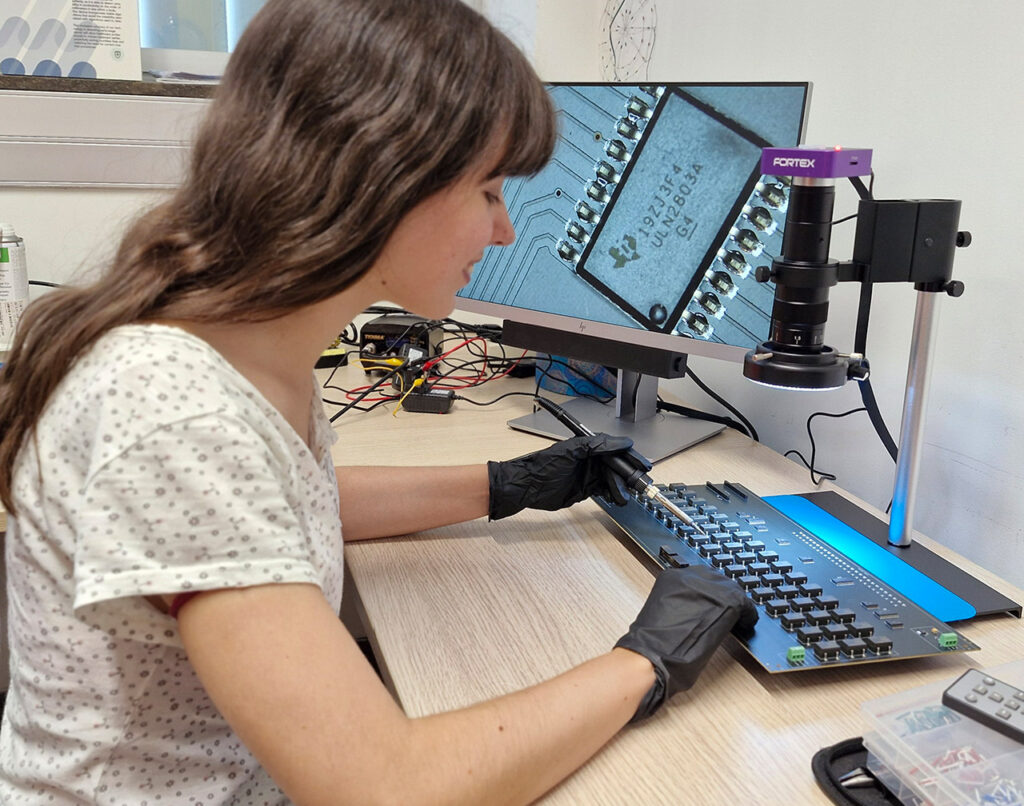
- A team from the Matrix Analysis and Discrete Potential Theory (MAPTHE) research group at the Universitat Politècnica de Catalunya - BarcelonaTech (UPC), and the Department of Mathematics at CUNEF Universidad in Madrid, have participated in the development of MARIA, a prototype of a portable, flexible and radiation-free device designed to improve the early detection of breast cancer. The device can identify tumours through electrical conductivity, with the aim of enabling its future use in primary care settings.
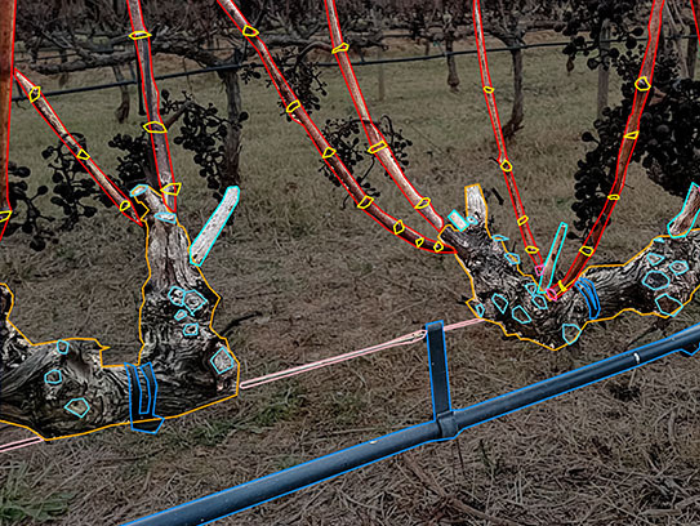
- The Center for Industrial Equipment Design (CDEI-UPC) at the Universitat Politècnica de Catalunya - BarcelonaTech (UPC) is participating in a cross-border project aimed at promoting the use of advanced digital technologies in viticulture in regions on both sides of the Pyrenees. The initiative seeks to improve specialist training, technical advice and decision-making in vineyard management.