

BINAFET: Integrating agriculture into buildings and modelling strategies for air reuse in cities
October 30, 2023
SAFEPASS: A polyurea-concrete construction system to improve safety in the conservation of infrastructures
November 29, 202328/11/2023
The UPC POLQUITEX research group is working, along with the company CARINSA, on the research and development of fragrance microcapsules with biodegradable polymer materials for use in fabric softeners, to avoid the release of microplastics into the environment.
The microencapsulation of fragrances is a technology that has existed for over half a century. For over fifteen years, it has been applied to the detergent sector. However, its use is not without problems associated with the generation of microplastics, and the regulatory framework is increasingly restrictive in terms of the use of toxic, non-biodegradable materials.
In this context, to respond to the need to adapt rapidly to new challenges in the use of microcapsules in the sector, and to implement new technologies and solutions for manufacturers and final users, a research project has emerged with the company CARINSA. Participants include the Polymeric Materials and Textile Chemistry (POLQUITEX) research group, which is part of the Terrassa Institute of Textile Research and Industrial Cooperation (INTEXTER) at the Universitat Politècnica de Catalunya - BarcelonaTech (UPC). The aim is to find new materials for the coating of fragrance microcapsules to be used in fabric softeners, and new encapsulation methods that are more environmentally friendly.
Results and impact
Classic encapsulation methods have used in situ polymerisation to generate aminoplastic resins. This process releases toxic products such as formaldehyde. As a result, current research areas are focused on the formation of formaldehyde-free resins through in situ polymerisation, interfacial polymerisation (polyurea, polyurethane, polyamide), coacervation and combinations of these processes. The project prioritises the selection of synthetic polymeric materials (PLA, PCL, PBS) and materials derived from renewable sources (starch, cellulose, chitosan) or mixtures of them (starch-PLA, starch PCL), as long as they enable the established objectives to be achieved.
The research activity will enable validation of the preferability of using biodegradable materials in the microcapsule wall. It should ensure that the selection of encapsulating polymers and the encapsulation methodology show a balance in biodegradation at the end of their use, and that the current regulations are met without compromising the stability of the ingredient incorporated into the final product, prior to its use.
The new microcapsules that are developed in the framework of the project, will be prepared to be stable in a fabric softener formulation and will ensure the fixation of the microcapsules in the fabric during the domestic washing process.
Budget and funding
The project has a budget of €33,960 through a grant awarded by the Agency for Management of University and Research Grants (AGAUR), as part of a Catalan Government grant programme for industrial doctorates. It has a duration of three years (December 2020 – December 2023).

Topic
You want to know more?
Related Projects
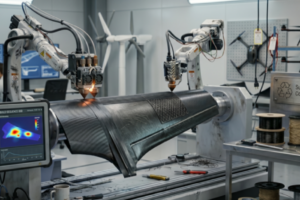
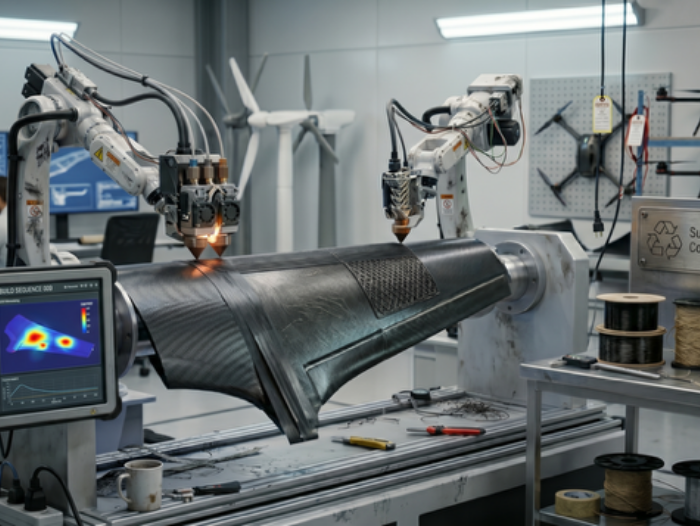
- The Control, Data and Artificial Intelligence (CoDAlab) research group at the Universitat Politècnica de Catalunya - BarcelonaTech (UPC) is taking part in the ATHENS project, which is developing recyclable thermoplastic composite materials with advanced real-time monitoring systems to improve the manufacture, safety and service life of lightweight structures.
- The MICROTECH LAB - Microtechnology for the Industry research subgroup, part of the Centre for Advanced Technologies in Mechanics (CATMech) at the Universitat Politècnica de Catalunya - BarcelonaTech (UPC), is leading the technical development of a minimally invasive platform to monitor biomarkers and physiological indicators related to stress and emotional wellbeing.
- A research team from the Universitat Politècnica de Catalunya - BarcelonaTech (UPC) has participated in the M3LEC project, coordinated by the Centro de Astrobiología (CAB), a joint centre of the Spanish National Research Council (CSIC) and the Instituto Nacional de Técnica Aeroespacial (INTA), with the Universidad de Sevilla (US) / Instituto de Microelectrónica de Sevilla (IMSE) also participating. M3LEC aimed to contribute to the characterisation of the Martian atmosphere and meteorology, and to investigate new instrumentation for future planetary exploration missions.
- The Interdisciplinary Group on Building Science and Technology (GICITED) and the Energy, Catalysis, Process and Reaction Engineering (ENCORE) research group at the Universitat Politècnica de Catalunya - BarcelonaTech (UPC) are participating in the European ArchiSpace project, to develop infrastructure prototypes for human settlements in extraterrestrial environments using materials and conditions analogous to those on the Moon and Mars.