

ECOSUN: Improvement of efficiency in thermal and photovoltaic cogeneration systems
June 5, 2024
Compass+: Artificial intelligence and machine learning for maritime traffic management at the Port of Barcelona
June 26, 202407/06/2024
The EU.FFICIENT (European Communities of Facilitators focused on Co-creation training, Networking and Hands-on learning) project, launched in January 2024, aspires to transform and enhance the co-creation landscape across Europe. Funded under the EU framework, the project brings together a consortium of 16 partners from 12 countries, boasting a diverse blend of academic, industrial and public sector partners. The initiative, with CIT UPC standing as a one of key participants, represents an investment in the future of collaborative innovation.
At its core, EU.FFICIENT seeks to address the often fragmented and inefficient co-creation processes that hinder innovation. The project’s aim is to create, pilot and validate Communities of Expert Facilitators (CEFs) that can navigate and streamline co-creation processes in Europe. By focusing on personalized training, networking, and practical, hands-on learning experiences, the project endeavours to create a sustainable and replicable model that will serve as a blueprint for collaboration across Europe.
The innovation model proposed by EU.FFICIENT is structured around the creation of four pilot CEFs, each dedicated to a critical sector of European industry and innovation: Advanced Manufacturing, Mobility, HealthTech, and AI/Digital. These pilots are designed to facilitate an organic cross-fertilization of ideas and methodologies, thus enabling a thorough cross-comparison and the generation of best practices that can be adapted and applied to various fields.
CIT UPC’s involvement in EU.FFICIENT is a testament to its ongoing commitment to fostering collaboration between academia and industry. As a recognized leader in transferring technology and knowledge, CIT UPC's role in the project will likely encompass leveraging its extensive capabilities, providing expertise in the facilitation of innovation, through its role as the leader of Piloting of the four CEFs. This participation underscores the value of cross-disciplinary and cross-border collaboration in tackling complex challenges and fostering innovation.
In addition to CIT UPC, other participants in this project are KU Leuven (leader of the project) and Flanders Make (Belgium), the Karlsruher Technology Institute KIT (Germany), Innoget (Spain), Fondazione Politecnico di Milano (Italy), University of Maribor (Slovenia), EIT Manufacturing and i2m (Austria), Centrale Supélec (France), TICE.PT (Portugal), Sunrise Valley Technology Park (Lithuania), Skellefteå Municipality (Sweden), University Industry Innovation Network (The Netherlands), CSEC - Centre for Strategy & Evaluation Services Europe (Ireland).
The project has a duration of three years (2024-2026) and a budget of two million euros. EU.FFICIENT has received funding from the European Union’s Horizon Europe Programme under grant agreement No 101135297.



This project has received funding from the European Union’s Horizon Europe Programme under grant agreement No 101135297.
Disclaimer:
Views and opinions expressed are however those of the author(s) only and do not necessarily reflect those of the European Union or European Health and Digital Executive Agency (HADEA). Neither the European Union nor the granting authority can be held responsible for them.
Technology
Sector
Topic
You want to know more?
Related Projects
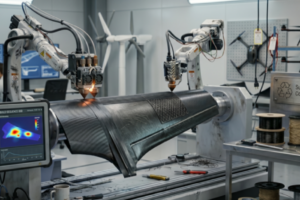
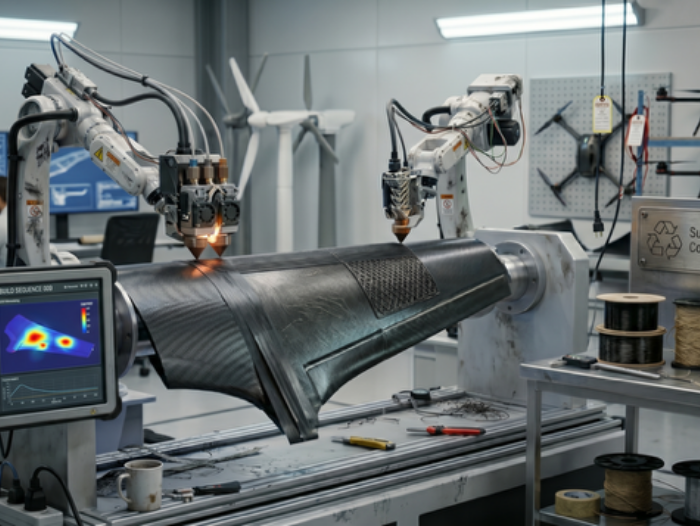
- The Control, Data and Artificial Intelligence (CoDAlab) research group at the Universitat Politècnica de Catalunya - BarcelonaTech (UPC) is taking part in the ATHENS project, which is developing recyclable thermoplastic composite materials with advanced real-time monitoring systems to improve the manufacture, safety and service life of lightweight structures.
- The MICROTECH LAB - Microtechnology for the Industry research subgroup, part of the Centre for Advanced Technologies in Mechanics (CATMech) at the Universitat Politècnica de Catalunya - BarcelonaTech (UPC), is leading the technical development of a minimally invasive platform to monitor biomarkers and physiological indicators related to stress and emotional wellbeing.
- A research team from the Universitat Politècnica de Catalunya - BarcelonaTech (UPC) has participated in the M3LEC project, coordinated by the Centro de Astrobiología (CAB), a joint centre of the Spanish National Research Council (CSIC) and the Instituto Nacional de Técnica Aeroespacial (INTA), with the Universidad de Sevilla (US) / Instituto de Microelectrónica de Sevilla (IMSE) also participating. M3LEC aimed to contribute to the characterisation of the Martian atmosphere and meteorology, and to investigate new instrumentation for future planetary exploration missions.
- The Interdisciplinary Group on Building Science and Technology (GICITED) and the Energy, Catalysis, Process and Reaction Engineering (ENCORE) research group at the Universitat Politècnica de Catalunya - BarcelonaTech (UPC) are participating in the European ArchiSpace project, to develop infrastructure prototypes for human settlements in extraterrestrial environments using materials and conditions analogous to those on the Moon and Mars.