

PERMEPSY: A Predictive Tool to Personalise Psychosis Treatment
July 29, 2024
VALSUCANEM: New green composite materials from the valorisation of hemp by-products
September 12, 202409/09/2024
The DISCOVER project aims to revolutionize the construction and demolition industry by developing an advanced system for the autonomous, synchronous, and continuous identification and analysis of materials in end-of-life built environments.
The Universitat Politècnica de Catalunya - BarcelonaTech (UPC) coordinates the Digital, autonomous, Intelligent and Synchronous system for Continuous identification, Optimization and Value Extraction of Resources from the end-of-use built environment (DISCOVER) project, which involves a multidisciplinary team formed by the Center for Industrial Equipment Design (CDEI), the Geophysics and Earthquake Engineering (GiES) research group, and the Structural and Materials Technology (ATEM) research group. The project will provide data-driven insights, to key stakeholders, including academic performers, and, along with construction industry representatives to make deconstruction more efficient, optimize the use of resources, improve the environmental footprints and enhance the circularity of construction and demolition. This will unlock the potential of end-of-life built works, which will become material banks.
The expected outcomes of DISCOVER include an autonomous robotic platform coupled with continuous identification tools to scan built works and provide synchronous quantitative and qualitative data from different materials. Artificial intelligence algorithms will allow a rapid analysis of the properties and characteristics of components and will feed into the automated scan-to-BIM model creation. The multidimensional BIM, including selective demolition processes, labour productivity, and technical planning, will become a Digital Twin of the demolition site optimized by social, economic, and environmental multi-criteria assessments. This approach will highly contribute to significant increase in the supply of traceable and sustainable construction materials and products for enhancing their wider market acceptance, following the waste hierarchy.
The ambitions of the project are:
- Developing rapid and autonomous on-site material identification methods
- Advancing robotics in pre-demolition inspection and identification
- Unlocking the potential of AI and BIM-based tools for sustainable deconstruction
- Transforming demolition practices through decision-making tools for optimal resource recovery
- Pioneering circular economy in construction by bridging multi-LCA/LCC, demolition digitalization, and traceability of recovered products
- Integrating deconstruction and construction: increasing direct material reuse in construction
DISCOVER will impact various perspectives:
- Economic - Enhancing efficiency, cost savings, and reduced labour in construction and demolition.
- Environmental - Reducing Construction and Demolition Waste (C&DW), lowering landfill rates, and decreasing CO2 emissions related to waste management and construction materials.
- Social - Influencing policymakers to create evidence-based regulations for sustainable construction and waste management.
- Scientific - Accelerating research in sustainable construction and waste management.
DISCOVER Consortium and budget
The project is funded by the European Union (Horizon Europe) with a total budget of €5,997,208.50. It began in June 2024 and will span four years. The DISCOVER consortium, which includes CIT UPC, comprises 14 partners (a balanced mix of SMEs, large companies, academia, research institutions, and associations) from eight EU countries (Belgium, France, Germany, Greece, Netherlands, Poland, Portugal, Spain).


The DISCOVER (GA 101129909) project is funded by the European Union. Views and opinions expressed are however those of the author(s) only and do not necessarily reflect those of the European Union or the European Health and Digital Executive Agency (HADEA). Neither the European Union nor the granting authority can be held responsiblefor them.
You want to know more?
Related Projects
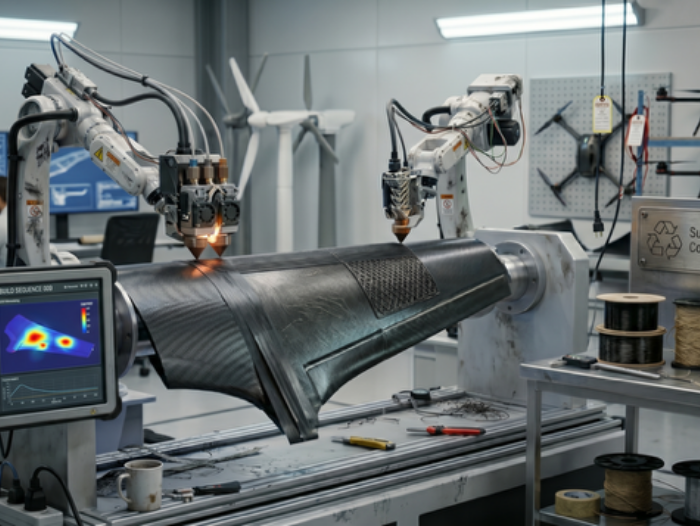
- The Control, Data and Artificial Intelligence (CoDAlab) research group at the Universitat Politècnica de Catalunya - BarcelonaTech (UPC) is taking part in the ATHENS project, which is developing recyclable thermoplastic composite materials with advanced real-time monitoring systems to improve the manufacture, safety and service life of lightweight structures.
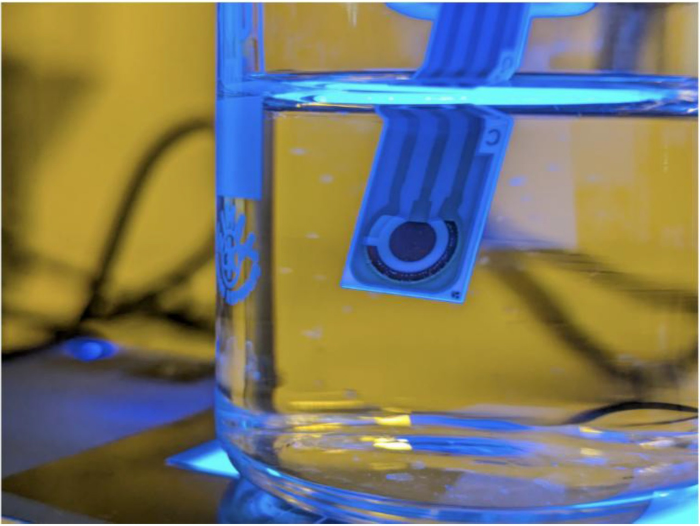
- The MICROTECH LAB - Microtechnology for the Industry research subgroup, part of the Centre for Advanced Technologies in Mechanics (CATMech) at the Universitat Politècnica de Catalunya - BarcelonaTech (UPC), is leading the technical development of a minimally invasive platform to monitor biomarkers and physiological indicators related to stress and emotional wellbeing.
- A research team from the Universitat Politècnica de Catalunya - BarcelonaTech (UPC) has participated in the M3LEC project, coordinated by the Centro de Astrobiología (CAB), a joint centre of the Spanish National Research Council (CSIC) and the Instituto Nacional de Técnica Aeroespacial (INTA), with the Universidad de Sevilla (US) / Instituto de Microelectrónica de Sevilla (IMSE) also participating. M3LEC aimed to contribute to the characterisation of the Martian atmosphere and meteorology, and to investigate new instrumentation for future planetary exploration missions.
- The Interdisciplinary Group on Building Science and Technology (GICITED) and the Energy, Catalysis, Process and Reaction Engineering (ENCORE) research group at the Universitat Politècnica de Catalunya - BarcelonaTech (UPC) are participating in the European ArchiSpace project, to develop infrastructure prototypes for human settlements in extraterrestrial environments using materials and conditions analogous to those on the Moon and Mars.