

TRAP: Citizen science and numerical modelling to fight marine plastic pollution and improve environmental management
April 14, 2025
AEROFER: Liquid Fertilisers from Pig Manure
April 30, 202529/04/2025
The Center for Technological Innovation in Static Converters and Drives (CITCEA-UPC) at the Universitat Politècnica de Catalunya - BarcelonaTech (UPC) is participating in the TenSyGrid project, a set of innovative tools for real-time evaluation of grid stability.
The European power grid is undergoing profound changes in its demand. An increasing number of decentralized generation points and the fluctuating supply of renewable energies are making interactions between grid components more complex, posing a significant challenge to maintaining grid stability.
The growing share of renewable energy sources in distribution and transmission networks increases integration demands. Traditional methods, based on simplified simulations, do not adequately capture the fast dynamics of power electronics, leading to uncertainty and forcing the application of very conservative stability limits that restrict the expansion of renewable energy sources.
Currently, only simulations allow consideration of all possible scenarios. However, EMT (electromagnetic transient) simulations used for this purpose are highly computationally intensive and impractical, as they require the analysis of hundreds of different scenarios.
In this context, the TenSyGrid project emerges with a completely new approach: reducing the computational load of the power grid by using a multilinear system that simulates the grid with a mathematical model called a tensor. These models can represent the relevant phenomena of converter-dominated grids but with a much lower computational load than traditional models. At the same time, they are highly interpretable. With this innovative framework, the TenSyGrid Toolbox will be developed — a tool that will evaluate the stability of power grids much more effectively and in real time.
The tool is designed to easily integrate with the existing commercial software used by grid operators, thus facilitating the adoption of advanced stability assessment methods without altering current workflows, regardless of the network size.
Impact
The TenSyGrid project offers an innovative way to understand and analyze power grids. Instead of using traditional models, it employs tensors, which allow for a faster, simpler, and more efficient description of grid behavior. These new models not only consume fewer computing resources but are also easier to interpret. This greatly simplifies grid stability analysis — almost in real time — allowing for quick and safe decision-making.
This tool breaks away from the typical "black box" model used by original equipment manufacturers, where internal processes and key information are kept hidden. In doing so, it facilitates the identification and in-depth analysis of the root causes of problems, providing system operators with a more transparent and detailed view of grid behavior.
Furthermore, the tool developed by TenSyGrid can be easily incorporated into the software already used by network operators, enabling them to benefit from these advancements without changing their existing operations.
Consortium and Funding
The TenSyGrid project also involves the Fraunhofer Institute for Wind Energy Systems (Fraunhofer IWES), Hamburg University of Applied Sciences (HAW), eRoots Analytics, and the University of Malta (UM).
The project is funded by the German Federal Ministry for Economic Affairs and Climate Action (BMWK), XJENZA Malta, AE, and CDTI Spain, under the European Union’s Clean Energy Transition Partnership (CETP) framework. It has a budget of €1.41 million. The project started in December 2024 and will run until 2027.

Supported by:

Sector
You want to know more?
Related Projects
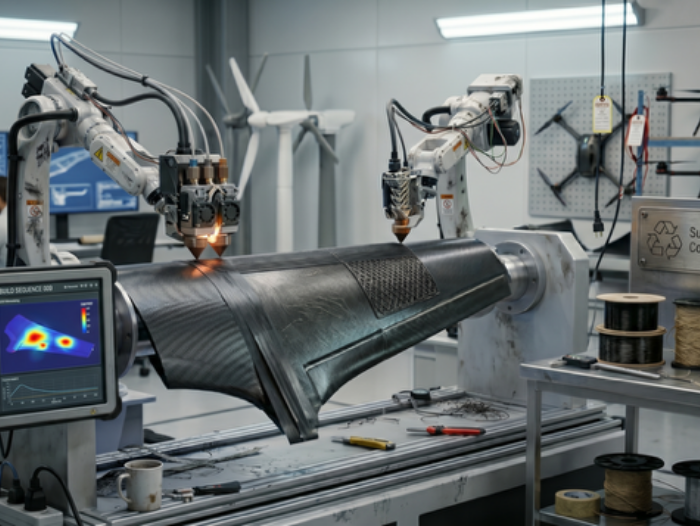
- The Control, Data and Artificial Intelligence (CoDAlab) research group at the Universitat Politècnica de Catalunya - BarcelonaTech (UPC) is taking part in the ATHENS project, which is developing recyclable thermoplastic composite materials with advanced real-time monitoring systems to improve the manufacture, safety and service life of lightweight structures.
- The MICROTECH LAB - Microtechnology for the Industry research subgroup, part of the Centre for Advanced Technologies in Mechanics (CATMech) at the Universitat Politècnica de Catalunya - BarcelonaTech (UPC), is leading the technical development of a minimally invasive platform to monitor biomarkers and physiological indicators related to stress and emotional wellbeing.
- A research team from the Universitat Politècnica de Catalunya - BarcelonaTech (UPC) has participated in the M3LEC project, coordinated by the Centro de Astrobiología (CAB), a joint centre of the Spanish National Research Council (CSIC) and the Instituto Nacional de Técnica Aeroespacial (INTA), with the Universidad de Sevilla (US) / Instituto de Microelectrónica de Sevilla (IMSE) also participating. M3LEC aimed to contribute to the characterisation of the Martian atmosphere and meteorology, and to investigate new instrumentation for future planetary exploration missions.
- The Interdisciplinary Group on Building Science and Technology (GICITED) and the Energy, Catalysis, Process and Reaction Engineering (ENCORE) research group at the Universitat Politècnica de Catalunya - BarcelonaTech (UPC) are participating in the European ArchiSpace project, to develop infrastructure prototypes for human settlements in extraterrestrial environments using materials and conditions analogous to those on the Moon and Mars.