

OPTIMA: Optimisation of Photovoltaic Technology for Self-Consumption in Buildings
June 23, 2025
BITSDRAIN: Porous Bituminous Pavements for Sustainable Urban Drainage
July 8, 202504/07/2025
The Laboratory of Applied Bioacoustics (LAB) at the Universitat Politècnica de Catalunya – BarcelonaTech (UPC) is leading the SEAMPHONI project (Sensing and Evaluating offshore biodiversity with Acoustics, Molecular and Imagery tools for an intelligent digital twin). It aims to transform the monitoring of marine biodiversity through the creation of an intelligent marine digital twin that will integrate innovative tools such as environmental DNA, acoustics and underwater imaging.
As our oceans face increasing pressure from human activity, a new approach to marine conservation is urgently needed. By integrating cutting-edge monitoring solutions, the SEAMPHONI project seeks to develop real-time, cost-effective tools that will revolutionise how biodiversity, ecosystem health, and the effectiveness of protection and restoration measures are assessed. The goal is to create inclusive and scalable systems to ensure no part of the ocean remains invisible or unknown.
SEAMPHONI aims to transform offshore marine biodiversity monitoring. Through the integration of innovative tools such as environmental DNA (eDNA) — which allows species to be identified from genetic traces present in the water — acoustics, and underwater imaging, an intelligent marine digital twin will be built. It will be interoperable with the European Digital Twin Ocean (EDITO). This virtual replica of the marine ecosystem will offer a comprehensive and dynamic view of the environment, based on systems and data science methodologies and open-source software.
The ambition of the project goes beyond technology, as SEAMPHONI also aims to support international marine policies and reconnect society with the ocean — even through artistic outreach.
One of the project's objectives is to listen to the underwater symphony of life and sound that characterises Europe’s most remote and vulnerable marine regions, including Areas Beyond National Jurisdiction (ABNJ), which remain largely unprotected.
Impact
The project represents a groundbreaking solution for marine conservation, enabling governmental agencies, the scientific community, and local stakeholders to access baseline and real-time data, as well as predictive scenarios. The aim is to move towards more continuous, predictive, and affordable monitoring of marine biodiversity, thus contributing to the identification of priority protection areas and supporting the goals of the Global Biodiversity Framework 2030 and the EU Mission for Oceans and Inland Waters.
Budget, Consortium and Funding
The project has received €11 million in funding from the Horizon Europe programme and involves 24 European partners, including research centres, universities and companies. It has a duration of four years (June 2025 – June 2029).


You want to know more?
Related Projects
- Researchers from the Computer Networks and Distributed Systems (CNDS) research group at the Universitat Politècnica de Catalunya - BarcelonaTech (UPC) are developing new artificial intelligence-based solutions to obtain more accurate and reliable data from IoT sensor networks, with applications in air quality monitoring, anomaly detection and industrial predictive maintenance.
- The Casa Bosc project explores a lightweight, modular and prefabricated timber construction system designed to reduce the environmental impact of housing while making it easier to build and adapt to different contexts. The project has been developed by researchers from the Architectural Rehabilitation and Restoration Research Group (REARQ) at the Universitat Politècnica de Catalunya - BarcelonaTech (UPC) and the company ÀGORA.
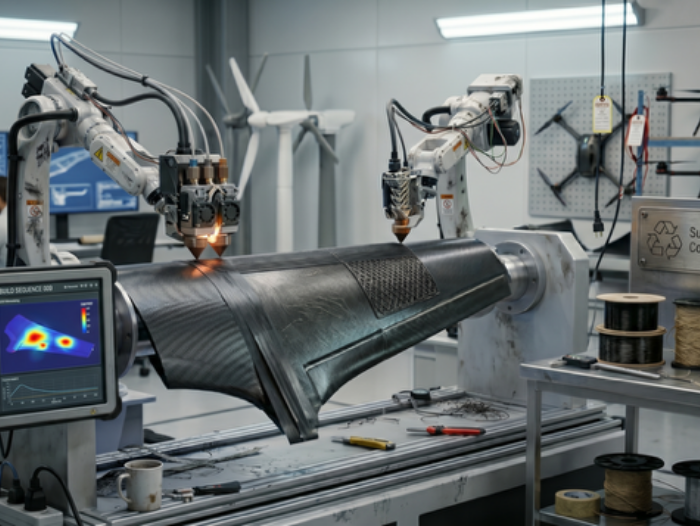
- The Control, Data and Artificial Intelligence (CoDAlab) research group at the Universitat Politècnica de Catalunya - BarcelonaTech (UPC) is taking part in the ATHENS project, which is developing recyclable thermoplastic composite materials with advanced real-time monitoring systems to improve the manufacture, safety and service life of lightweight structures.
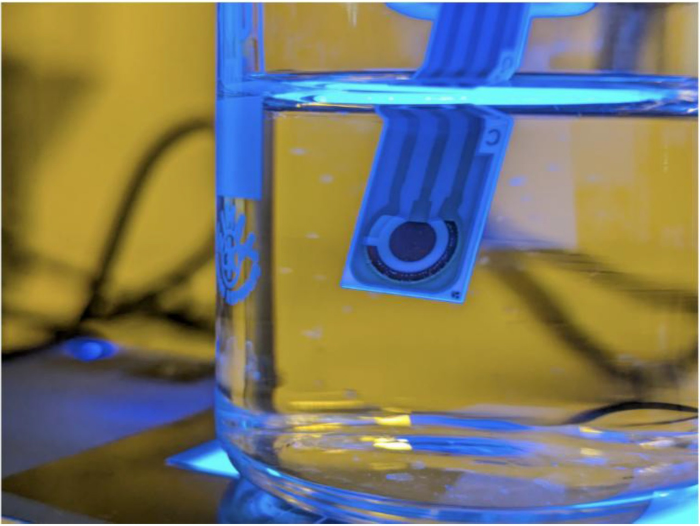
- The MICROTECH LAB - Microtechnology for the Industry research subgroup, part of the Centre for Advanced Technologies in Mechanics (CATMech) at the Universitat Politècnica de Catalunya - BarcelonaTech (UPC), is leading the technical development of a minimally invasive platform to monitor biomarkers and physiological indicators related to stress and emotional wellbeing.