


HYDROHEAL: Improving Bone Fracture Treatment with Advanced Biomaterials
July 24, 2025
ReINfoRCed: Assessment and rehabilitation of concrete structures affected by corrosion through digital twins and eco-efficient strengthening
August 28, 202526/08/2025
Researchers from the Universitat Politècnica de Catalunya - BarcelonaTech (UPC) are participating in the Quartz Enrichment Enabling Near-Zero Silicon (QUEEN) project, aimed at reducing the European Union’s dependence on external sources for critical raw materials, particularly metallurgical-grade silicon (MG-Si). To achieve this, the project proposes harnessing an underused resource: quartz sand from European quarries, to produce MG-Si locally, sustainably, and efficiently.
The project tackles a major challenge: the EU’s heavy reliance on external sources for critical raw materials, especially metallurgical silicon. Currently, over 80% of MG-Si —essential for high-tech applications and the EU’s sustainability goals— is imported mainly from China.
The overall objective of the QUEEN project is to develop a new environmentally friendly metallurgical grade silicon (MG-Si) process from quarry sands, with near-zero CO₂ emissions and by making use of residual materials. This transformative approach could turn any EU quartz quarry into a potential MG-Si reservoir. Moreover, the technologies developed could be adapted to other materials.
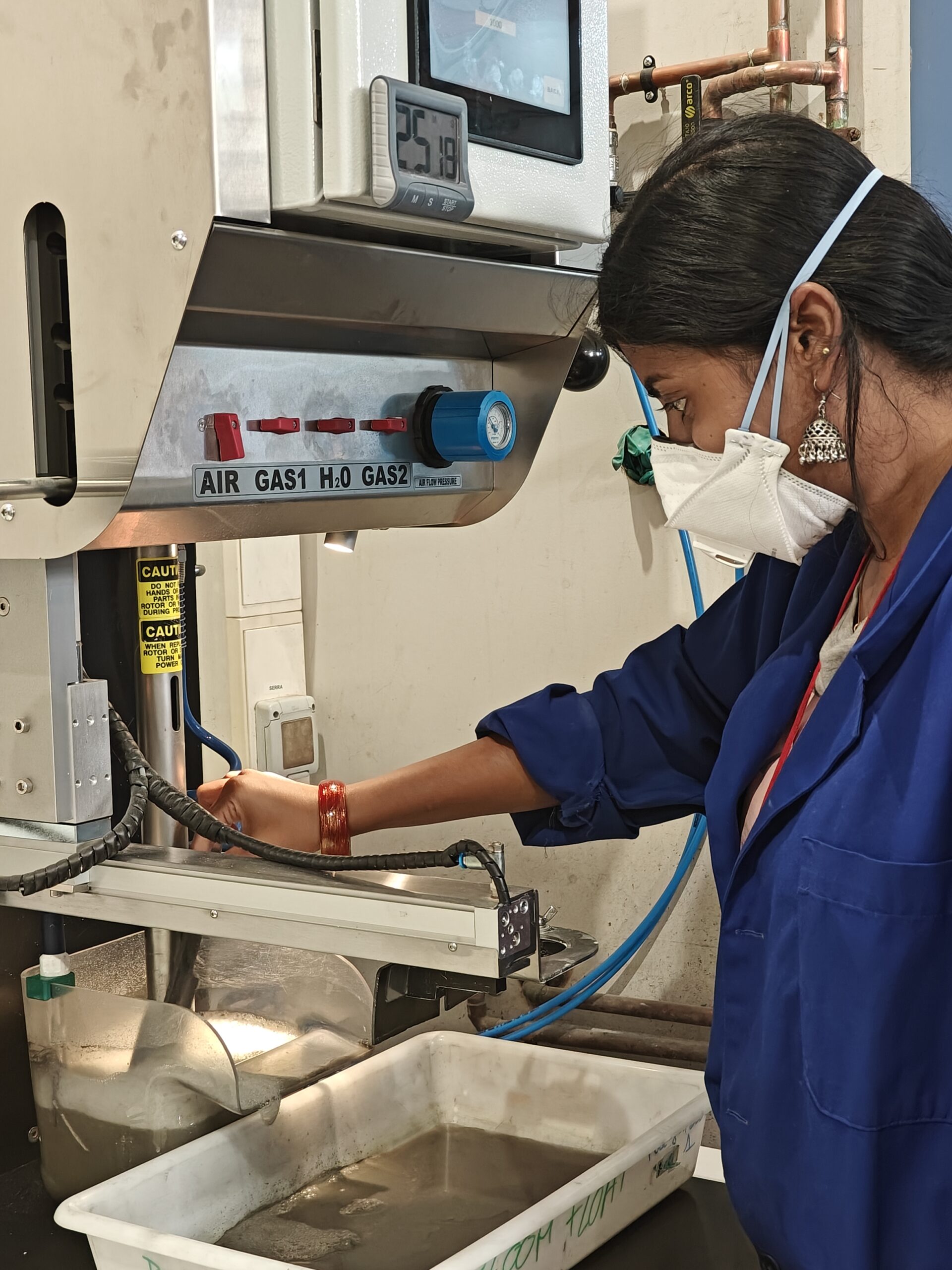
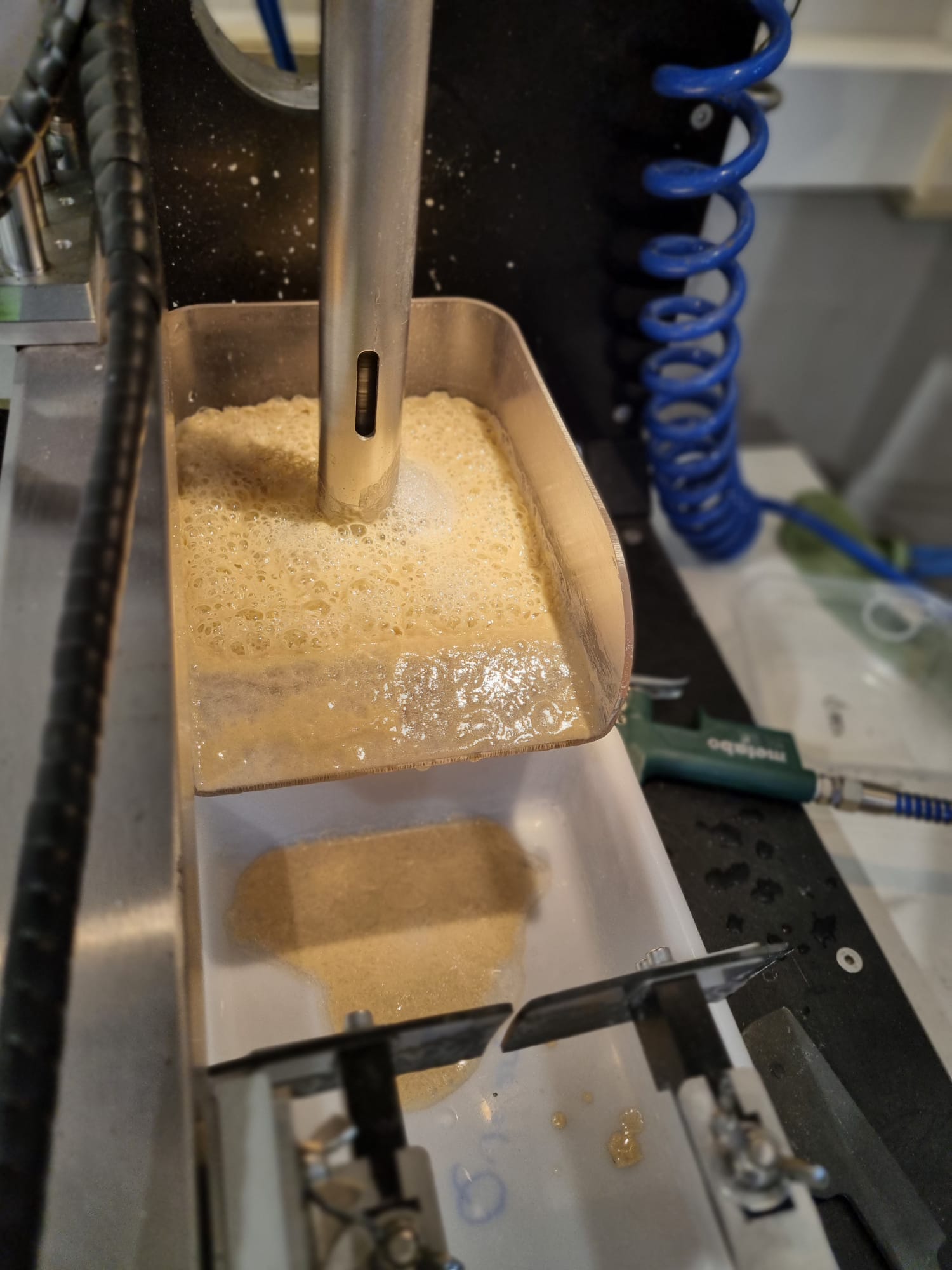
A new mineral separation process will be designed based on froth flotation using sustainably sourced reagents to extract quartz from quarry sands, offering a more efficient and environmentally friendly alternative for refining high-purity quartz, while recovering calcite and feldspars as by-products.
From UPC, the participating groups include the Sustainable Mining Research Group (GREMS), the project coordinator; the Research Group on Intelligent and Sustainable Resources and Industries (RIIS); the Smart Sustainable Resources Research Centre (SSR-UPC); and the Research Centre for Supervision, Safety and Automatic Control (CS2AC-UPC). Also involved are the University Institute for Research in River Dynamics and Hydrological Engineering (FLUMEN), the Intelligent and Secure ICT Systems Research Group (SINAPSI), the Service and Industrial Robotics – Operation, Production and Enterprise Group (SIR-OPE), and the Service and Industrial Robotics Group (SIR).
UPC’s main role is the development and pilot-scale validation of the new separation process, in collaboration with industrial partners that produce biological reagents for use in the process. The market value of quartz depends on its purity, and this technology is expected to allow companies access to higher-value markets.
Impact
The QUEEN project is expected to have a strong economic, social and environmental impact. It aims to cover 56% of the EU’s MG-Si demand by 2032. In addition to reducing import dependence, the project anticipates recovering over 300 million tonnes of MG-Si from sand and saving 232 billion tonnes of CO₂.
It will also help reduce the EU’s reliance on imported quartz by 714,000 tonnes, create 440 new jobs, and generate an estimated gross profit increase of €140 million.
From an environmental and technological perspective, the project seeks to improve resource efficiency by 30% and set new benchmarks in line with the EU’s critical raw materials strategy.
Partners, Budget and Funding
The QUEEN project involves 14 partners from 8 EU countries.
Funded under the Horizon Europe programme, the project has a total budget of €7,294,162.27 and is expected to run for four years (November 2024 - October 2028).
Technology
Sector
Topic
You want to know more?
Related Projects
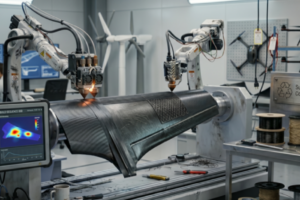
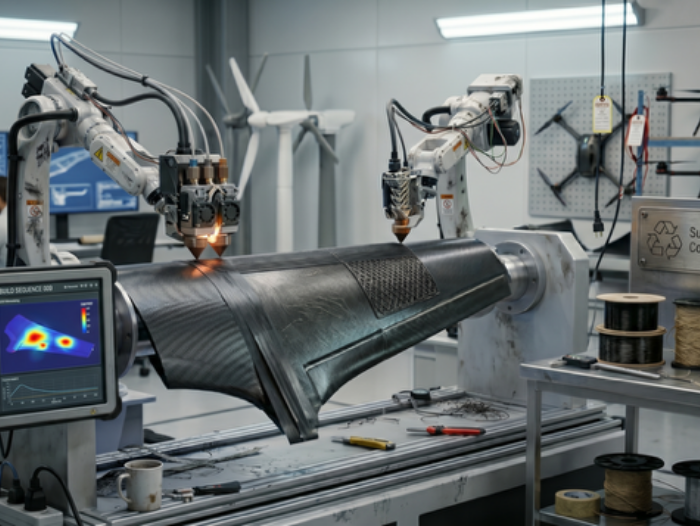
- The Control, Data and Artificial Intelligence (CoDAlab) research group at the Universitat Politècnica de Catalunya - BarcelonaTech (UPC) is taking part in the ATHENS project, which is developing recyclable thermoplastic composite materials with advanced real-time monitoring systems to improve the manufacture, safety and service life of lightweight structures.
- The MICROTECH LAB - Microtechnology for the Industry research subgroup, part of the Centre for Advanced Technologies in Mechanics (CATMech) at the Universitat Politècnica de Catalunya - BarcelonaTech (UPC), is leading the technical development of a minimally invasive platform to monitor biomarkers and physiological indicators related to stress and emotional wellbeing.
- A research team from the Universitat Politècnica de Catalunya - BarcelonaTech (UPC) has participated in the M3LEC project, coordinated by the Centro de Astrobiología (CAB), a joint centre of the Spanish National Research Council (CSIC) and the Instituto Nacional de Técnica Aeroespacial (INTA), with the Universidad de Sevilla (US) / Instituto de Microelectrónica de Sevilla (IMSE) also participating. M3LEC aimed to contribute to the characterisation of the Martian atmosphere and meteorology, and to investigate new instrumentation for future planetary exploration missions.
- The Interdisciplinary Group on Building Science and Technology (GICITED) and the Energy, Catalysis, Process and Reaction Engineering (ENCORE) research group at the Universitat Politècnica de Catalunya - BarcelonaTech (UPC) are participating in the European ArchiSpace project, to develop infrastructure prototypes for human settlements in extraterrestrial environments using materials and conditions analogous to those on the Moon and Mars.