


STOR-HY: More flexible, efficient and resilient hydropower storage for the European electricity grid
July 2, 2026
VINNEA: Advanced digital technologies for more efficient and automated viticulture
July 9, 202607/07/2026
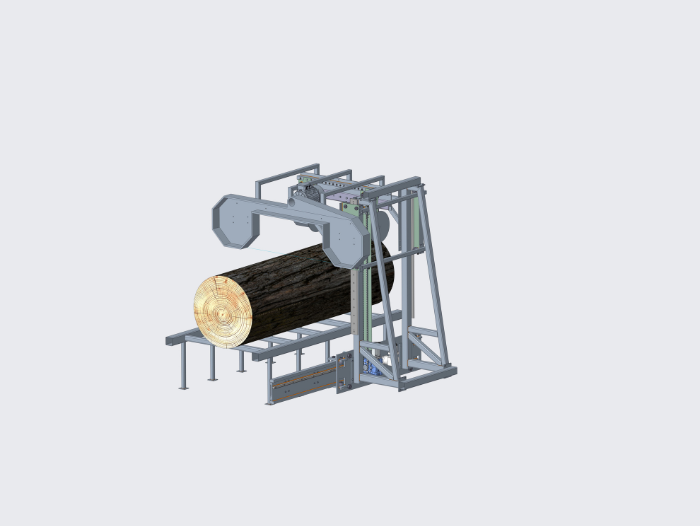
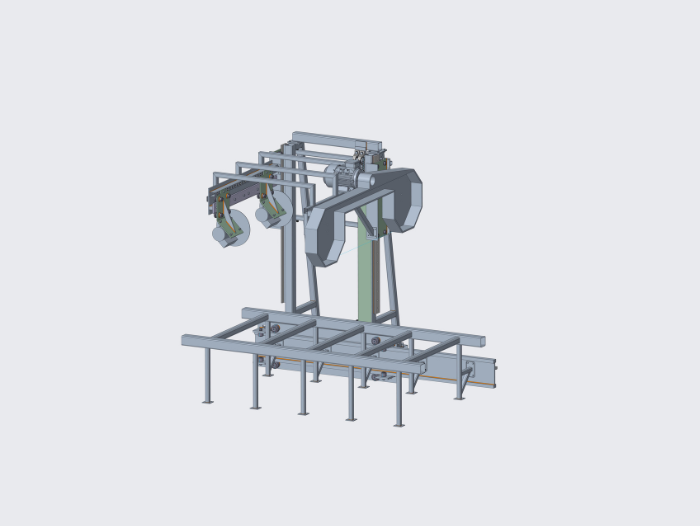
The Centre for Industrial Equipment Design (CDEI) at the Universitat Politècnica de Catalunya - BarcelonaTech (UPC), together with the IRI, Institut de Robòtica i Informàtica Industrial (CSIC-UPC), is participating in the development of a pre-commercial prototype of an automatic portable sawmill that integrates computer vision, artificial intelligence and computer numerical control to improve productivity, efficiency and safety in local wood processing for the company Envall Coop. S.L.
The wood transformation sector faces the challenge of improving the efficiency of sawing processes, particularly in local or small-scale settings, where flexibility, equipment mobility and optimal use of each log are key factors. Portable sawmills make it possible to bring the cutting process closer to the territory where the raw material is located, but they often depend on manual or semi-automatic operations that can limit productivity, precision and safety. In addition, operating a sawmill requires highly experienced personnel in order to obtain the maximum yield from the available wood.
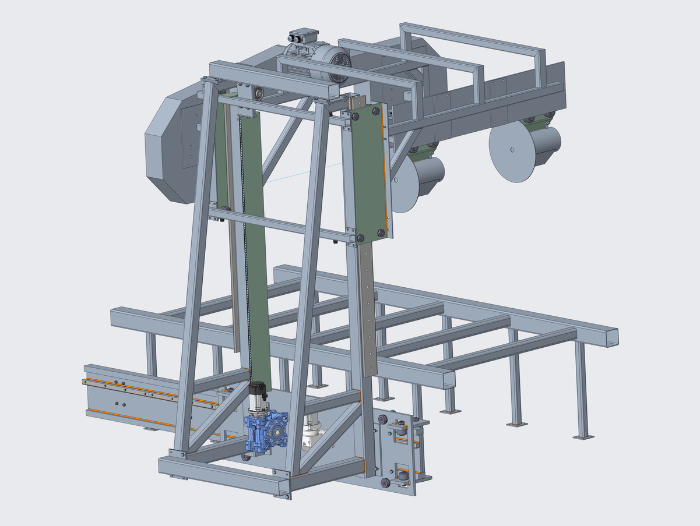
In this context, the SPIN project aims to develop a pre-commercial prototype of an intelligent portable sawmill, a new-generation automatic sawmill designed to transform the local wood-sawing process. The solution is equipped with two cutting tools: a band saw and a circular saw.
The main innovation of the SPIN project lies in combining this mechanical equipment with three technological advances that make it possible to automate and optimise the process. First, the system incorporates 3D log modelling through computer vision, making it possible to obtain a digital representation of the piece before cutting. This information is essential to understand its geometry and make more precise decisions on how to use it.
Second, once the 3D model of the log has been obtained, cutting-optimisation software based on the Bin Packing Problem (BPP) is developed. This combinatorial optimisation problem, together with the use of artificial intelligence, makes it possible to calculate the optimal cutting strategy according to the characteristics of the wood and the required final products. This reduces waste, maximises the use of the raw material and increases the commercial value of each processed piece.
Finally, SPIN integrates a system for automating mechanical processes through computer numerical control (CNC). This automation makes it possible to execute cutting movements and operations with greater precision and repeatability, reducing dependence on manual operation and improving safety conditions for users. In addition, with the help of an intelligent system, the operator can optimise the cutting process without needing extensive experience, as the technology supports decision-making and improves process precision.
Specifically, the CDEI’s contribution focuses on developing the machine’s mechanical design, from conceptual design through to detailed design, including simulations and detailed drawings, to ensure that all components are properly integrated and that the machine meets functional and safety requirements, contributing technological knowledge in numerical control technology and facilitating the transfer of advanced solutions towards an industrial application with market potential. The CDEI will also provide technical support in manufacturing the prototype, particularly in assembling the mechanical components and control systems. For its part, the contribution of the IRI (CSIC-UPC) focuses on developing the prototype’s computer vision system. This ranges from conceptual design to implementation of the technology for generating the 3D model of the log, including the execution of advanced algorithms to calculate the optimal cutting strategy. In this way, the system is ensured to respond accurately to production and wood-use requirements, contributing specialised knowledge in machine vision and facilitating the transfer of digital solutions towards an industrial application with commercial viability.
Budget and Consortium
The SPIN project is being carried out through a consortium led by Envall Cooperativa and involves the Group of Centres for the Advanced Digital Factory (DigiFACT), through the CDEI at the UPC, and the IRI (CSIC-UPC) of the Spanish National Research Council (CSIC). The project is expected to last 2 years (2025-2026) and has a total budget of €187,182. The project has received funding from the Agency for Business Competitiveness (ACCIÓ) of the Government of Catalonia.
Technology
Sector
You want to know more?
Related Projects
- The MICROTECH LAB - Microtechnology for the Industry research subgroup, part of the Centre for Advanced Technologies in Mechanics (CATMech) at the Universitat Politècnica de Catalunya - BarcelonaTech (UPC), is leading the technical development of a minimally invasive platform to monitor biomarkers and physiological indicators related to stress and emotional wellbeing.
- A research team from the Universitat Politècnica de Catalunya - BarcelonaTech (UPC) has participated in the M3LEC project, coordinated by the Centro de Astrobiología (CAB), a joint centre of the Spanish National Research Council (CSIC) and the Instituto Nacional de Técnica Aeroespacial (INTA), with the Universidad de Sevilla (US) / Instituto de Microelectrónica de Sevilla (IMSE) also participating. M3LEC aimed to contribute to the characterisation of the Martian atmosphere and meteorology, and to investigate new instrumentation for future planetary exploration missions.
- A team from the Matrix Analysis and Discrete Potential Theory (MAPTHE) research group at the Universitat Politècnica de Catalunya - BarcelonaTech (UPC), and the Department of Mathematics at CUNEF Universidad in Madrid, have participated in the development of MARIA, a prototype of a portable, flexible and radiation-free device designed to improve the early detection of breast cancer. The device can identify tumours through electrical conductivity, with the aim of enabling its future use in primary care settings.
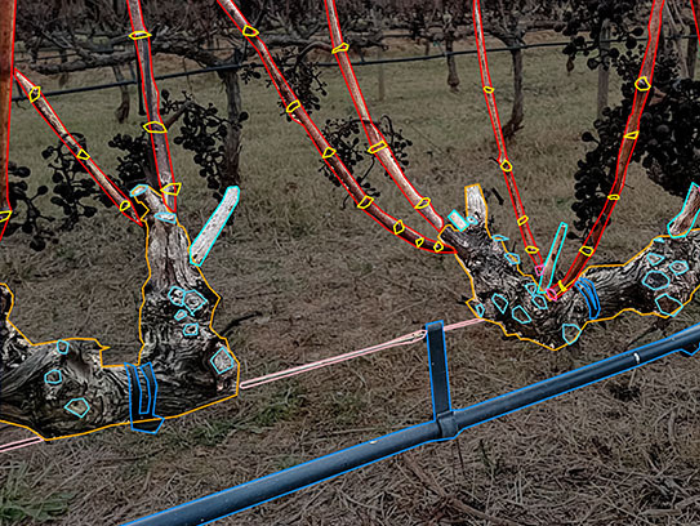
- The Center for Industrial Equipment Design (CDEI-UPC) at the Universitat Politècnica de Catalunya - BarcelonaTech (UPC) is participating in a cross-border project aimed at promoting the use of advanced digital technologies in viticulture in regions on both sides of the Pyrenees. The initiative seeks to improve specialist training, technical advice and decision-making in vineyard management.