


An innovative treatment for bone cancer based on plasma-gas treated hydrogels
April 14, 2023
RECYBUILDMAT: Construction materials based on recycling fibres from clothing waste and textile remnants
May 4, 202302/05/2023
The UPC Department of Computer Architecture coordinates the European project Vitamin-V, in which a complete set of hardware-software is developed for cloud services, based on the latest open-source technologies for RISC-V processors.
Given the growing demand in the market to provide cloud services with efficient, flexible, scalable and fast technologies, RISC-V has become an excellent option for the future to lead the next generation of processors and cloud services. It is an alternative platform to current processors and can be adapted to a wide range of applications in different execution environments, from internet of things (IoT) devices to large computing centres. RISC-V processors also enable personalisation and improvement in processor performance to adapt it to user needs. All of this makes this technology extremely attractive to companies, as it provides greater flexibility, efficiency and security for cloud services, without the need to purchase and maintain hardware and software.
In recent years, progress in the development of RISC-V technology has been supported by leading technology companies and by the scientific community, which is working to develop new software, tools and equipment. The European project Vitamin-V falls within this context. It is led by the Universitat Politècnica de Catalunya - BarcelonaTech (UPC), from the Department of Computer Architecture.
Vitamin-V is a project promoted by a consortium of eight European partners from the academic environment and the world of industry. It is focused on the development and validation of an online execution environment with a set of tools to implement the software and test its reliability, based on RISC-V technology for various cloud services. Vitamin-V will develop open-source software distributions for applications such as Apache Spark, Kubernetes, Tensorflow or RustVMM. It will provide a pioneering platform of hardware and software that will simplify and automate the development of these kinds of applications.
Consortium, budget and funding
The project has €4,635,818.75 of funding through the Horizon Europe programme, in the framework of the call ‘Digital and emerging technologies for competitiveness and fit for green deal’ and will last two years (January 2023 – December 2025). In addition to the UPC, members of the consortium include Barcelona Supercomputing Center - Centro Nacional de Supercomputación (BSC-CNS); the universities Politecnico di Torino (Italy) and the National and Kapodistrian University of Athens (Greece); the research centre Institute of Communication and Computer System (Greece); and the companies Semidynamics (Spain), Virtual Open Systems (France), Zeropoint (Sweden) and Exascale Performance System (Greece).

Technology
Topic
You want to know more?
Related Projects
- The Research Group in Smart and Sustainable Resources and Industries (RIIS) at the Universitat Politècnica de Catalunya - BarcelonaTech (UPC) is developing the ZeroCarbonPave project, which aims to assess the feasibility of incorporating biochar as filler and/or as the fine fraction of granular material in bituminous mixtures, with the objective of reducing the carbon footprint associated with the manufacture and laying of road pavements.
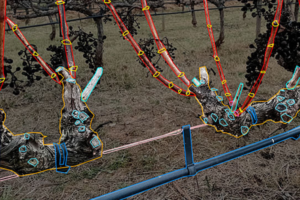
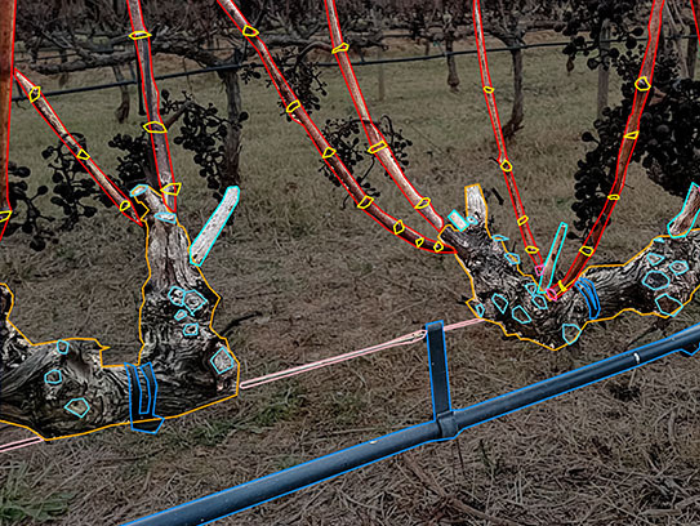
- The Center for Industrial Equipment Design (CDEI-UPC) at the Universitat Politècnica de Catalunya - BarcelonaTech (UPC) is participating in a cross-border project aimed at promoting the use of advanced digital technologies in viticulture in regions on both sides of the Pyrenees. The initiative seeks to improve specialist training, technical advice and decision-making in vineyard management.
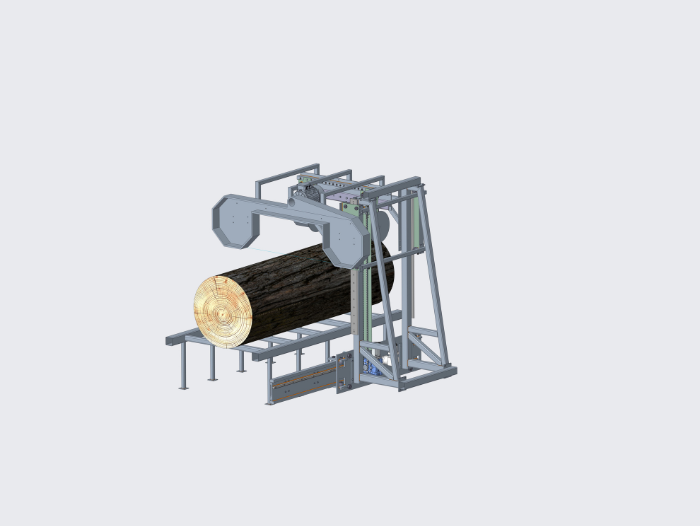
- The Centre for Industrial Equipment Design (CDEI) at the Universitat Politècnica de Catalunya - BarcelonaTech (UPC), together with the IRI, Institut de Robòtica i Informàtica Industrial (CSIC-UPC), is participating in the development of a pre-commercial prototype of an automatic portable sawmill that integrates computer vision, artificial intelligence and computer numerical control to improve productivity, efficiency and safety in local wood processing for the company Envall Coop. S.L.
STOR-HY: More flexible, efficient and resilient hydropower storage for the European electricity grid
The Center for Industrial Diagnostics (CDIF) at the Universitat Politècnica de Catalunya - BarcelonaTech (UPC) coordinates the European STOR-HY project, which develops digital tools, monitoring systems and advanced models to optimise the operation of pumped-storage hydropower plants and reduce their investment and maintenance costs.