

TECHNOLOGICAL CAPABILITIES

OCEAN ENERGY
- Tidal power, wave power, offshore wind power, ocean thermal energy conversion, energy form currents and blue energy or salinity gradient energy.

MARITIME TRANSPORT
- Energy saving, reduction of contamination and improvement in management of energy quality and emissions.

PORT ACTIVITIES
- Studies of the traffic of boats in ports and air quality, using data from the automatic identification system (AIS) during manoeuvres.
- Production and maintenance of shipyards.

MARINE LIVING RESOURCES
- Prediction of hydro-morphodynamic and ecological evolution.
- Management of coastal bays.
- Monitoring of estuaries.
- Use of meteo-oceanographic conditions.
- Automatic learning. Modelling and display of marine agriculture data.
- Integrated multi-trophic aquaculture (MTA) techniques.
- Analysis and effect of meteorological and seasonal variables on the breeding system.
- Systematic studies of localization and monitoring of marine species to understand their behaviour.
- Measure of surface circulation forced by waves breaking. Monitoring habitat degradation.

INFRASTRUCTURE
- Addressing the negative impact of coastal construction on biodiversity.
- Reduction of the acoustic impact and vibrations from these constructions.
- Establishment of standards for terminology and methodology.
- Control of wind turbines and electricity substations and numerical modelling to take advantage of wave energy.

THE BLUE BIOECONOMY & BIOTECHNOLOGY
- Studies of natural pressures on the sea and those derived from humans.
- Development of a European system for ocean observation.
- Estimations of the amount of plastic floating on the surface of the ocean.
- Comprehensive modelling to trace the movement of plastic over the ocean.

SHIPBUILDING AND REPAIR
- Manufacture of vessels. Efficient, digitalized, automated and modular production of boats.
- Integration of the industrial internet of things (IIoT).

MARINE NON-LIVING RESOURCES
- Supply of critical raw materials.
- Improvement in underwater capture equipment (collectors).
- Seawater processing techniques and desalination.

COASTAL TOURISM
- Improvement in coverage in time and space, and in the resolution and quality of marine observations.
- Water management with innovative systems to manage reserves and the planning of trips.
RELATED PROJECTS
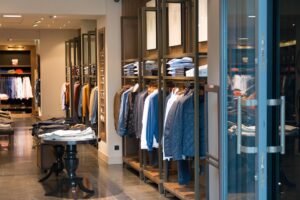
- The company Trace ID and the group Twin Investors, in collaboration with the Textile Technology research group (TECTEX), which is part of the Institute of Textile Research and Industrial Cooperation of Terrassa (INTEXTER) at the Universitat Politècnica de Catalunya - BarcelonaTech (UPC), are developing electronic devices to identify, monitor, and study the traceability of the products in which they are embedded.
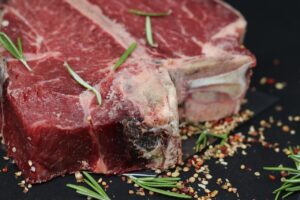
- The company Friselva S.A., Corporació Alimentària Guissona (bonÀrea), together with the Food Service Cluster and inLab FIB at the Universitat Politècnica de Catalunya - BarcelonaTech (UPC), are participating in the Hydroless project, which aims to optimise water consumption in meat production plants. The project includes an innovative solution to monitor and optimise water use at bonÀrea’s plant in Guissona, as well as the design and development of a digital twin of Friselva’s facilities in Riudellots de la Selva.
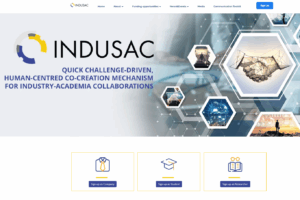
- The EU-funded Quick Challenge-Driven, Human-Centred Co-Creation Mechanism for INDUStry-Academia Collaborations (INDUSAC) project has successfully developed and validated a new, human-centred, challenge-driven co-creation mechanism that connects industry with academia across Europe. Over three years of implementation, the project has supported international teams of students and researchers in tackling innovation needs directly submitted by companies. The INDUSAC project has created a dynamic community of industry-academia stakeholders focused on circularity, general sustainability, digitalisation and industry 4.0.
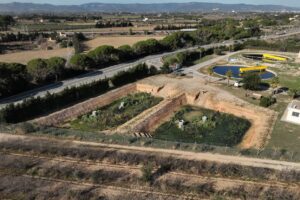
- The Hydrogeology Group (GHS) at the Universitat Politècnica de Catalunya - BarcelonaTech (UPC) is participating in the LIFE REMAR project to develop an innovative and sustainable solution for the reuse of treated wastewater through infiltration, with the aim of increasing the availability of freshwater resources and improving the state of ecosystems.