

TECHNOLOGICAL CAPABILITIES

OCEAN ENERGY
- Tidal power, wave power, offshore wind power, ocean thermal energy conversion, energy form currents and blue energy or salinity gradient energy.

MARITIME TRANSPORT
- Energy saving, reduction of contamination and improvement in management of energy quality and emissions.

PORT ACTIVITIES
- Studies of the traffic of boats in ports and air quality, using data from the automatic identification system (AIS) during manoeuvres.
- Production and maintenance of shipyards.

MARINE LIVING RESOURCES
- Prediction of hydro-morphodynamic and ecological evolution.
- Management of coastal bays.
- Monitoring of estuaries.
- Use of meteo-oceanographic conditions.
- Automatic learning. Modelling and display of marine agriculture data.
- Integrated multi-trophic aquaculture (MTA) techniques.
- Analysis and effect of meteorological and seasonal variables on the breeding system.
- Systematic studies of localization and monitoring of marine species to understand their behaviour.
- Measure of surface circulation forced by waves breaking. Monitoring habitat degradation.

INFRASTRUCTURE
- Addressing the negative impact of coastal construction on biodiversity.
- Reduction of the acoustic impact and vibrations from these constructions.
- Establishment of standards for terminology and methodology.
- Control of wind turbines and electricity substations and numerical modelling to take advantage of wave energy.

THE BLUE BIOECONOMY & BIOTECHNOLOGY
- Studies of natural pressures on the sea and those derived from humans.
- Development of a European system for ocean observation.
- Estimations of the amount of plastic floating on the surface of the ocean.
- Comprehensive modelling to trace the movement of plastic over the ocean.

SHIPBUILDING AND REPAIR
- Manufacture of vessels. Efficient, digitalized, automated and modular production of boats.
- Integration of the industrial internet of things (IIoT).

MARINE NON-LIVING RESOURCES
- Supply of critical raw materials.
- Improvement in underwater capture equipment (collectors).
- Seawater processing techniques and desalination.

COASTAL TOURISM
- Improvement in coverage in time and space, and in the resolution and quality of marine observations.
- Water management with innovative systems to manage reserves and the planning of trips.
RELATED PROJECTS
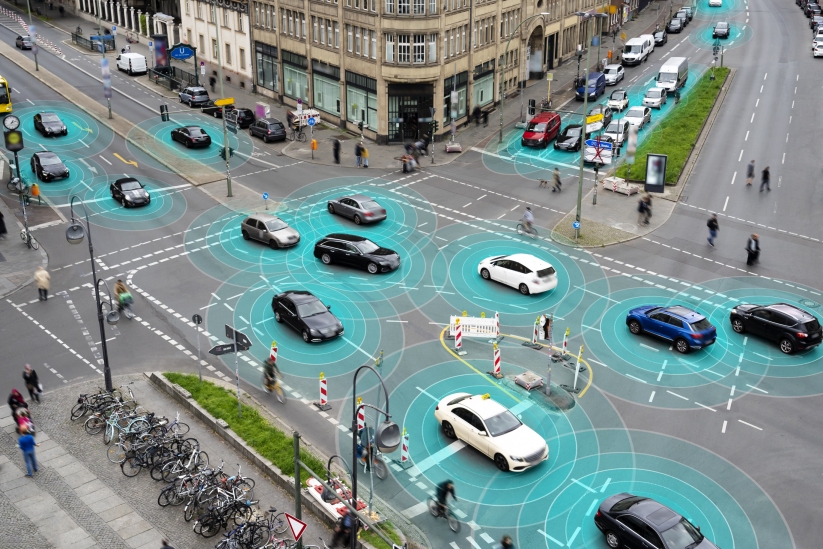
- A multidisciplinary team at the Universitat Politècnica de Catalunya - BarcelonaTech (UPC) is working on the European project AI - Enhanced Fibre -Wireless Optical 6G Network in Support for Connected Mobility (6G-EWOC) to develop technologies and a 6G optical network that will combine artificial intelligence with 6G technologies, remote sensing systems and optical communication (wireless and by optical fibre). The result will be a network that will enable autonomous and human-driven vehicles to circulate safely, avoiding accidents in zones that have a lot of traffic or are very busy.
- The technology of the CP4C project, based on hydrogels treated with plasma gas, is being developed by the team of researchers at the PlasmaMedLab and the Biomaterials, Biomechanics and Tissue Engineering Group (BBT) of CREB at the UPC. CP4C is one of the University projects that has obtained a grant from Barcelona Deep Tech Node to accelerate its launch on the market.
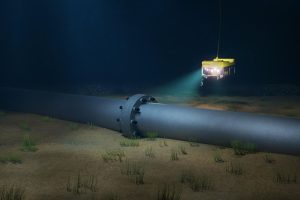
- CD6 researchers at the UPC participate in a project to design and construct a proof of concept of a system that has laser technology and sensors to detect and map the underwater environment.
- A multidisciplinary team whose participants include the Microbiology Service of the Vall d’Hebrón University Hospital, the Microbiology research group of the Vall d’Hebron Research Institute (VHIR), the Computational Biology and Complex Systems Group (BIOCOM-SC UPC), the Image and Video Processing Group (GPI) and the Database Technologies and Information Management Group (DTMI) at the Universitat Politècnica de Catalunya - BarcelonaTech (UPC), and Fundación Probitas, have presented a new diagnostic method for malaria based on artificial intelligence.