

RESIST: Improve the response to emergencies caused by climate change
January 25, 2023
IAQ4EDU: Optimal ventilation strategies to balance indoor air quality, comfort and energy use in educational buildings
February 8, 202330/01/2023
We are faced with a state of climate emergency in which water resources are increasingly scarce. This situation is suffered by many regions and is particularly critical in areas such as the Mediterranean basin. This is experiencing heating that is 20% faster than the global average. According to the UN Environmental Programme, it is expected that by 2050 the water demand will double or even triple. At the same time, precipitation will drop by between 10 and 15% while global warning will increase by 2°C. All these forecasts threaten current irrigation practices in agriculture.
In this context, the AI4WATER project proposes optimizing the use of available water resources, to mitigate the effects of increasing water scarcity in agriculture and to improve food safety through the creation of a digital twin (DT) in an irrigation sector of the Segarra-Garrigues region (Lleida). Participants in the project are the Specific Research Centre in Communication and Detection of the UPC (CommSensLab-UPC), the Center for Industrial Equipment Design (CDEI) and the Geophysics and Earthquake Engineering (GiES) group of the UPC.
How the digital twin will be applied
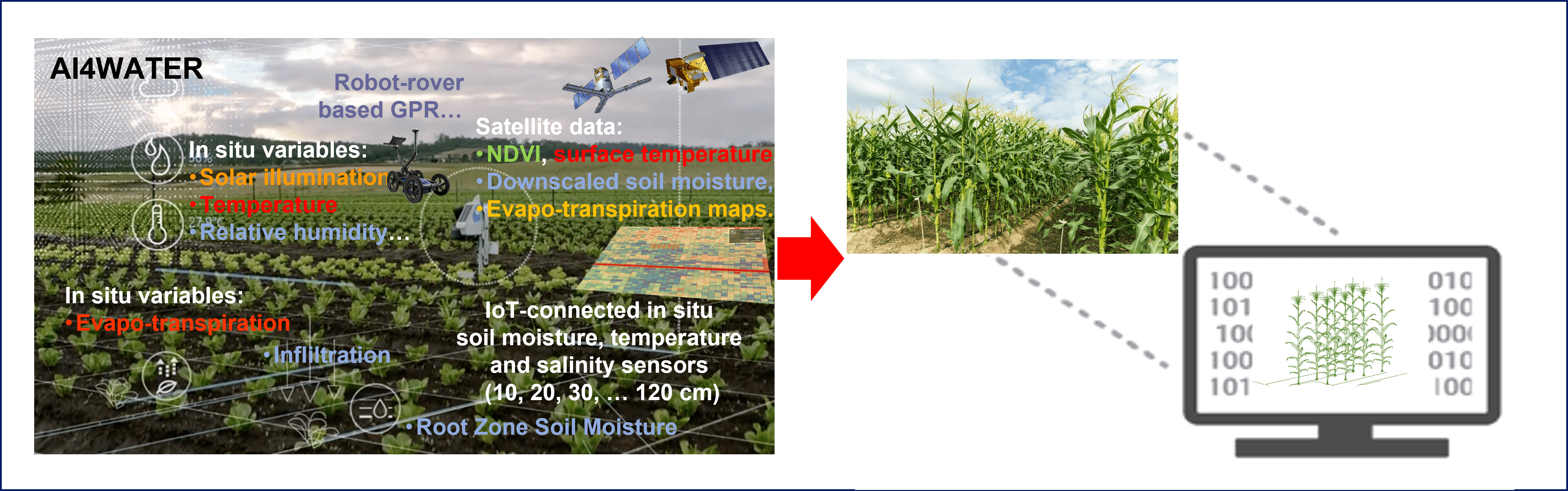
A digital twin is defined as a virtual representation of an object or physical system that covers its entire lifecycle and is updated using real-time data. It uses simulation and machine learning to help in decision making. In AI4WATER, the digital twin will enable simulation, planning, analysis and improvement of crop growth, to maximise performance and make it more sustainable for agriculture. It will model water flows in the irrigation area using as input the water captured in the environment, the water returned to the environment and information on different uses (human, industrial and agricultural, according to the information obtained by the water meters).
In addition, other variables will be considered that influence the water balance, such as atmospheric (temperature, relative humidity and solar radiation), evapotranspiration and soil surface humidity (from the AQUA/MODIS of NASA and SMOS of the ESA satellites) and data from an IoT network of humidity sensors in the soil in situ that will be placed at different depths (at 5, 10 and 100 cm). This IoT network will provide useful information on the land for the cross-calibration of a georadar (Ground-Penetrating Radar, GPR) that, placed on an all-terrain vehicle (a rover), will gather data that can be used to train the digital twin algorithm.
Thus, the digital twin that is developed will achieve a more precise evaluation of the volume of water that is used for irrigation agriculture. This is highly relevant for the communities that pay flow regulation fees depending on the volume of water used. It will help to confirm whether the water volume saved with these advances serves to improve the environment. In addition, it will be useful to validate the estimates of irrigation water via other systems to, subsequently, compare them with data from water meters.
CommSensLab-UPC will develop a network of humidity and temperature sensors with IoT connectivity and implement the digital twin. It will direct the data analysis, including the earth observation data from the satellites, and the test of concept. The CDEI will be responsible for adapting a robot for agricultural applications with a georadar that can detect the phreatic zone where water is stored.
Finally, the i2Cat Foundation, which is also participating in the project, will support aspects of IoT communications for the land network of soil humidity sensors.
Results and expected impact
The main challenge for the AI4WATER project is to precisely estimate the irrigation water resources, through the creation of a digital twin, a tool for application in agriculture that is still unprecedented. With this, AI4WATER will contribute to fine-tuning the estimate of water volume used by irrigation agriculture and its associated cost. This will lead indirectly to optimisation of the water resources and enable relevant savings in the water volumes that are used.
The implementation of the digital twin will require the synergic combination of different sources of data entry: an IoT network of soil humidity sensors, a georadar or ground-penetrating radar (GPR) of 500 MHz assembled in an automated robot-rover and maps of redimensioned soil humidity and evapotranspiration. These individual elements of information and technologies already exist, but they have rarely been used together.
Budget and funding
The total budget of the project is €272,665. It is co-funded by the European Union’s Next Generation funds, with the Government of Spain’s Recovery, Transformation and Resilience Plan. AI4WATER started at the start of December 2022 and will be completed at the end of November 2024.



Activity financed through Operation 01.02.01 for Technology Transfer of the Rural Development Programme of Catalonia 2014-2022.
Topic
You want to know more?
Related Projects
- Researchers from the Computer Networks and Distributed Systems (CNDS) research group at the Universitat Politècnica de Catalunya - BarcelonaTech (UPC) are developing new artificial intelligence-based solutions to obtain more accurate and reliable data from IoT sensor networks, with applications in air quality monitoring, anomaly detection and industrial predictive maintenance.
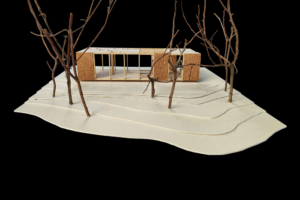
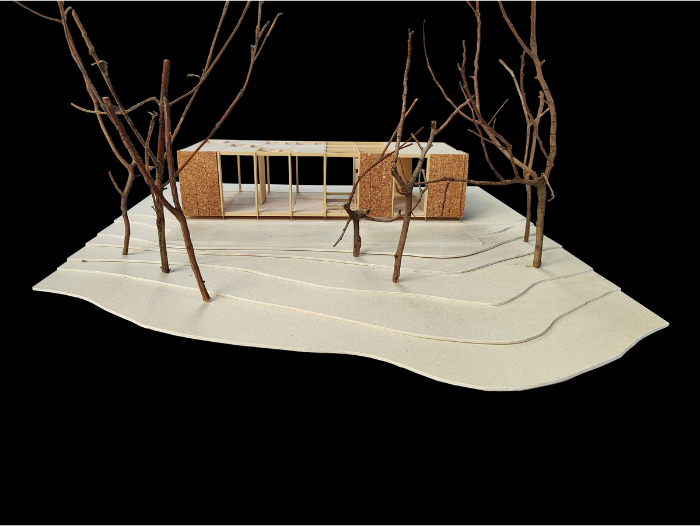
- The Casa Bosc project explores a lightweight, modular and prefabricated timber construction system designed to reduce the environmental impact of housing while making it easier to build and adapt to different contexts. The project has been developed by researchers from the Architectural Rehabilitation and Restoration Research Group (REARQ) at the Universitat Politècnica de Catalunya - BarcelonaTech (UPC) and the company ÀGORA.
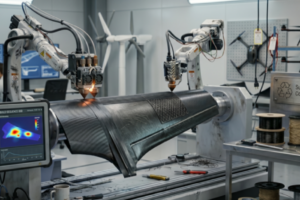
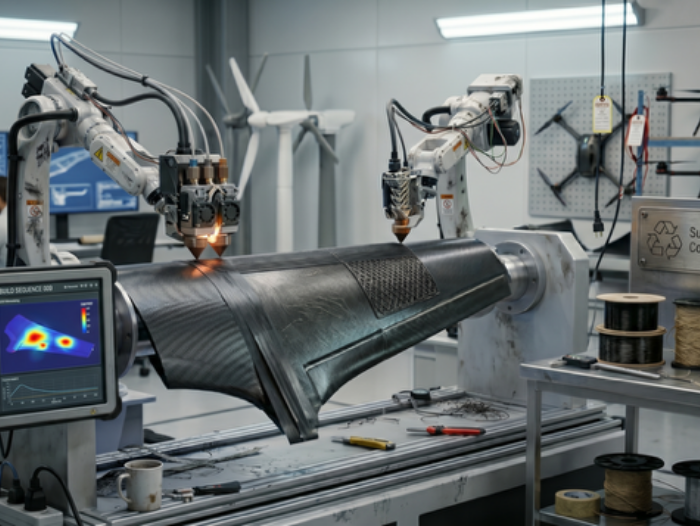
- The Control, Data and Artificial Intelligence (CoDAlab) research group at the Universitat Politècnica de Catalunya - BarcelonaTech (UPC) is taking part in the ATHENS project, which is developing recyclable thermoplastic composite materials with advanced real-time monitoring systems to improve the manufacture, safety and service life of lightweight structures.
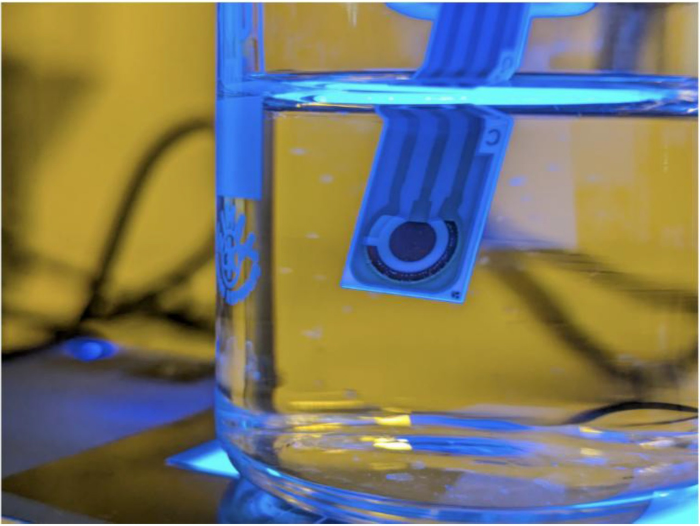
- The MICROTECH LAB - Microtechnology for the Industry research subgroup, part of the Centre for Advanced Technologies in Mechanics (CATMech) at the Universitat Politècnica de Catalunya - BarcelonaTech (UPC), is leading the technical development of a minimally invasive platform to monitor biomarkers and physiological indicators related to stress and emotional wellbeing.