

ReINfoRCed: Assessment and rehabilitation of concrete structures affected by corrosion through digital twins and eco-efficient strengthening
August 28, 2025
CIRC-BOOST: Circular solutions in the construction sector
September 8, 202504/09/2025
A research team involving the Barcelona Innovative Transportation (BIT), inLab FIB, CARNET Barcelona – Future Mobility Research Hub (CER-AMA), and the Department of Computer Architecture (DAC) of the Universitat Politècnica de Catalunya - BarcelonaTech (UPC) is driving the i-MovE project, which aims to incorporate multisectoral data to provide much more accurate and valuable information for the mobility sector. The project develops four use cases focused on both companies and mobility authorities, covering public and individual transport, using the UPCxels demonstrator.
In the current context of transition towards more sustainable mobility, the integration and interoperability of data across different sectors is key to informed decision-making. The i-MovE project (Interoperability for an Efficient, Safe and Equitable Mobility) was conceived to address this challenge, harnessing the potential of data to improve the planning and management of mobility in urban and metropolitan environments.
i-MovE aims to generate a collaborative data space that facilitates access to urban mobility information for all transport sector stakeholders. This space will contain different types of data with various frameworks of spatial and temporal aggregation.
This platform will unify, process, and provide integrated and reliable data from public and private sources across Spain, with a primary focus on the metropolitan area of Barcelona. i-MovE will unify and process data to obtain integrated, complete, and reliable information that will support administrations and private entities in achieving more sustainable, efficient, safe, and equitable mobility. Interoperability of physical and data systems will be promoted, optimising the planning, operation, and profitability of urban transport for the benefit of all citizens.
With this information, the project will develop 4 use cases to deliver innovative services with high scalability potential. These are classified according to the end user:
Services for mobility companies
The goal is to enhance the operational efficiency of taxi services and private hire vehicles (PHVs), through demand estimation models and optimisation of vehicle distribution and drivers’ working shifts:
- i-MovE-Demand: Generate demand estimation models based on multiple data sources.
- i-MovE-Operator: Design tools for the efficient distribution of drivers’ working shifts, balancing supply and demand.
Services for mobility authorities
It seeks to optimise traffic management and public transport planning through advanced analysis and real-time prioritisation strategies:
- i-MovE-Control: Analyse the operability of bus lines and other public transport modes to improve route planning.
- i-MovE-Priority: Implement real-time public transport prioritisation strategies, including traffic light adjustments and traffic diversions to optimise mobility.
Impact
The impact of i-MovE will result in significant improvements in decision-making by transport administrations and operators, thanks to the availability of integrated and high-quality information. This will make it possible to optimise mobility services, reduce congestion, improve operational efficiency, and move towards a transport system that is fairer and more responsive to citizens’ real needs.
Budget and funding
The project runs for 14 months (November 2024 - December 2025), funded by the Ministry for Digital Transformation and Public Service of the Government of Spain under the call “Demonstrators and Use Cases of Data Spaces (1st call)”, within the Recovery, Transformation and Resilience Plan. It has received a budget of € 707,511.

Sector
You want to know more?
Related Projects
- The Casa Bosc project explores a lightweight, modular and prefabricated timber construction system designed to reduce the environmental impact of housing while making it easier to build and adapt to different contexts. The project has been developed by researchers from the Architectural Rehabilitation and Restoration Research Group (REARQ) at the Universitat Politècnica de Catalunya - BarcelonaTech (UPC) and the company ÀGORA.
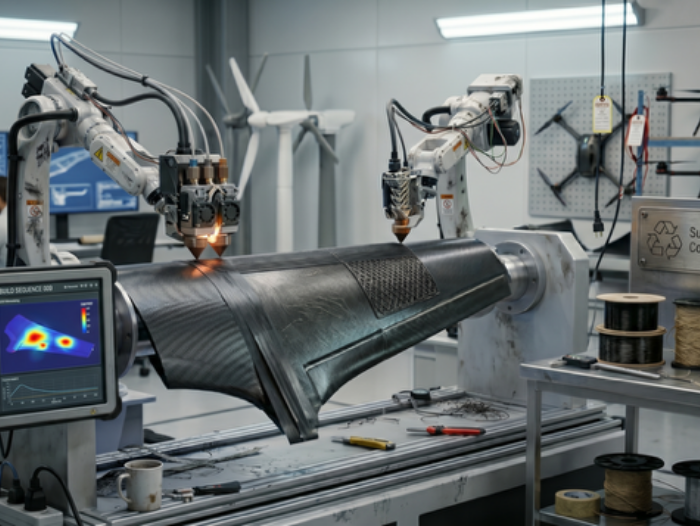
- The Control, Data and Artificial Intelligence (CoDAlab) research group at the Universitat Politècnica de Catalunya - BarcelonaTech (UPC) is taking part in the ATHENS project, which is developing recyclable thermoplastic composite materials with advanced real-time monitoring systems to improve the manufacture, safety and service life of lightweight structures.
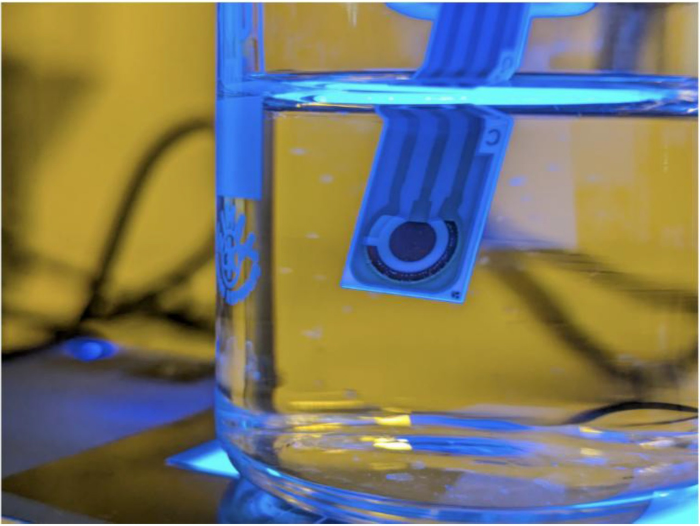
- The MICROTECH LAB - Microtechnology for the Industry research subgroup, part of the Centre for Advanced Technologies in Mechanics (CATMech) at the Universitat Politècnica de Catalunya - BarcelonaTech (UPC), is leading the technical development of a minimally invasive platform to monitor biomarkers and physiological indicators related to stress and emotional wellbeing.
- A research team from the Universitat Politècnica de Catalunya - BarcelonaTech (UPC) has participated in the M3LEC project, coordinated by the Centro de Astrobiología (CAB), a joint centre of the Spanish National Research Council (CSIC) and the Instituto Nacional de Técnica Aeroespacial (INTA), with the Universidad de Sevilla (US) / Instituto de Microelectrónica de Sevilla (IMSE) also participating. M3LEC aimed to contribute to the characterisation of the Martian atmosphere and meteorology, and to investigate new instrumentation for future planetary exploration missions.