

Digital Twins
- Digital twins with applications in construction, mobility, blue economy and agriculture, among other sectors, to optimize and increase productivity, reduce costs and provide safe working conditions.
- Open-source software to produce digital twins for edge computing.
- AI and machine learning-based platforms for generating digital twins.

Security and Cybersecurity
- Real-time response and mitigation of the effects of cyberattacks across ICT supply chains.
- Algorithms for detecting physical and cyberattacks, and response mechanisms.
- More functional and secure integrated circuits for cybersecurity and supercomputing.
- Monitoring of intelligent fire detection systems.
- Perception systems: vision for controlling and guiding robots.

Industry 4.0
- Advanced production using automated technologies such as adaptive models, ATP/AFP, 3D printing, profiling processes, hot stamping.
- Integration of drones with 4G and 5G mobile technologies.
- Smart management of industrial plants and infrastructures.
- Predictive maintenance of machines through IoT platforms.
- Industrial automation and communication.
- Energy saving through smart monitoring.
- Flexible manufacturing processes.
- Advanced decision-making tools for zero defect manufacturing (ZDM).
- Digital control with microprocessors and DSP.
- Computer vision.
- Human-machine communication interfaces (dialogue systems).

Big Data Analytics
- Data analysis techniques to obtain high-precision information with low-cost sensors.
- Capability to connect and transform data from the Internet of Things (IoT) or the Internet of People (IoP) into reliable and usable information.
- Efficient and adaptable management of large amounts of data on network devices and infrastructures.
- Communication protocols with limited latency, high reliability and energy efficiency.
- LoRa Mesher.
- Alert management system with different input channels.
- Decentralized computing and network system infrastructures, based on cooperative resource coordination models.
- Adaptable, resilient, scalable software systems that exploit edge resources and networks for communication and computing infrastructures (cloud).

Smart Farming
- Agricultura 4.0: sistemes de captació, processament d’imatges i sistemes de telecomunicacions basats en la ciència de dades.
- Aplicació de Digital Twins per a agricultura de regadiu.
- Automatització i mecanització de processos productius en l'agricultura intel·ligent.
- Desenvolupament de sistemes de mesura i comunicació de les dades amb menor consum energètic.
- Teledetecció per a cultius a l’aire lliure mitjançant drons i satèl·lits.
- Millora de la productivitat amb robots mòbils.
- Disseny de maquinària agrícola i equips sensoritzats.
- Monitoratge de bestiar i detecció de malalties mitjançant sensors biomètrics.

Robotic Process Automation
- Advanced robotic handling systems.
- Collaborative robots, human-machine interfaces (HMI).
- Automation of complex processes with artificial intelligence and machine learning to improve robot decision-making.
- Intelligent robotic exoskeletons.
- Voice recognition and response systems enabling interaction and verbal command of robots.

Mobility
- Autonomous delivery devices for last-mile operations.
- Drones for large-scale use.
- IoT platforms for autonomous cars.
- Multimodal image sensors for autonomous vehicles.
- Interconnected and secure mobility through remote sensing and optical communication systems, RADAR and LiDAR sensors.
- Autonomous underwater vehicles with sensors to detect and map the environment.
- Passenger demand prediction, social trends based on learning and decision-making systems.
- New mobility services for public transport.

eHealth
- Surgical robots.
- Virtual reality and augmented reality for telerehabilitation.
- Low-cost devices for remote cardiovascular monitoring.
- Image processing to diagnose injuries.
- Differential diagnosis in patients with Parkinson’s disease using biomechanical tests.
- Advanced non-intrusive remote health evaluation.
- IoT medical devices.
- Wearable tech.
- Modelling of human body movement.
- Biomedical signal processing.

Smart Building & BIM
- Advanced optimization to monitor errors in smart infrastructures.
- IoT platforms with deep learning applied to smart homes.
- Modular sensors to identify bridge structures subjected to quasi-static loads.
- 3D printing of insulating composites useful in construction.
- Energy information in digital administration.

Energy efficiency
- Internet architectures with open-source software and hardware protocols aimed at energy efficiency.
- Smart, modular and scalable batteries using big data analysis, artificial intelligence and IoT.
- Energy management in smart factories.
- Light energy harvesting for autonomous sensors.

Edge & Cloud Computing
- Efficiency and optimization of artificial intelligence systems.
- Efficient artificial intelligence for cloud computing.
- Digital energy transition through the exchange of intelligence and data.
Related Projects
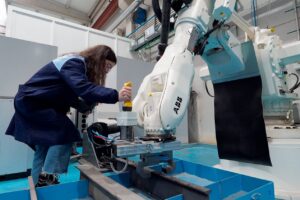
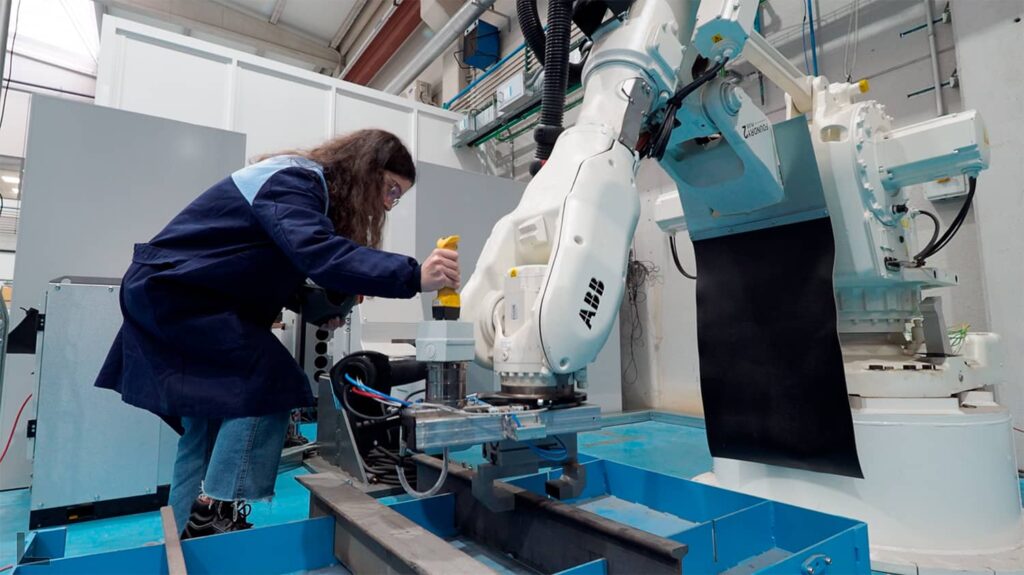
- A research team from the Institut de Robòtica i Informàtica Industrial (IRI, CSIC-UPC), together with the Centre de Disseny d'Equips Industrials (CDEI) of the Universitat Politècnica de Catalunya - BarcelonaTech (UPC), are participating in the national CASANDRA project to develop a digital manufacturing solution that will make it possible to establish a bidirectional data flow for continuous digital integration throughout the supply chain across the product life cycle. This integration will be achieved through digital twins and data-based models that are continuously updated thanks to distributed monitoring and control tools.
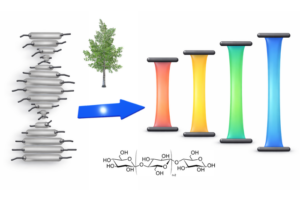
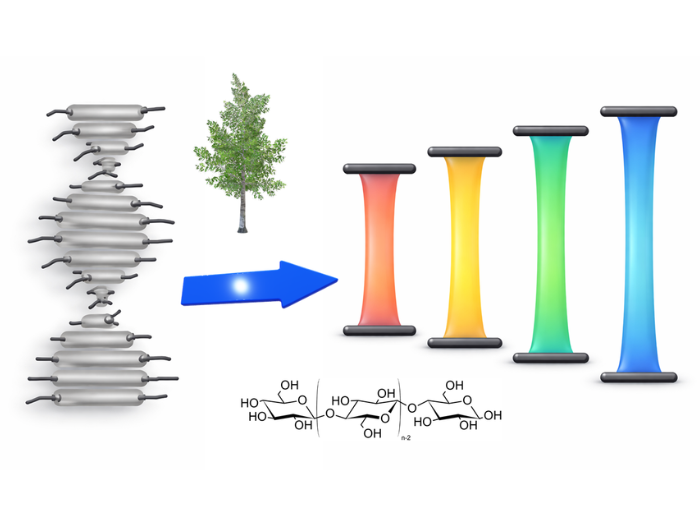
- The Materials Interfaces and Colloid Engineering group (INTERCOLL) at the Universitat Politècnica de Catalunya - BarcelonaTech (UPC), in collaboration with the Life Cycle Thinking group at the University of the Basque Country (EHU), are taking part in the BIOCHOLESTEROID project to develop new bio-based smart materials with optical response for advanced applications.
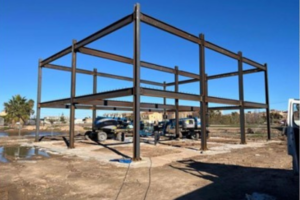
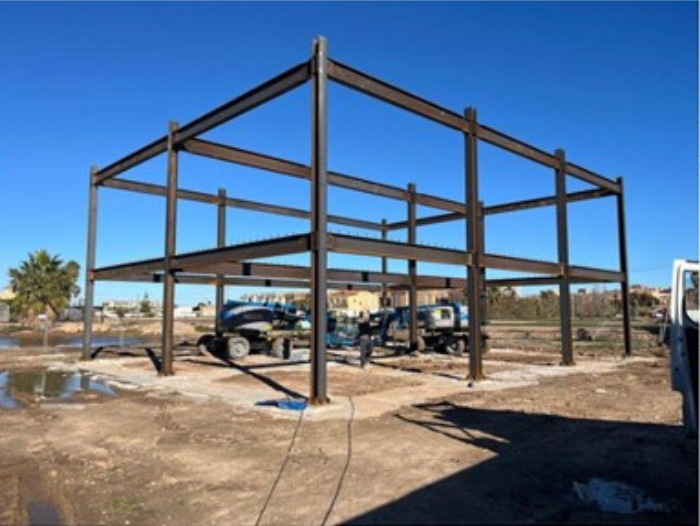
- The research groups Structural and Materials Technology (ATEM) and the Construction Engineering (EC) at the Universitat Politècnica de Catalunya - BarcelonaTech (UPC) are working on the RE-STEEL project, which aims to develop an efficient methodology for assessing the rehabilitation of existing steel structures.
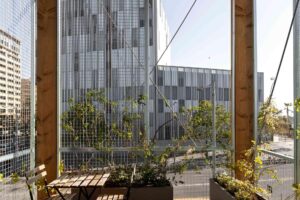
- The project is led by a team from the Rehabilitation and Architectural Restoration (REARQ) at the Universitat Politècnica de Catalunya - BarcelonaTech (UPC), in collaboration with the Interdisciplinary Group on Building Science and Technology (GICITED), also from UPC, and CONSTRAULA.