

The UPC’s CD6 participates in the construction of the world’s largest telescope
May 26, 2022
A project to improve the integrated control of pests using photonic engineering is successfully completed
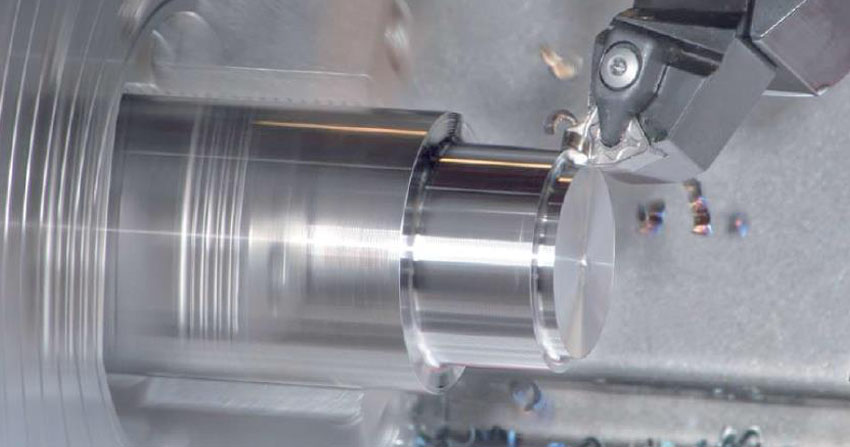
July 4, 2022The AVINT project, in which the Structural Integrity and Materials Reliability Centre (CIEFMA) of the Universitat Politècnica de Catalunya (UPC) has participated, has the objective of developing and implementing an application for predicting the roughness and surface finishing of machined parts for optimal surface integrity.
In addition, the project has enabled new products and parts with added value to be obtained as machining tools, coating for tools and lubricants/cooling agents with greater efficiency due to their functional, geometric and mechanical properties.
Increase productivity by reducing defective parts, cost and times
Machining is an essential technology that enables an increase in competitiveness of companies in the industrial area, as this is a key, cross-cutting sector for the production of components that are used in many applications.
One of the most important parameters used to describe the quality of machined parts is roughness, which is a descriptor of surface finish and is one of the aspects that is also used to describe surface integrity.
Currently, the percentage of machined parts that do not meet quality requirements in long series can be up to 8%, depending on the type of part and its application. This leads to high costs of repairing and/or eliminating defective parts as scrap metal, halts in production and replacement of machining tools to obtain parts of the desired quality.
For high added value parts in shorter series, the operating times tend to be high to avoid the generation of defective parts. This has a negative effect on productivity.
Value chain of the machining sector
The consortium of the AVINT project was formed of ten members, distributed among research, development and innovation agents, companies in the sector and companies that provide services and technology.
The project has concentrated on optimisation of the efficiency of metal machining processes, using simulation and optimisation tools and machine learning for greater optimisation of quality control and the surface integrity of components. In turn, CIEFMA UPC has used its knowledge to characterise the machining tools used.
Cooperation, technology transfer and dissemination
AVINT lasted three years (January 2018 – March 2021) and was part of the Catalonia ERDF 2014-2020 Operational Programme, an area of action of the Future Industries Community (IdF) of RIS3CAT, for the optimisation of machining processes.
The aim of the IdF Community is to consolidate its position as a leading innovation hub in efficient and sustainable manufacture in Catalonia that accelerates the value chain of industrial research, development and innovation. The project, which is programmed in the priority area “Boost research, technological development and innovation”, had the specific objective of “Transfer and dissemination of technology and cooperation between companies and universities or other research centres”.
The total budget of AVINT was 2,316,720 euros, of which 752,523 euros correspond to the grant that was awarded.
Sector
Topic
Would you like to know more?
Related projects
- Researchers from the UPC are participating in the Quartz Enrichment Enabling Near-Zero Silicon (QUEEN) project, aimed at reducing the European Union’s dependence on external sources for critical raw materials, particularly metallurgical-grade silicon (MG-Si). To achieve this, the project proposes harnessing an underused resource: quartz sand from European quarries, to produce MG-Si locally, sustainably, and efficiently.
- A multidisciplinary team of researchers from the Research Group in Smart and Sustainable Resources and Industries (RIIS), the Sustainable Mining Research Group (GREMS), and the Construction Materials and Roads (MATCAR) group at the Universitat Politècnica de Catalunya – BarcelonaTech (UPC) is leading the VALORFIN project. The aim is to develop a technological solution for the valorisation of the fine fraction of construction and demolition waste (CDW), transforming it into new low-CO₂-emission cementitious materials, while also reducing the presence of hazardous materials in this waste.
- 08/07/2025Project Headerrightno-repeat;left top;;auto20px The research groups River Dynamics and Hydrological Engineering (FLUMEN) and Construction Materials and Roads (MATCAR) at the Universitat Politècnica de Catalunya – BarcelonaTech […]
- The Innovation in Materials and Molecular Engineering – Biomaterials for Regenerative Therapies (IMEM-BRT) research group at the Universitat Politècnica de Catalunya – BarcelonaTech (UPC), in collaboration with the Institute of Chemical Research of Catalonia (ICIQ), has developed polymer resins derived from plant-based materials to reduce the dependence of 3D printing on fossil fuel-based resins.