

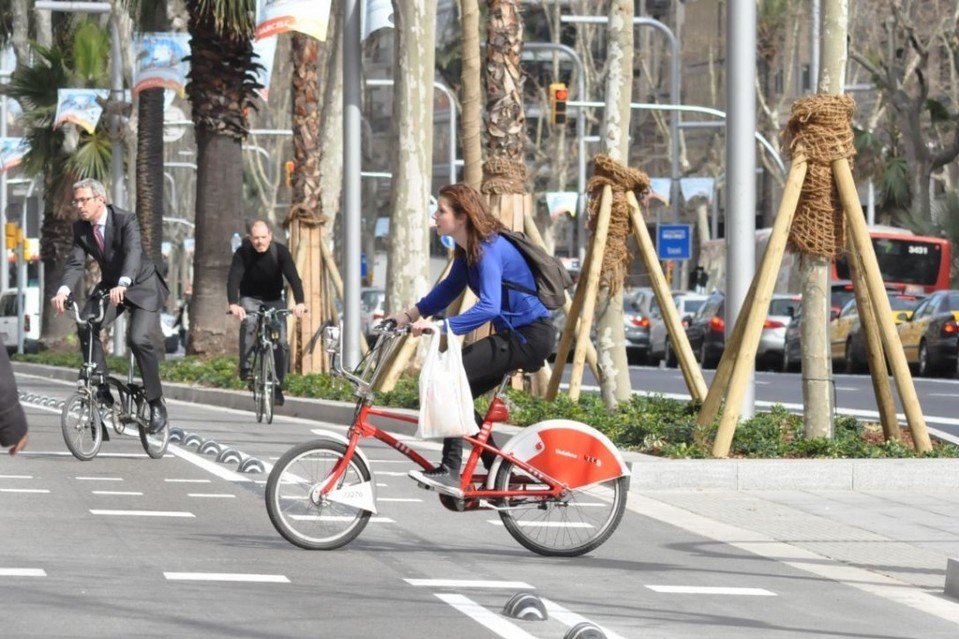
MobilitApp: Deep learning to predict citizens transport modes while ensuring data security
February 23, 2023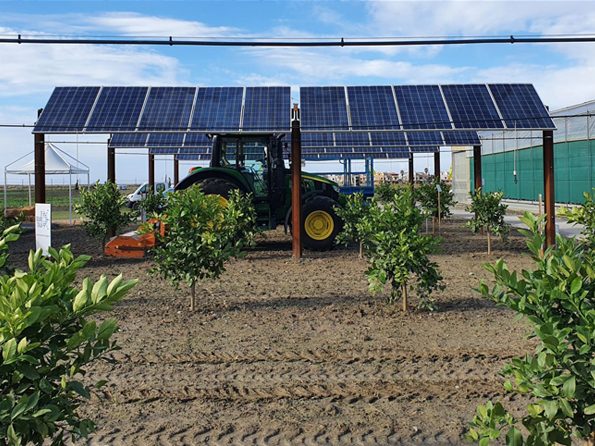
UPC technology to generate clean energy for the agricultural sector in Europe
March 21, 202314/03/2023
The use of renewable energies is vital to face critical global challenges such as climate change and global warming, in the framework of energy scarcity and rising prices of fossil fuels. One renewable energy is biogas, a gas that comes from the biodegradation of a wide range of organic waste including wastewater sludge (the organic fraction of municipal waste or manure), among others. The production of biogas through anaerobic digestion (that is, the decomposition of biodegradable material in the absence of oxygen) has been increasing exponentially in Europe in recent years. This is because it can be produced locally and has a clear positive effect on waste recycling, the generation of clean energy, sustainable development or climate action.
In this context, the FertiLab project was launched (Cycles towards local sustainability in agriculture: production of nutrient enriched biofertilizers and organic amendments with biopesticide and biostimulant properties), with the participation of researchers from the Department of Agri Food Engineering and Biotechnology (DEAB) of the Universitat Politècnica de Catalunya - BarcelonaTech (UPC). The main objective of the project is to give a second life to digested sludge from water treatment and other sources to produce added value products of critical interest in sustainable agriculture. These include:
- An enriched mineral fertiliser made from the nutrients present in sludge, which are mainly struvite but also vivianite.
- A biopesticide made from the solid-state fermentation of sludge, into which specific strains are inoculated to produce an organic amendment with pesticide properties.
- A biostimulant made from the solid-state fermentation of sludge, into which specific strains are inoculated to produce a large number of bioproducts that improve the specific properties of the organic amendment that is obtained. This new product increases the growth of plants to obtain greater yield and better quality, among other factors.
Results and expected impact
The aim of the project is to increase the sustainability of agriculture in the territory, based on the principles of agroecology. The aim is to change the current situation of intensive agriculture for more local strategies, close nutrient cycles and use organic soil conditioners instead of chemical products that have a high environmental impact, such as mineral fertilisers and chemical pesticides.
The project includes the assessment of the potential use and application of the bioproduct that is obtained, and so promotes the marketing and acceptance in the market of new agricultural ingredients with a biological base. The concept of “Living Lab” will be applied to address sustainable fertilisation with the participation of a range of agents, who will act as catalysts to implement an open platform in which new agricultural proposals can be approached from a technical, environmental and economic perspective.
Other agriculture-related benefits that can be attributed to FertiLab are an increase in biodiversity, a reduction in the impact of forest fires, a reduction in greenhouse gases, soil carbon sequestration and a reduction in energy consumption.
Consortium, budget and funding
FertiLab will last three years (December 2022 - November 2025) and is financed with the European Union’s Next Generation funds, within the Spanish Government’s Recovery, Transformation and Resilience Plan (Ministry of Science and Innovation). The consortium is comprised of three universities, two research centres and one industrial partner: the Universitat Politècnica de Catalunya - BarcelonaTech (UPC), the Autonomous University of Barcelona (UAB), the Miguel Hernández University (UMH) of Elche, the Institute of Agrifood Research and Technology (IRTA), the Basque Centre for Climate Change (BC3) - Klima Aldaketa Ikergai and Fomento Agrícola Castellonense, S.A. (FACSA). The total budget for the project is €1,045,598.78.



Activity financed through Operation 01.02.01 for Technology Transfer of the Rural Development Programme of Catalonia 2014-2022.
You want to know more?
Related Projects
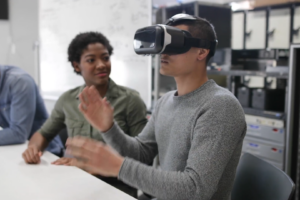
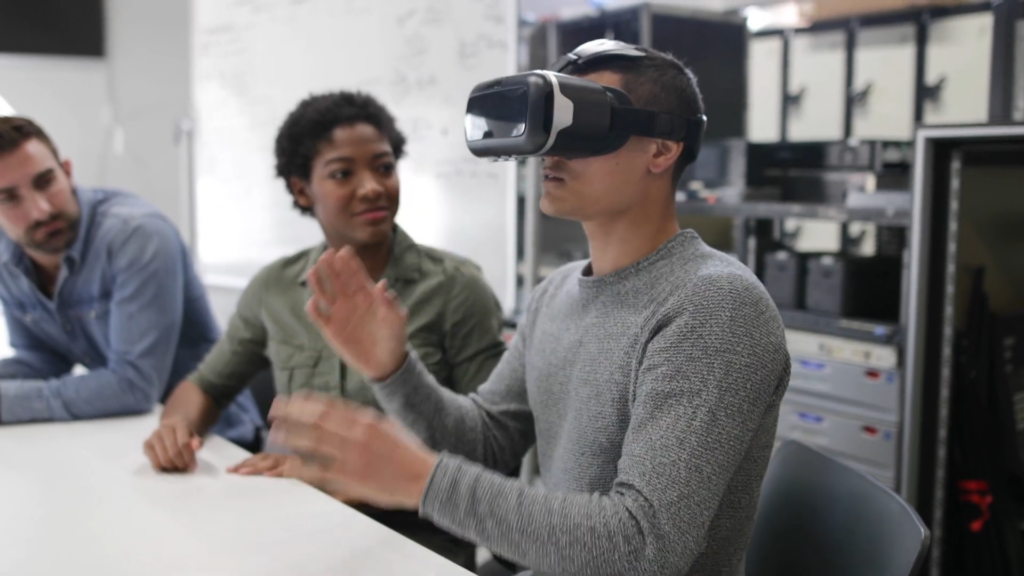
- The Visualisation, Virtual Reality and Graphic Interaction Research Group (ViRVIG) at the Universitat Politècnica de Catalunya - BarcelonaTech (UPC) has participated in the XR4ED project, an initiative that connects the educational technology (EdTech) and Extended Reality (XR) sectors, with the aim of transforming learning and training across Europe.
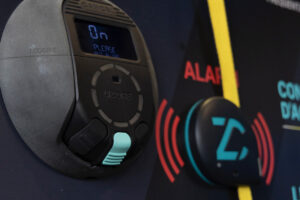
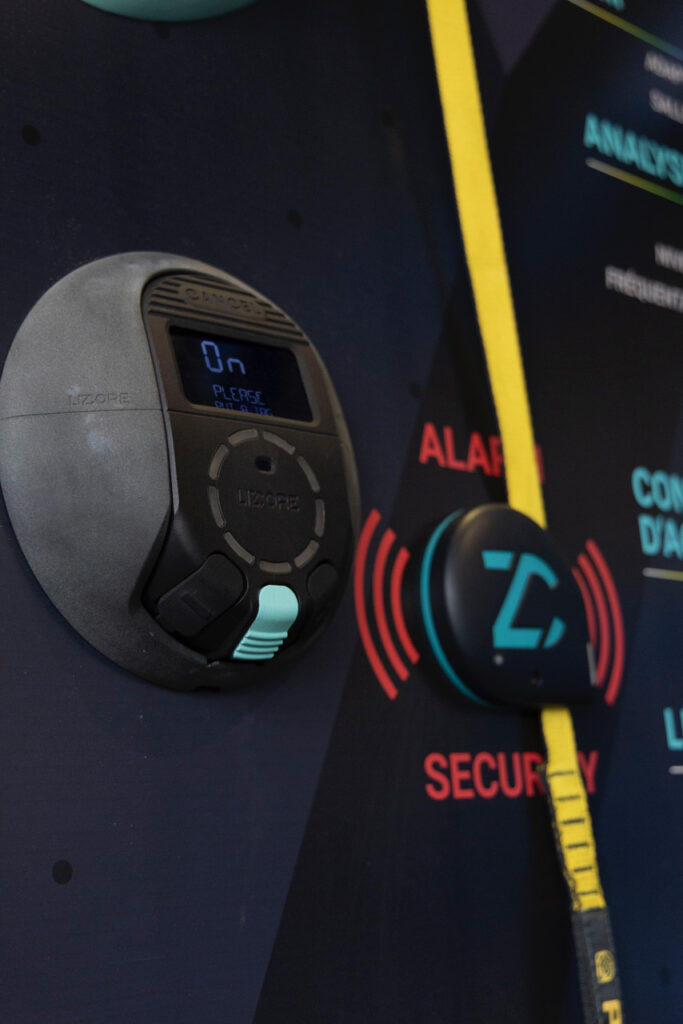
- The inLab FIB at the UPC has collaborated with Lizcore® for the development of a proof of concept based on artificial intelligence to improve safety in climbing with autobelay devices. The system allows the automatic and accurate detection of risk situations before starting a route.
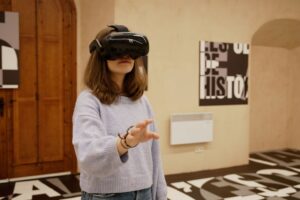
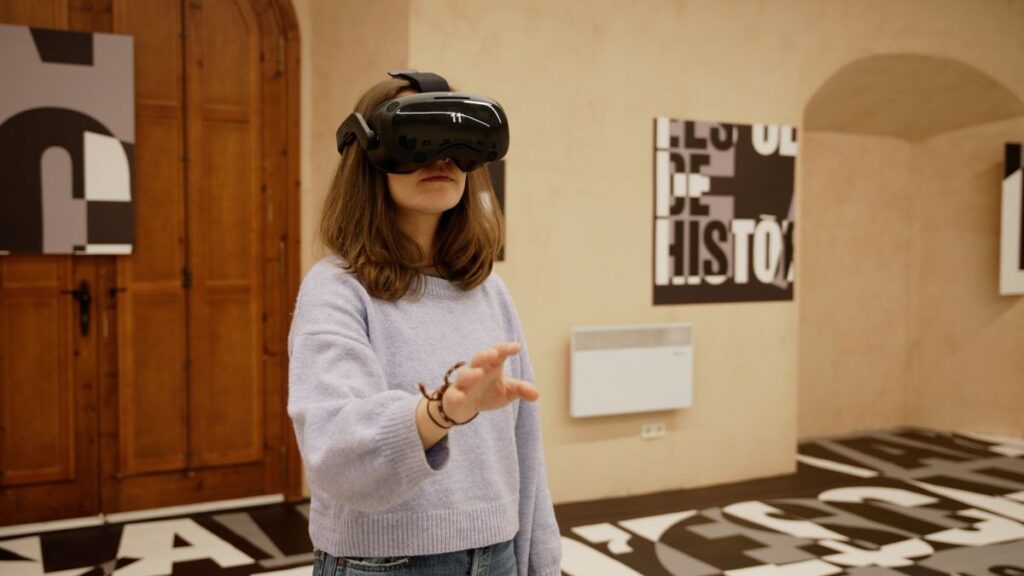
- Researchers from the Centre for Image and Multimedia Technology of the UPC (CITM) and from the DiCode research group (Digital Culture and Creative Technologies Research Group) of the Universitat Politècnica de Catalunya – BarcelonaTech (UPC) have worked on the project The Eyes of History, an initiative of the Catalan Agency for Cultural Heritage that offers an immersive view of Catalan cultural heritage. It is especially aimed at the first and second cycles of secondary education and was created to bring heritage into the classroom. Its goal is to bring the history and monuments of Catalonia closer in a vivid and innovative way, using tools such as virtual reality and new museographic narratives.
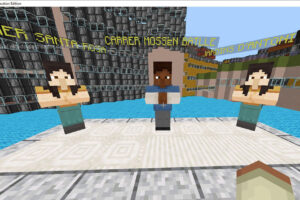
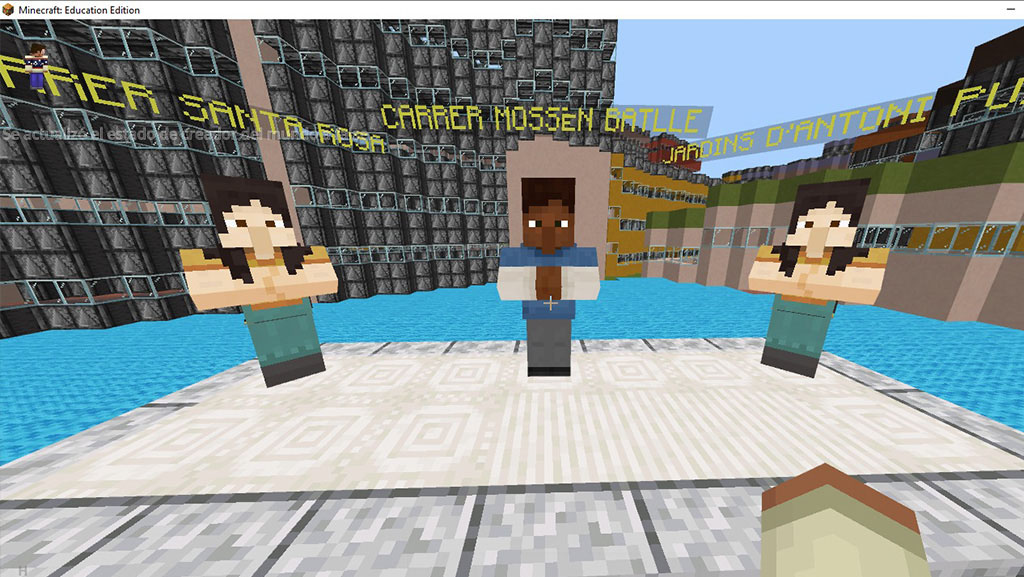
- City and Play is a social action project coordinated by researchers from the Centre for Image and Multimedia Technology (CITM) and the DiCode research group (Digital Culture and Creative Technologies Research Group) of the Universitat Politècnica de Catalunya – BarcelonaTech (UPC), the Universitat Oberta de Catalunya (UOC) and the University of Barcelona (UB), and funded by Barcelona City Council. The aim of the project is to promote civic competences and reflection on the urban environment among adolescents through the creation of an open framework that uses methodologies based on play, co-creation and storytelling.