


Prediction of occupation of public transport
June 30, 2020
Two UPC researchers create a new generation of smart surgical meshes to treat abdominal and groin hernias
July 22, 2020The spin-off Exheus emerged recently from research carried out at the Sant Pau Biomedical Research Institute (IIB Sant Pau), the Universitat Politècnica de Catalunya · BarcelonaTech (UPC) and the company Summit SL. It has introduced to the market innovative technology that analyses gene expression and its alterations, using artificial intelligence, to optimise people’s performance, health and nutrition. The spin-off was founded within the framework of the Venture Builder ‘The Collider’ programme of the Mobile World Capital Barcelona Foundation.
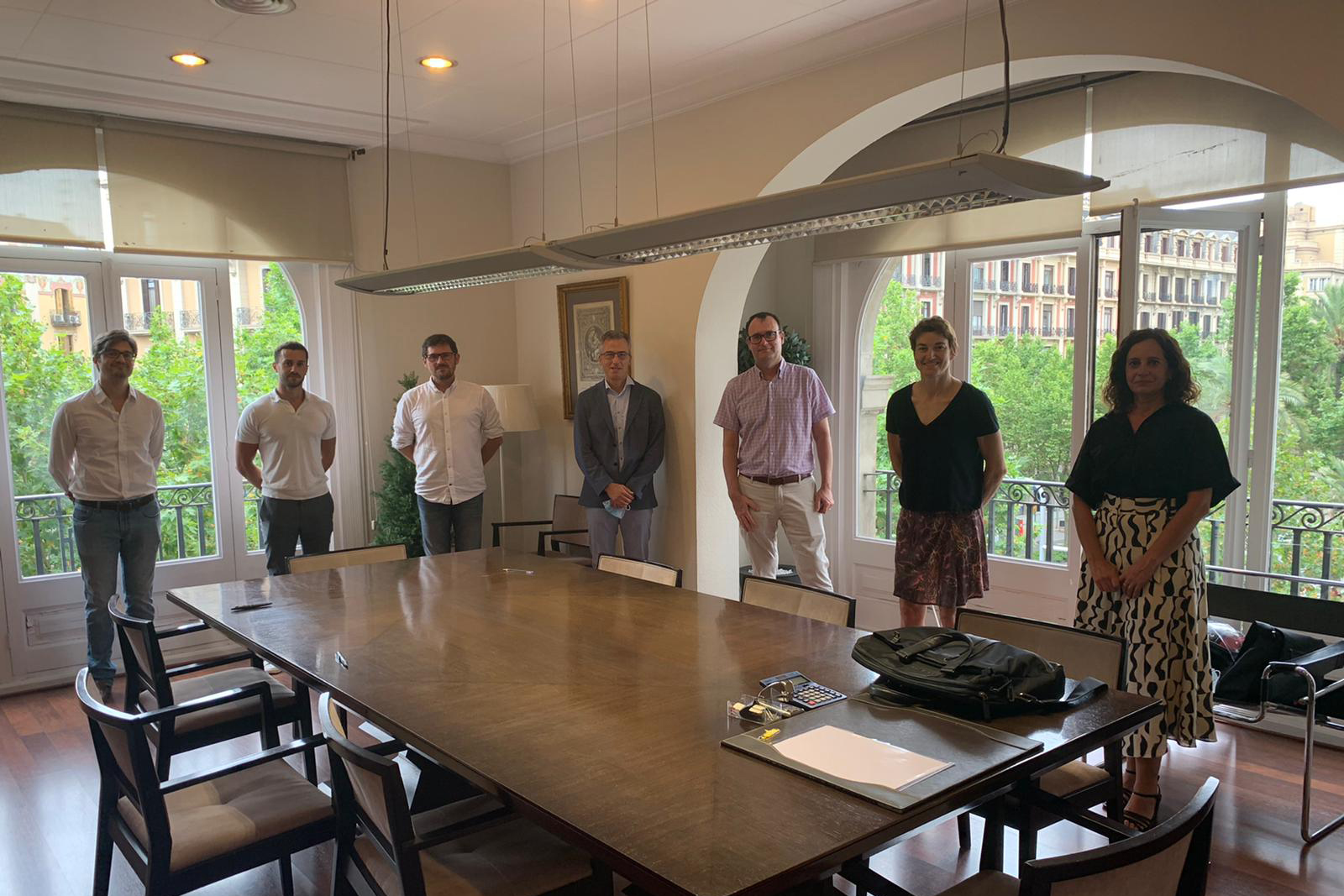
The new spin-off Exheus has developed technology that can sequence RNA from a small blood sample, and associate gene expression in more than 320 metabolic pathways that act as biomarkers of parameters of an individual’s body. The technology can analyse all variations that are outside of normality to improve and prevent health problems.
This project emerged from a doctoral thesis read at the UPC by researcher Emma Roca, a biochemist and elite ultrarunner worldwide. Roca analysed the effect of high intensity sport on ultra-trail runners, together with Dr. José Manuel Soria, principal researcher of the Complex Disease Genomics Research Group at the Sant Pau Hospital Research Institute - IIB Sant Pau and Dr. Alexandre Perera, physicist, expert in Artificial Intelligence and director of the UPC’s Centre for Research in Biomedical Engineering (CREB), who is responsible for developing the algorithms that allow the automatic evaluation of the expression of metabolic pathways. Finally, within the framework of the Collider program, in the 2019 edition, Dr. Teresa Tarragó, CEO of the project, and Pol Cervera, operations director, joined to provide a business perspective and orient the product to the market.
The technology has been validated in various sports disciplines. Currently, pilot projects are being developed with some of the main European clubs and sports centres as well as Barcelona Marathon runners.
One of the first objectives of Exheus is to improve recovery from sports injuries in high performance areas and to reduce them. To this end, the expression of all genes in the genome is analysed, with special attention to the target genes, such as genes integrated into metabolic pathways in inflammatory processes and infections, the immune system and other markers that control muscle damage suffered in training and competition.
Related Projects
- A team from the Bioinspired Oral Biomaterials and Interfaces (BOBI) research group at the Department of Materials Science and Engineering (CEM) of the Universitat Politècnica de Catalunya - BarcelonaTech (UPC) is taking part in the European project HYDROHEAL, which explores how to transform bone fracture treatment using smart and advanced biomaterials, aiming to reduce the risk of infection and implant rejection, as well as shortening fracture recovery times.
- Neurodegenerative diseases, such as Parkinson's disease, Alzheimer's, and age-related disorders, have been widely studied due to their significant impact on individuals and society. So far, these are incurable and debilitating diseases that lead to progressive degeneration and death of nerve cells, resulting in cognitive and mobility impairments. Tremors, mainly at rest, slowness of movement (bradykinesia), limb rigidity, and issues with gait and balance are typical motor disorders related to Parkinson’s disease. Additionally, due to progressive muscle atrophy, these issues can lead to falls, which in turn result in further complications and risks to quality of life.
- The Biomaterials, Biomechanics, and Tissue Engineering (BBT) Research Group at the Institute for Health Research and Innovation (IRIS) of the Universitat Politècnica de Catalunya – BarcelonaTech (UPC) is leading DYNAMIC, a project aimed at creating multifunctional, stimuli-responsive biomaterials that not only promote bone regeneration but also intelligently and effectively combat bacterial infections.
- 30/09/2024Project Headerrightno-repeat;left top;;auto20px A team from the Centre for Research in Biomedical Engineering (CREB) of the UPC and Sant Joan de Déu has created a new […]


