

An app is developed based on intangible cultural heritage to prevent memory loss in elderly people
July 21, 2021
Cooperative robots developed to harvest dessert grapes
September 8, 2021The Centre for Technological Innovation in Static Converters and Drives (CITCEA) of the UPC participates in a project to investigate the planning of electric recharging infrastructure on motorways using overhead lines. The first results of the study have been published recently in the scientific journal Energies.
The total electrification of the transport sector is needed to combat the effects of climate change. However, while the introduction of electric vehicles for passenger transport is gradually increasing, heavy vehicles continue to be almost exclusively dependent on fossil fuels. Although lorries only represent 5% of the vehicles that circulate by road in the European Union, they are responsible for over 25% of total CO2 emissions, a fact that shows the need to progress in the decarbonisation of the sector.
To achieve this objective, it is vital to equip motorways with infrastructure that meets the future demand of electrical mobility, a challenge on which the Centre for Technological Innovation in Static Converters and Drives (CITCEA) of the Universitat Politècnica de Catalunya · BarcelonaTech (UPC) is working as part of the FuChar research project.
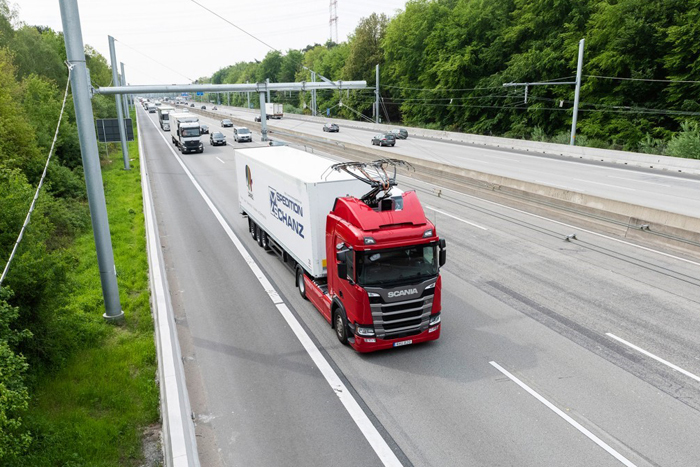
The initiative is focused on planning the electricity grid and the design of the charging infrastructure on motorways, for passenger vehicles and heavy vehicles, to minimise the costs associated with integrating electric transport into the network. In this respect, researchers are working to develop methods and tools to optimally integrate the charging infrastructure into the distribution network. For this purpose, patterns of transport, user behaviour and charging profiles of electric vehicles are analysed. In addition, alternative systems to improve the use and flexibility of the charging structure are investigated.
Overhead lines as recharging infrastructure
In the first phase of the study, scenarios of electrification using different charging technologies − inductive, overhead line and traditional charge points – were assessed using past data from a section of the E18 motorway in the south of Norway to predict charging in medium voltage substations. These simulations provide important data on the use of overhead lines as charging technology.
The next steps in the research are to add a cost-benefit analysis of the various solutions studied, considering future mobility scenarios in urban environments, with the introduction of autonomous vehicles, the shared use of vehicles and the increase in the number of passengers in public transport.
Fuchar is a four-year project that will be completed in 2022. It is funded by the Norwegian Research Council for Science under the leadership of the SINTEF research centre. The first results of the study have been published recently in the scientific journal 'Energies'.
Topic
You want to know more?
Related Projects
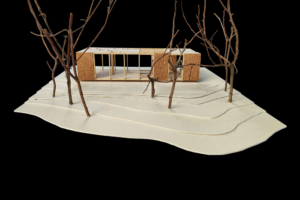
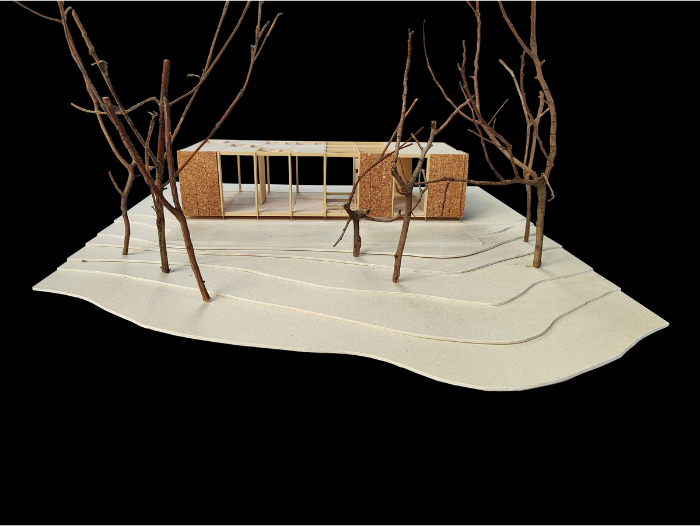
- The Casa Bosc project explores a lightweight, modular and prefabricated timber construction system designed to reduce the environmental impact of housing while making it easier to build and adapt to different contexts. The project has been developed by researchers from the Architectural Rehabilitation and Restoration Research Group (REARQ) at the Universitat Politècnica de Catalunya - BarcelonaTech (UPC) and the company ÀGORA.
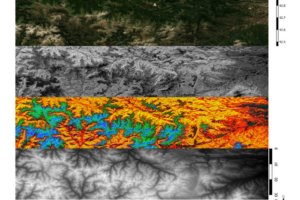
- Un equip de recerca de la UPC, integrat pel CommSensLab-UPC i el Remote Sensing Lab (RSLAB) de la Universitat Politècnica de Catalunya - BarcelonaTech (UPC), juntament amb l’Institut d’Estudis Espacials de Catalunya (IEEC), ha participat en el projecte AI4EO, amb l’objectiu d’impulsar solucions i posar en pràctica eines d’intel·ligència artificial aplicades a dades d’observació de la Terra en diversos casos d’ús sobre el territori català.
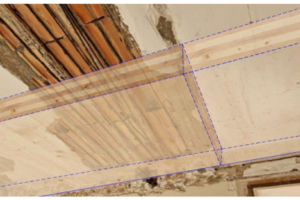
- Researchers from the Architecture, Energy and Environment research group (AiEM) and the Design and Analysis of Architectural Structures research group of the Department of Architectural Technology (DiCEA), which are part of the Centre for Research and Services for the Local Administration (CRAL) at the Universitat Politècnica de Catalunya - BarcelonaTech (UPC), have developed an innovative system for the structural strengthening of ceramic floor slabs using stress-activated timber, designed to intervene in occupied buildings in a fast, sustainable and replicable manner.
- A team of researchers led by the FLUMEN Research Institute at the Universitat Politècnica de Catalunya - BarcelonaTech (UPC) has participated in the European ICARIA project. Its aim is to develop tools and risk maps that enable public authorities and infrastructure managers to anticipate the impacts of extreme climate events and make adaptation decisions on a more robust technical basis.