


Reduction of the use of copper in horticultural crops through microencapsulation
July 3, 2023
eBRT2030: A new generation of high-performance buses (BRT) in Europe for more sustainable, environmentally friendly transport
August 28, 202307/07/2023
Currently, buildings are becoming smart organisms due to a wide range of distributed sensors and software programmes that provide them with a certain degree of intelligence. In this context, SUST(AI)N (Smart Building Sensitive to Daily Sentiment) emerged. Participants in this project include researchers from the Instrumentation, Sensors and Interfaces Group (ISI) and the Components and Systems for Communications Research Group (CSC) at the Universitat Politècnica de Catalunya - BarcelonaTech (UPC).
SUST(AI)N will enable the development of theoretical and experimental principles to combine distributed artificial intelligence, greater precision in the environmental detection of people (location and tracking, gesture recognition and vital signs such as breathing and heart rate), and increased flexibility and efficiency in the implementation of reconfigurable hardware, in the framework of a smart building as a conscious organism, which will achieve self-awareness through probabilistic reasoning by integrating people with the various connected devices and sustainable systems.
The consortium of the project will simplify the hardware and smart building systems by exploiting electromagnetic signals jointly for backscatter communication, energy harvesting, physical-layer computation offloading, and non-intrusive sensing. Reconfigurable intelligent surfaces are used to support each of these functions. This new smart system will help tertiary buildings (used by public services, companies and organisations) to meet regulatory degree 2010/31/EU of the European Parliament, which requires systems to control automation by 2025.
The research team from the ISI group and the CSC at the UPC, will be responsible for powering the sensor nodes using energy harvested from the surroundings, specifically from three sources that are present inside buildings: light energy, thermal energy and radiofrequency energy. Light energy will come from artificial lighting (LED, fluorescent tubes) and natural lighting (windows, transparent doors). Thermal energy will be captured from the heating and air conditioning system, specifically from the pipes that distribute hot/cold water. Radiofrequency energy will be obtained from that present in the environment and that emitted by the radio transmitters that are already used for communications and sensors. In addition, for the three types of energy harvesters, electronic systems will be developed to maximise the harvested power.
Consortium, budget and funding
Led by Aalto University (Finland), SUST(AI)N brings together a consortium comprised of the UPC (Spain), the Mines-Télécom Institute (France), the University of Trento (ltaly) and the Yıldız Technical University (Turkey). The project began in October 2022 and will end in March 2026. During this period, it will have a total budget of 2,550,196 euros. It is fully funded by the European Commission’s Horizon Europe programme.

Image by rawpixel.com on Freepik.

Sector
You want to know more?
Related Projects
- The Image and Video Processing Group (GPI), part of the IDEAI-UPC research group, and the Digital Culture and Creative Technologies Research Group (DiCode) from the Image Processing and Multimedia Technology Center (CITM) at the Universitat Politècnica de Catalunya – BarcelonaTech (UPC), have co-organised the AI and Music Festival (S+T+ARTS) together with Sónar+D and Betevé, to explore the creative use of artificial intelligence in music.
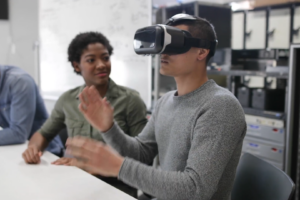
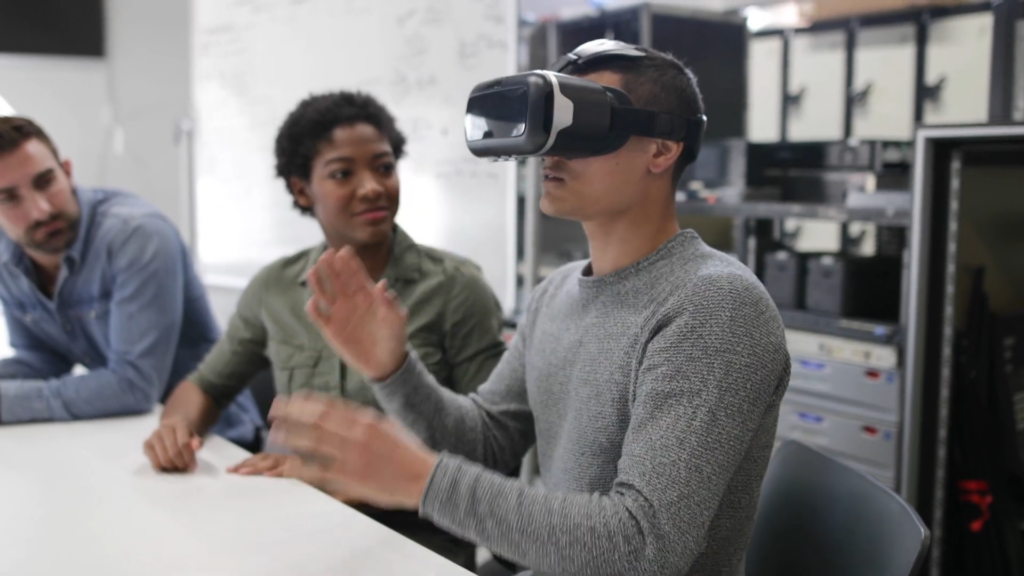
- The Visualisation, Virtual Reality and Graphic Interaction Research Group (ViRVIG) at the Universitat Politècnica de Catalunya - BarcelonaTech (UPC) has participated in the XR4ED project, an initiative that connects the educational technology (EdTech) and Extended Reality (XR) sectors, with the aim of transforming learning and training across Europe.
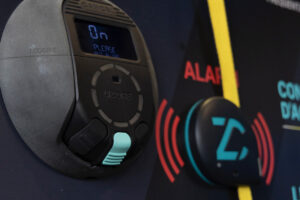
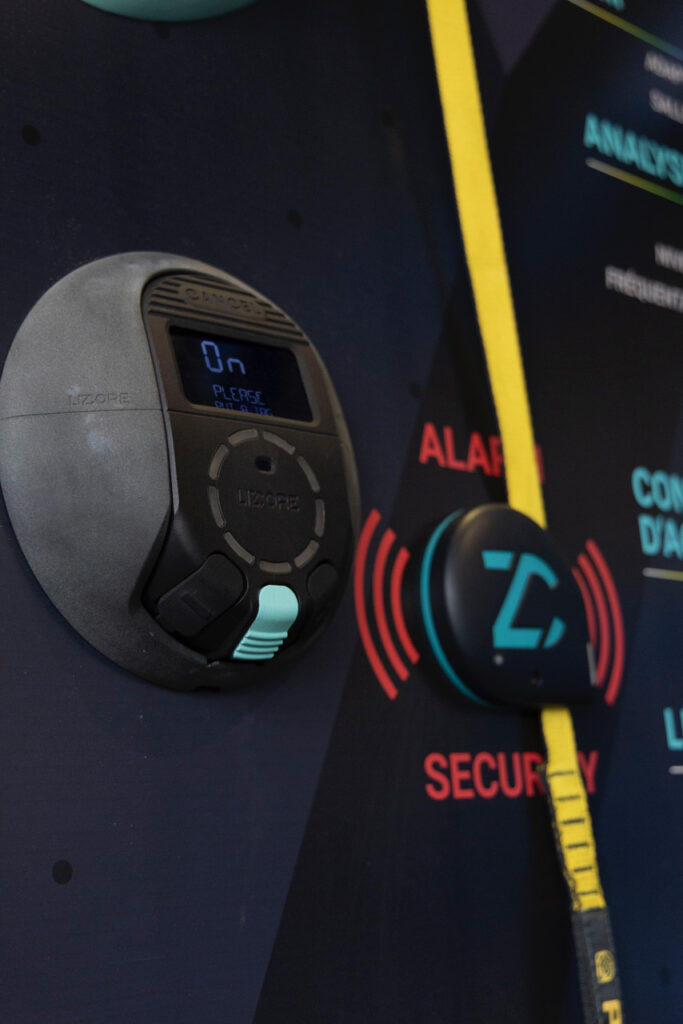
- The inLab FIB at the UPC has collaborated with Lizcore® for the development of a proof of concept based on artificial intelligence to improve safety in climbing with autobelay devices. The system allows the automatic and accurate detection of risk situations before starting a route.
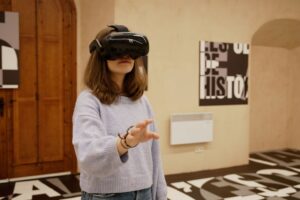
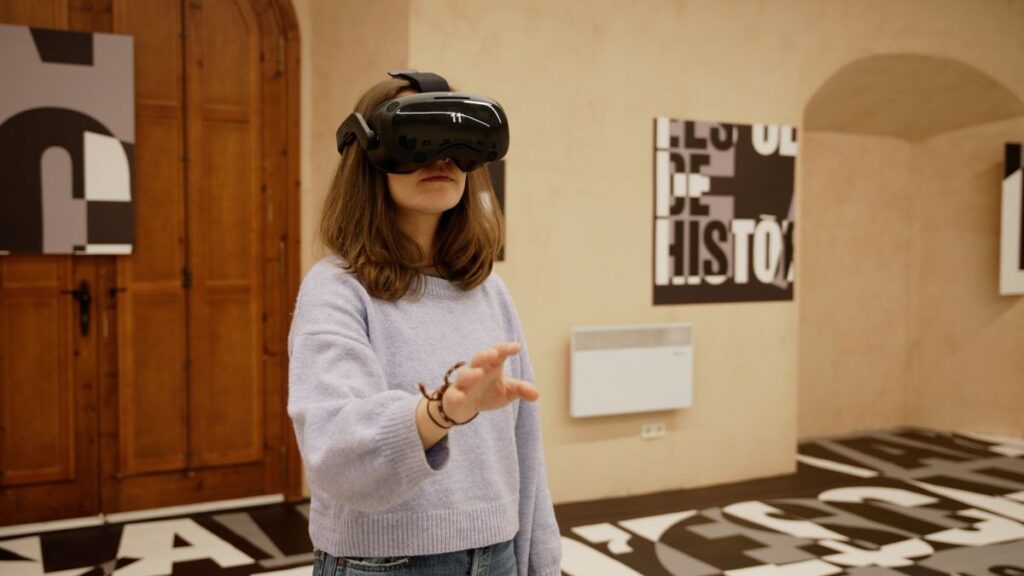
- Researchers from the Centre for Image and Multimedia Technology of the UPC (CITM) and from the DiCode research group (Digital Culture and Creative Technologies Research Group) of the Universitat Politècnica de Catalunya – BarcelonaTech (UPC) have worked on the project The Eyes of History, an initiative of the Catalan Agency for Cultural Heritage that offers an immersive view of Catalan cultural heritage. It is especially aimed at the first and second cycles of secondary education and was created to bring heritage into the classroom. Its goal is to bring the history and monuments of Catalonia closer in a vivid and innovative way, using tools such as virtual reality and new museographic narratives.