

Biofertilisers with biopesticide properties and biostimulants based on wastewater sludge from the production of biogas
March 14, 2023
A device for generating hydroelectric energy from water in pipes
March 27, 202321/03/2023
Combining agricultural activity and the production of solar energy by means of photovoltaic panels is the aim of SYMBIOSYST, a project promoted by a consortium of 16 European partners including the UPC. As part of this project, technological tools will be developed to contribute to generating clean energy for the agricultural sector in Europe.
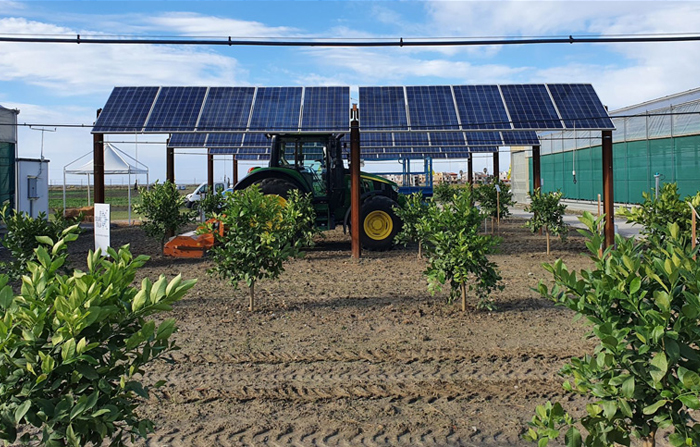
Image: EF Solare Italia. Prototype of greenhouse and agri-PV in Scalea (Italy).
With the ambitious aim of achieving net zero emissions by 2050, European countries need viable tools and solutions to increase the production of clean energy, without causing an additional environmental impact. To meet this challenge, the SYMBIOSYST European project has been launched. This initiative is focused on agrivoltaic activity, called agri-PV, which consists of using the land for agriculture and the generation of solar energy.
The project will advance research and the multidisciplinary transfer of knowledge in the area of technification of vegetable growing, at a time when the agricultural sector requires the incorporation of technologies and technological processes to be able to grow. It fosters the production of foods with a low water and carbon footprint and added value products linked to the territory. The project’s aim is also to promote awareness-raising activities to increase the interest in agri-PV technology and attract more investments.
The Universitat Politècnica de Catalunya - BarcelonaTech (UPC) contributes its expertise to this project through various research groups and centres, under the umbrella of the Specific Research Center (CER) Agrotech-UPC. In this way, it contributes to the development of technology solutions and strategies to increase the competitiveness of agri-PV solutions in Europe and minimise the impact on the landscape and on the environment in general.
The UPC Construction Research and Innovation Group (GRIC) – an expert in implementing energy efficiency improvements from many perspectives – will design more sustainable structures to support solar panels using materials such as wood. It will analyse the various systems proposed and develop business models that enable their implementation in different environments, such as agricultural fields, greenhouses or greenhouses integrated in buildings.
The UPC Industrial Equipment Design Centre (CDEI) – an expert in the design of machinery, prototyping of new mobile robotics solutions and applications – will develop a customised robot that can move omnidirectionally in the agricultural environment, equipped with sensors of different types, which will enable data to be sent in real time to a decision-making system. The data that are obtained will serve to adapt variables such as the angle of the solar panels, to optimise the relationship between crop production and energy generation. This solution will have less environmental impact, as it is based on a single sensorised system instead of installing a network of sensors spread over the entire territory.
In turn, the UPC Intelligent Data Science and Artificial Intelligence Research Center (IDEAI) will support the development of digital twins of the agrivoltaic systems, which will enable the assessment of different solutions. To achieve this, the system will be modelled from all perspectives and interactions: biological (evolution in the growth of crops), energetic (production of energy by the photovoltaic panels) and physical (system of mobile platforms and constructions - greenhouses), to reproduce the evolution and, using a base model, make recommendations on the overall system: when and how to move the panels or how to manage the energy system depending on variables such as ripening time or crop growth.
Finally, the Department of Agri-Food Engineering and Biotechnology, associated with the Barcelona School of Agri-Food and Biosystems Engineering (EEABB) of the UPC, will evaluate the impact of the photovoltaic installation on the yield and quality of horticultural crops and will contribute to defining the parameters of the photovoltaic installation that will enable optimisation of agricultural production and energy generation.
Results and impact
In addition to developing solutions such as photovoltaic modules and assembly systems, operating and maintenance tests will be carried out for the specific needs of various crops in different environments. The products and services that are developed will be demonstrated through a network of agri-PV plants and the application, with field tests, of the innovative solutions that are studied in four agricultural settings that vary in location, climate, size and type of crop.
One of the pilot tests will take place in Agrópolis, a UPC space for research and innovation in technologies applied to the agrifood sector in Viladecans. Researchers from the Department of Agri-Food Engineering and Biotechnology will analyse the use strategies of the agri-PV installations proposed in the horticultural crops.
Consortium, budget and funding
The interdisciplinary consortium of SYMBIOSYST is comprised of 16 European members from the entire value chain, with decades of experience in agriculture, precision agriculture, technology, photovoltaic modules and systems, and integrated photovoltaic applications such as BIPV and agri-PV. The project is coordinated by Eurac Research (Italy). In addition to the UPC, other members of the consortium are research centres and entities in Belgium, the Netherlands and the United Kingdom. The project is part of the Horizon Europe 2021-2027 programme and is cofunded by the European Union through the programme ‘Climate, Energy and Mobility’. SYMBIOSYST started in January 2023 and will end in December 2026. It has a total budget of €5,775,143.42.
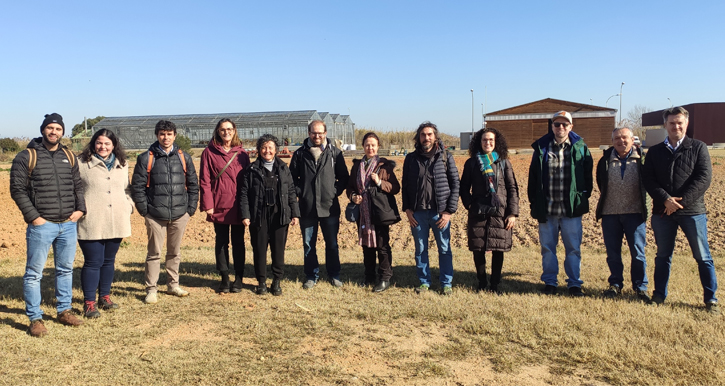
Image: Researchers of the SYMBIOSYST project.


Activity financed through Operation 01.02.01 for Technology Transfer of the Rural Development Programme of Catalonia 2014-2022.
You want to know more?
Related Projects
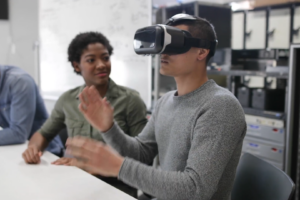
- The Visualisation, Virtual Reality and Graphic Interaction Research Group (ViRVIG) at the Universitat Politècnica de Catalunya - BarcelonaTech (UPC) has participated in the XR4ED project, an initiative that connects the educational technology (EdTech) and Extended Reality (XR) sectors, with the aim of transforming learning and training across Europe.
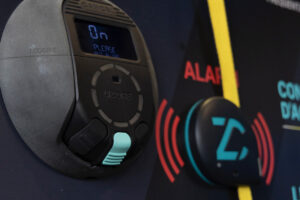
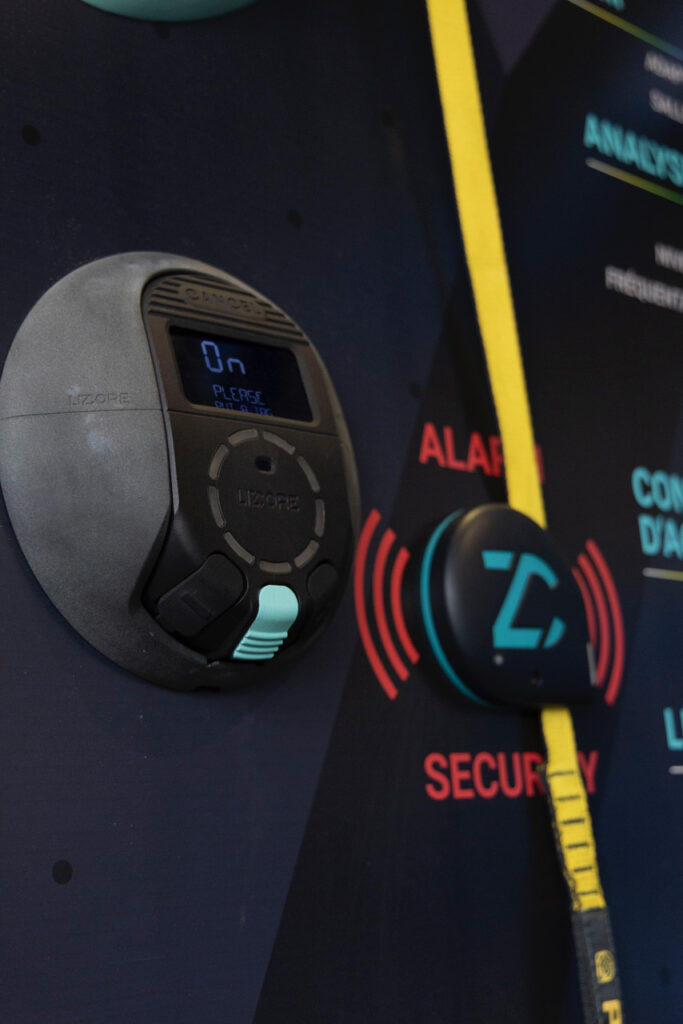
- The inLab FIB at the UPC has collaborated with Lizcore® for the development of a proof of concept based on artificial intelligence to improve safety in climbing with autobelay devices. The system allows the automatic and accurate detection of risk situations before starting a route.
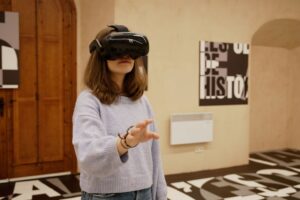
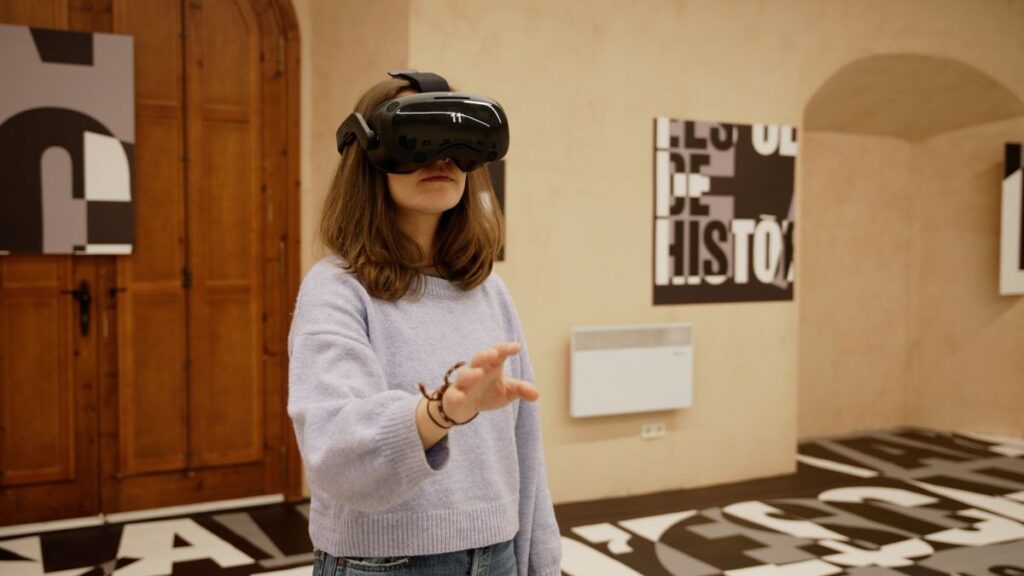
- Researchers from the Centre for Image and Multimedia Technology of the UPC (CITM) and from the DiCode research group (Digital Culture and Creative Technologies Research Group) of the Universitat Politècnica de Catalunya – BarcelonaTech (UPC) have worked on the project The Eyes of History, an initiative of the Catalan Agency for Cultural Heritage that offers an immersive view of Catalan cultural heritage. It is especially aimed at the first and second cycles of secondary education and was created to bring heritage into the classroom. Its goal is to bring the history and monuments of Catalonia closer in a vivid and innovative way, using tools such as virtual reality and new museographic narratives.
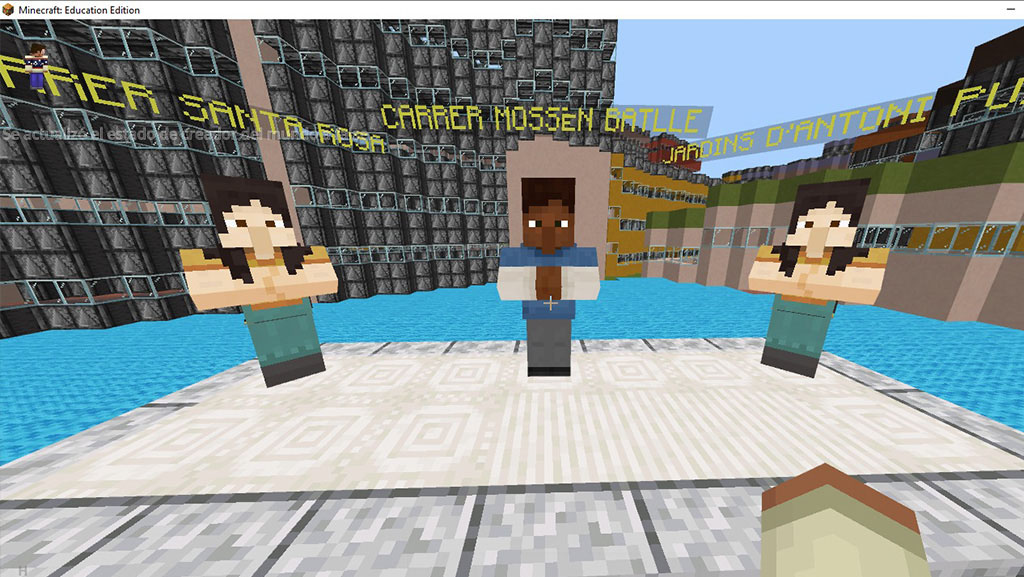
- City and Play is a social action project coordinated by researchers from the Centre for Image and Multimedia Technology (CITM) and the DiCode research group (Digital Culture and Creative Technologies Research Group) of the Universitat Politècnica de Catalunya – BarcelonaTech (UPC), the Universitat Oberta de Catalunya (UOC) and the University of Barcelona (UB), and funded by Barcelona City Council. The aim of the project is to promote civic competences and reflection on the urban environment among adolescents through the creation of an open framework that uses methodologies based on play, co-creation and storytelling.