

TREATMENT, MANAGEMENT, AND DISTRIBUTION OF DRINKING WATER


Infrastructure and management of water resources
- Infrastructure and integrated management of water resources, monitoring, and advanced control of urban drinking water networks.
- Security and efficiency of smart infrastructures: water networks, sewage systems, canals, and rivers.
- Territorial planning for sustainable water management and drought prevention.
- Tools for global management of hydraulic infrastructures: supply and urban drainage.
- Sensors and algorithms for leak detection.
- Treatment and use of bamboo in sanitation and sewage systems.
Drinking water treatment
- Evaluation of groundwater quality and risks for pathogens and contaminants.
- Improvement of drinking water quality through microalgae and acai biochar.
Desalination
- Renewable energy and advanced membranes for desalination.
- Sustainable recovery of value-added elements from brine.
- Desalination with conductive polymer hydrogels.
WASTEWATER TREATMENT, RECYCLING, AND DECONTAMINATION


Treatment
- Production of bioproducts and high-quality regenerated water with microalgae.
- Recovery of ammonia from urban and industrial waste.
- Heat and wastewater recovery with membranes in the industry.
- Removal of emerging contaminants, antibiotics, and hormones.
- Production of bio-stimulants and bio-fertilizers with cyanobacteria.
- Removal of metals and sulfates from wetlands with Acid Rock Drainage (ARD).
- Control of micro and nanoplastics and antibiotic-resistant genes in soils and aquifers.
Industrial water reuse and recycling
- Electrochemical treatment of textile wastewater with hydrogen production.
- Efficiency in water, energy, and chemical consumption, reduction of microplastics in laundries.
Rainwater harvesting
- Permeable bituminous mixtures for drainage pavements.
- Hydraulic modeling of drainage grates with computational fluid dynamics.


Pollution and waste management in aquatic environments
- Predictive models of microplastic movement in rivers and seas.
- Monitoring and quantification of microplastics with deep learning.
- Treatment of precipitated silica waste with total water recovery and sodium sulfate production.
- Technologies for contaminant degradation and pathogen retention in aquifers.
Effluent and discharge treatment
- Quantification of water and solute flux in submarine discharge.
- Digital twins for early detection of pollution in wastewater treatment plants.
- Processes to improve contaminant degradation and pathogen retention in aquifers.
Pollution reduction
- Microfluidic systems to detect and eliminate microplastics and contaminants from algae.
- Removal of metals and sulfates from water.
- Aquifer recharge to improve water quality and availability.
- Control of seawater intrusion into coastal aquifers.
- Mine Acid Drainage (MAD) treatment with nature-based solutions.
- Diagnosis of river pollution with low-cost instrumentation.
- Impact of climate change on groundwater quality.
CONSERVATION AND EFFICIENT USE OF WATER AND ECOSYSTEMS


Efficient irrigation in agriculture
- Regenerative and precision agriculture for sustainable production.
- Digital twins for irrigation and water and nutrient recirculation systems in hydroponic crops.
- Production of alternative proteins with microalgae.
Water-saving technologies in urban environments.
- Strategies for sustainable water use and drought management.
- Sustainability evaluation between bottled and tap water.
- Natural solutions for water management in peri-urban areas.
- Reuse of wastewater in urban green spaces.
SUSTAINABLE USE OF AQUATIC RESOURCES


Aquaculture and mariculture
- Feasibility studies for aquaculture operations.
- Marine reserve networks for the recovery of fishery interest species.
- Acoustic tags for marine species tracking.
- AI for automatic calibration of fishery operations.
Marine biotechnology
- Circular biomaterials for marine ecosystem regeneration.
ENERGY GENERATION


Ocean energy
- Evaluation of the energy resource from waves and optimization of capture devices.
- Fluid-structure interaction analysis for buoys and floating wind turbines.
- Optimization of moorings for offshore wind turbines.
Hydraulic energy (waves and tides)
- Generation of undulating and tidal energy.
- Predictive diagnosis and maintenance of machinery.
- Numerical simulation of turbulent flows and hydrodynamic characterization for tidal energy.
- Optimization of turbines in micro-hydro power plants.
MARITIME AND INLAND WATER TRANSPORT AND LOGISTICS

- Ship traffic studies and air quality with AIS data.
- Technologies to reduce emissions and use of sustainable fuels.
- Energy management optimization and pollution reduction in shipyards.
CLIMATE CHANGE AND ADAPTATION IN AQUATIC ENVIRONMENTS


Blue economy
- Study of natural and human impacts on the sea.
- Development of ocean observation systems.
- Climate risk management and early warning systems.
- 3D printing of marine biotopes using recycled steel slag.
Environmental monitoring and management
- Oceanic and river observation networks.
- Participatory monitoring platforms for coastal environments.
- Analysis of physical and biological processes in coastal bays.
- Impact of human activity on river sediments and flood risks.
Exploration technologies
- Mitigation of acoustic pollution on aquatic species.
- Autonomous underwater vehicles for marine observation.
- Cost-effective solutions for water challenges and aquatic ecosystem restoration.
RELEATED PROJECTS
- Barcelona is characterised by a high consumption of bottled water (55% of the population drinks it regularly). The reasons for this behaviour tend to be dissatisfaction with the organoleptic characteristics, perceived health risks and distrust of the quality of tap water.
- UPC, the Port of Barcelona and Siport21 will create an innovative operational traffic management system based on artificial intelligence and machine learning. This will be developed within the Compass+ project, which has been recognised as a pre-commercial project in the second call of the innovation fund managed by Ports of the State − Ports 4.0. The aim of the fund is to enhance efficiency and safety in port operations by integrating disruptive technologies that will drive the ports of the future.
- The innovation and research laboratory of the Barcelona Faculty of Computer Science (inLab FIB) at the Universitat Politècnica de Catalunya - BarcelonaTech (UPC) collaborated with ModpoW, a company specialised in wireless technologies, sensors and general electronics, to create a solution that optimises water and fertilizer usage in agriculture. This solution, which can potentially save over 30% of annual water and fertilizer consumption, monitors underground water data to draw up an irrigation recommendation for farmers, according to the real-time conditions of each plot.
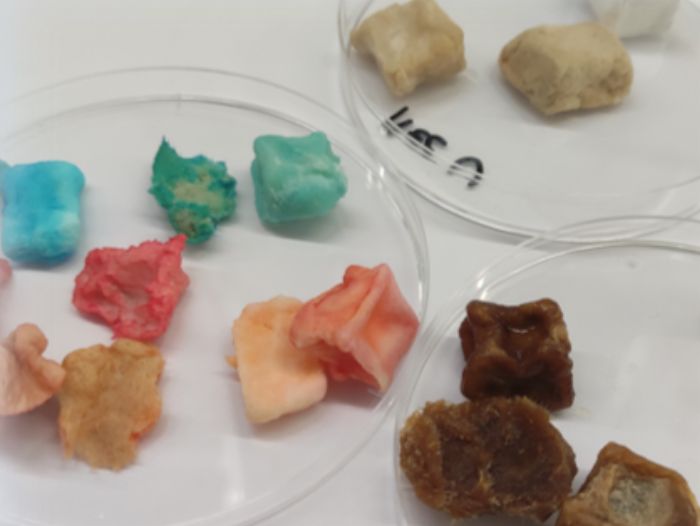
- The Paper Engineering research group (CELBIOTECH) at the Universitat Politècnica de Catalunya - BarcelonaTech (UPC) is participating in a project to develop biodegradable materials from cellulose, to transform them into advanced, eco-friendly bioproducts.