

A new management model integrated into the water resources of the Besòs
May 10, 2021
A device to assess emotional state through physiological signals and its application in music therapy for people with disabilities
May 12, 2021The Research Centre for Supervision, Security and Automatic Control (CS2AC) has participated in the SECUTIL project through which a comprehensive security chain management system has been created for networks and infrastructure that supply utilities (such as water, gas and electricity). The system improves physical security, access control and cybersecurity.
CS2AC has developed algorithms to detect cyberphysical attacks (for example, to detect images in a security circuit that appear normal but have been introduced by attackers, when the real images would show intruders accessing the facilities) and technologies that increase resilience to attacks. The detection technologies are based on watermarking signals, which add copyright information or other verification messages to digital documents and show whether images have been altered by an attacker. In addition, algorithms have been developed that can be used to reconfigure the control algorithm once an attack has been detected and isolated, using tolerant control technologies. All these technologies are being tested in laboratory studies and pilot tests in real environments.
As part of the project, cryptographic solutions have been developed to ensure the security and privacy of personal data throughout the service and technology cycle. This reduces the window of risk for critical infrastructure information systems. In addition, simulation tools have been designed and implemented to assist in decision-making by the critical infrastructure’s security management team and new systems and infrastructure security models have been researched.

One of the most notable aspects of the project is the research and development of tools and solutions based on artificial intelligence technologies to predict, protect, mitigate and defend against the new scenario of cyberattacks that is currently emerging and those that will emerge in the near future.
The project results include more advanced, intelligent algorithms and more architectural models and autonomous cybersecurity in cyberphysical systems, solutions which are essential to protect new models of infrastructure and services.
SECUTIL is a project of the RIS3CAT Utilities 4.0 Community, coordinated by Eurecat. Other participants in addition to the UPC’s CS2AC are Cetaqua-AGBAR, Naturgy, Retevisión, the University of Lleida and the Barcelona Supercomputing Center. The aim of the community is to transform the utilities sector by identifying a set of tools and solutions that enable digital transformation to the utilities 4.0 concept, and the creation of an industrial fabric through the development and application of these new solutions.
The project, which has taken three years and ended in March 2021, was funded by the EU’s European Regional Development Fund (ERDF) as part of the FEDER 2014–2020 Operational Programme, with a budget of €100,869.91.

Technology
Topic
You want to know more?
Related Projects
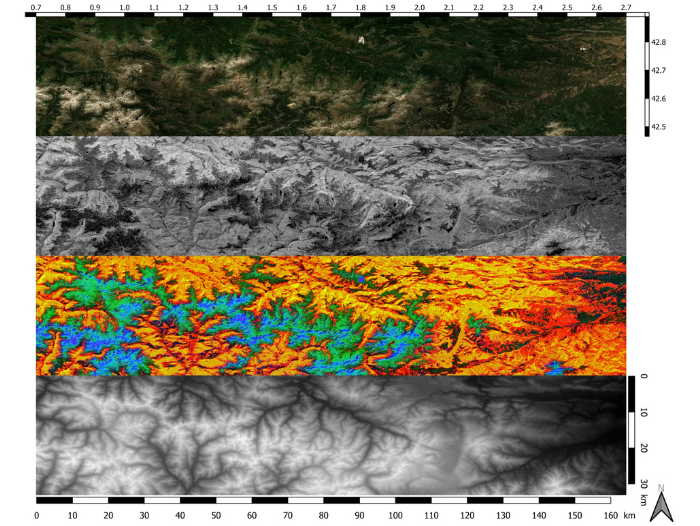
- Un equip de recerca de la UPC, integrat pel CommSensLab-UPC i el Remote Sensing Lab (RSLAB) de la Universitat Politècnica de Catalunya - BarcelonaTech (UPC), juntament amb l’Institut d’Estudis Espacials de Catalunya (IEEC), ha participat en el projecte AI4EO, amb l’objectiu d’impulsar solucions i posar en pràctica eines d’intel·ligència artificial aplicades a dades d’observació de la Terra en diversos casos d’ús sobre el territori català.
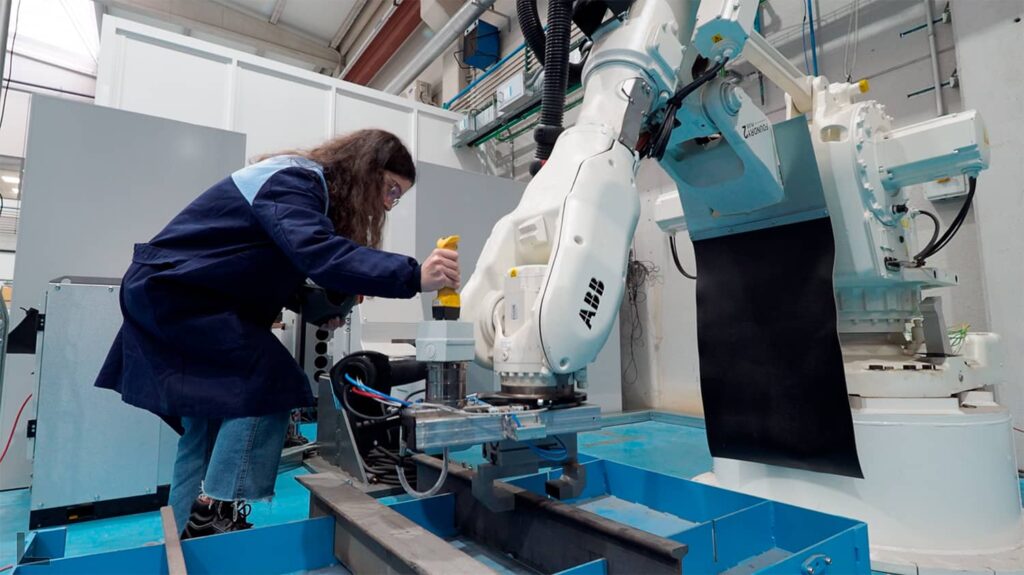
- A research team from the Institut de Robòtica i Informàtica Industrial (IRI, CSIC-UPC), together with the Centre de Disseny d'Equips Industrials (CDEI) of the Universitat Politècnica de Catalunya - BarcelonaTech (UPC), are participating in the national CASANDRA project to develop a digital manufacturing solution that will make it possible to establish a bidirectional data flow for continuous digital integration throughout the supply chain across the product life cycle. This integration will be achieved through digital twins and data-based models that are continuously updated thanks to distributed monitoring and control tools.
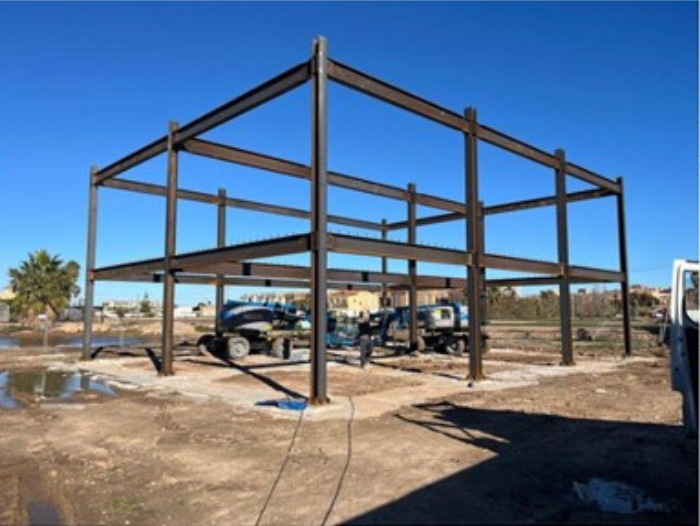
- The research groups Structural and Materials Technology (ATEM) and the Construction Engineering (EC) at the Universitat Politècnica de Catalunya - BarcelonaTech (UPC) are working on the RE-STEEL project, which aims to develop an efficient methodology for assessing the rehabilitation of existing steel structures.
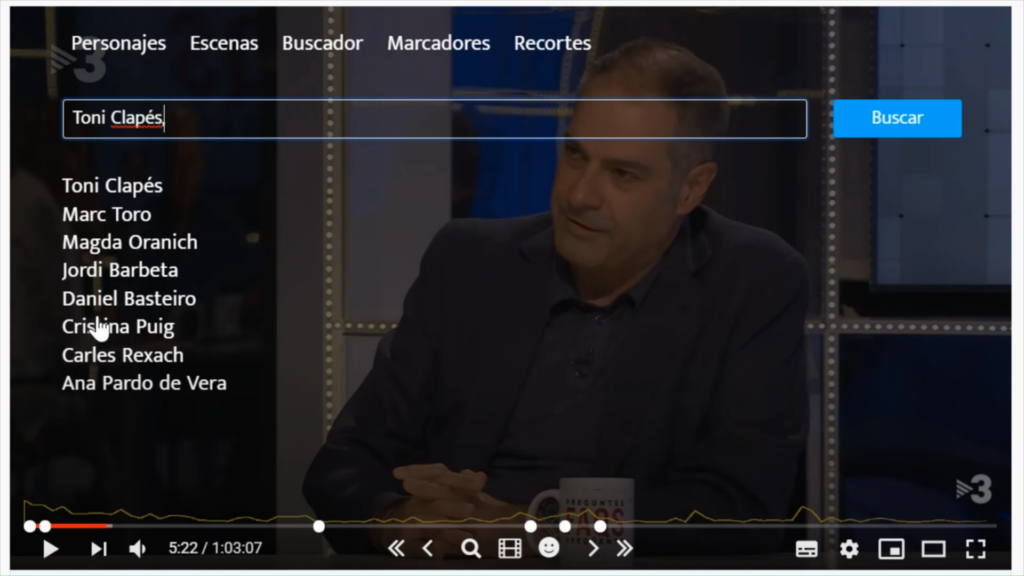
- The AgroTech research group at UPC, in collaboration with its spin-off Ugiat Technologies, has developed uPlayer, a new multimedia player concept that enables more intuitive video navigation and viewing, intelligently enhancing the user experience, especially on YouTube and other platforms, by integrating as a plugin or advanced player.