

New photonics and artificial intelligence tools to diagnose ocular, cardiovascular and neurodegenerative diseases
December 15, 2023
N2B2: A system to optimise heating and cooling with predictive control
January 22, 202416/01/2024
Researchers at the Universitat Politècnica de Catalunya - BarcelonaTech (UPC), in collaboration with the MINOS group of the URV, are participating in a project on the reliable, high-performance and low-cost production of ammonia sensors for livestock farming.
The aim of the project is to produce reliable, durable, low-cost sensors that are easy to use in agricultural environments and operate them with non-linear controls that optimise their dynamic features. The controls will be developed by researchers from the Micro and Nano Technologies for Solar Energy (MNT-Solar) group at the UPC. The sensors are based on a technology of nanostructured layers of metallic oxides deposited on MEMS membranes, developed by researchers in the MINOS group of the URV. In the context of the project, electronics will be designed that will generate the temperature modulations that are required for the sensors to function with a constant surface potential, and therefore have an optimised dynamic response. The model that is patented will enable an improvement in sensor response time, modulation of sensitivity, and the adaptability that is required to respond to the considerable environmental changes that may occur in agricultural areas.

Box with the electronics (right) and cavity in which the sensors lie (left). In the cavity part, the fan ensures air flow and on the other side a filter prevents the entry of unwanted particles.
This project continues and expands on a previous project in which a pilot test was carried out in a pig farm over fourteen days. The project will increase the complexity of the sensor heads and develop improved acquisition and control electronics. It also aims to undertake an experimental campaign in livestock barns, with a longer duration, to assess the reliability and performance of the technology.
Budget and funding
In addition to the MNT-Solar group at the UPC, the MINOS group at the Universitat Rovira i Virgili is working on this project, which has a budget of €49,999.5. The activity is funded through 01.02.01 Technology Transfer Operation of the Rural Development Programme of Catalonia 2014-2022 (Catalan Government). The project duration is from December 2021 to June 2024.


You want to know more?
Related Projects
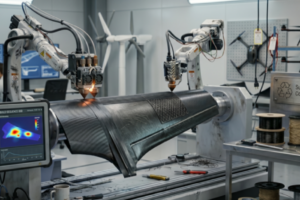
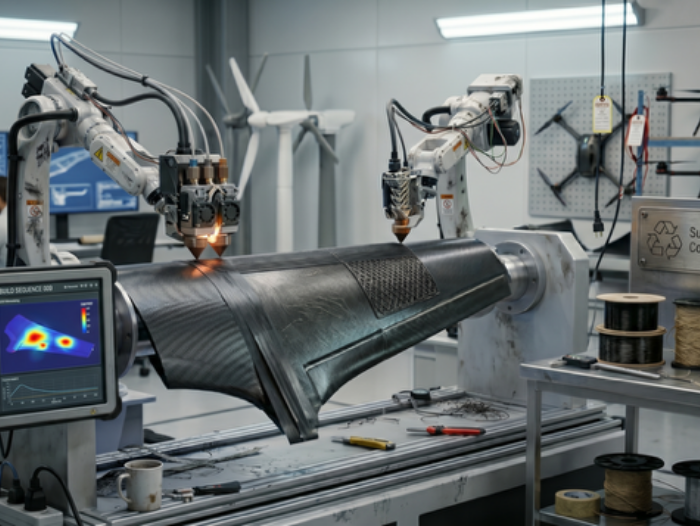
- The Control, Data and Artificial Intelligence (CoDAlab) research group at the Universitat Politècnica de Catalunya - BarcelonaTech (UPC) is taking part in the ATHENS project, which is developing recyclable thermoplastic composite materials with advanced real-time monitoring systems to improve the manufacture, safety and service life of lightweight structures.
- The MICROTECH LAB - Microtechnology for the Industry research subgroup, part of the Centre for Advanced Technologies in Mechanics (CATMech) at the Universitat Politècnica de Catalunya - BarcelonaTech (UPC), is leading the technical development of a minimally invasive platform to monitor biomarkers and physiological indicators related to stress and emotional wellbeing.
- A research team from the Universitat Politècnica de Catalunya - BarcelonaTech (UPC) has participated in the M3LEC project, coordinated by the Centro de Astrobiología (CAB), a joint centre of the Spanish National Research Council (CSIC) and the Instituto Nacional de Técnica Aeroespacial (INTA), with the Universidad de Sevilla (US) / Instituto de Microelectrónica de Sevilla (IMSE) also participating. M3LEC aimed to contribute to the characterisation of the Martian atmosphere and meteorology, and to investigate new instrumentation for future planetary exploration missions.
- The Interdisciplinary Group on Building Science and Technology (GICITED) and the Energy, Catalysis, Process and Reaction Engineering (ENCORE) research group at the Universitat Politècnica de Catalunya - BarcelonaTech (UPC) are participating in the European ArchiSpace project, to develop infrastructure prototypes for human settlements in extraterrestrial environments using materials and conditions analogous to those on the Moon and Mars.