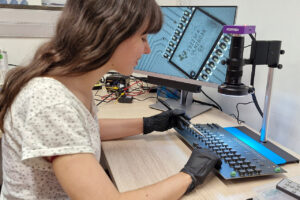


iMAGING, an app to diagnose malaria using artificial intelligence
January 25, 2024
CP4C: New therapies for bone cancer treatment and tissue regeneration
January 30, 202430/01/2024
CD6 researchers at the UPC participate in a project to design and construct a proof of concept of a system that has laser technology and sensors to detect and map the underwater environment.
The aim of the BEACON project, in which the Centre for Sensors, Instruments and Systems Development (CD6) at the Universitat Politècnica de Catalunya – BarcelonaTech (UPC) is participating, is to design and construct a proof of concept of a light detection and ranging system (LIDAR) for autonomous underwater vehicles. The proposed system will use laser technology and sensors to detect and map the underwater environment and will enable the autonomous vehicle to navigate in a safe, precise way without human intervention.
Direct LIDAR measurement systems (direct time-of-flight, d-TOF) are characterised by obtaining measurements without subsequent calculations. This is achieved by sending a light pulse towards a target and counting the time it takes to return using electronic timers. These point distance measurements can be converted into high resolution images through various techniques for scanning the scene. There is a wide range of configurations and systems that enable adaptation to different applications and requirements, from mobile phones to autonomous cars.
The complexity of the operation in the marine environment, combined with the difficulties inherent in underwater images, have hampered the development and application of this type of technologies to date. The main challenges that still need to be overcome are the severe attenuation of optical radiation, the use of uncommon wavelengths, and the presence of turbidity, particularly in coastal areas.
As part of the project, a light source will be developed that is tailored to the conditions of underwater operation. A LIDAR system will be adapted so that it can incorporate complementary sensors (RGB image, thermal image). It will be integrated into an underwater remotely operated vehicle (ROV), to validate autonomous navigation capabilities in relevant conditions.
BEACON will contribute to generating a significant impact in several industries:
- Improvements in the maintenance and inspection of underwater infrastructure.
- Expansion of the possibilities of sensors that can be used in underwater robotic vehicles, to make them more reliable and adaptable to their environment.
- Zoological and oceanographic applications for projects to analyse and conserve marine life.
Consortium, budget and funding
In addition to CD6 at the UPC, participants in the project include Subsea Mecatronics, Radiantis, Beamagine and Secpho. The project has a duration of 9 months (and is expected to conclude in April 2024). It has received funding from the grant programme to support innovative business groups (AEI-010500-2023-156 of the Recovery, Transformation and Resilience Plan) of the Spanish Government’s Ministry of Industry, Energy and Tourism (MINETUR).

You want to know more?
Related Projects
- A team from the Matrix Analysis and Discrete Potential Theory (MAPTHE) research group at the Universitat Politècnica de Catalunya - BarcelonaTech (UPC), and the Department of Mathematics at CUNEF Universidad in Madrid, have participated in the development of MARIA, a prototype of a portable, flexible and radiation-free device designed to improve the early detection of breast cancer. The device can identify tumours through electrical conductivity, with the aim of enabling its future use in primary care settings.
- The Research Group in Smart and Sustainable Resources and Industries (RIIS) at the Universitat Politècnica de Catalunya - BarcelonaTech (UPC) is developing the ZeroCarbonPave project, which aims to assess the feasibility of incorporating biochar as filler and/or as the fine fraction of granular material in bituminous mixtures, with the objective of reducing the carbon footprint associated with the manufacture and laying of road pavements.
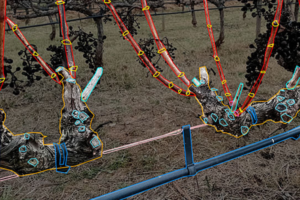
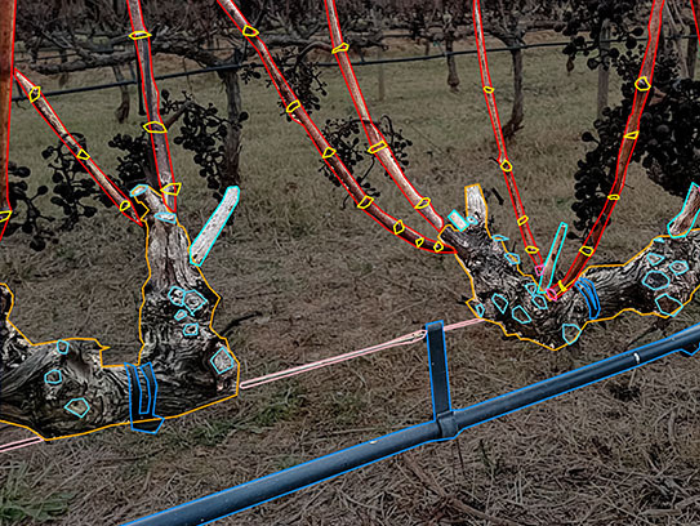
- The Center for Industrial Equipment Design (CDEI-UPC) at the Universitat Politècnica de Catalunya - BarcelonaTech (UPC) is participating in a cross-border project aimed at promoting the use of advanced digital technologies in viticulture in regions on both sides of the Pyrenees. The initiative seeks to improve specialist training, technical advice and decision-making in vineyard management.
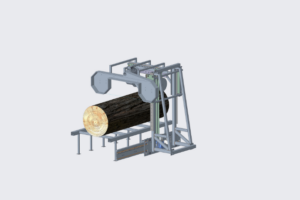
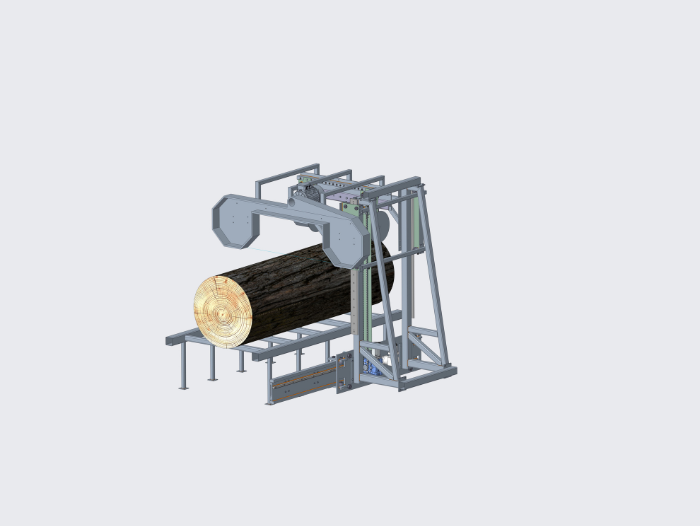
- The Centre for Industrial Equipment Design (CDEI) at the Universitat Politècnica de Catalunya - BarcelonaTech (UPC), together with the IRI, Institut de Robòtica i Informàtica Industrial (CSIC-UPC), is participating in the development of a pre-commercial prototype of an automatic portable sawmill that integrates computer vision, artificial intelligence and computer numerical control to improve productivity, efficiency and safety in local wood processing for the company Envall Coop. S.L.